
Internet Mastery Accelerator 3
Internet Mastery 3 – “Everything Wholesale” was an extraordinary event. Make sure to get your ticket now for IM Accelerator 4 before the price increases!

EVENT DATE: MARCH 21, 206
10AM EST (NY Time Zone) to 5PM EST
ATTENTION: Internet Mastery Accelerator 4.0 will be a full day of MULTIPLE STREAMS OF INCOME TRAINING – Everything from Walmart to eBay to Multi-Channel Fulfillment will be discussed at this event. Whatever you do – DO NOT MISS THIS ONE…
SPECIAL BONUS:
You will receive a full written cliffnotes outline for easy reference + the Event Recordings available within a private group inside of the Internet Mastery Community INCLUDED with your purchase of a ticket to this event!
IN ADDITION… You will receive 200 Prep Center Credits along with your IM Accelerator 4.0 ticket!
Unfortunately there was a technical issue with the recording for session #1. The keynote slides used for session #1 are as shown below. Unfortunately without a recording there would be no cliff notes from session 1.
Wholesale Business Fundamentals
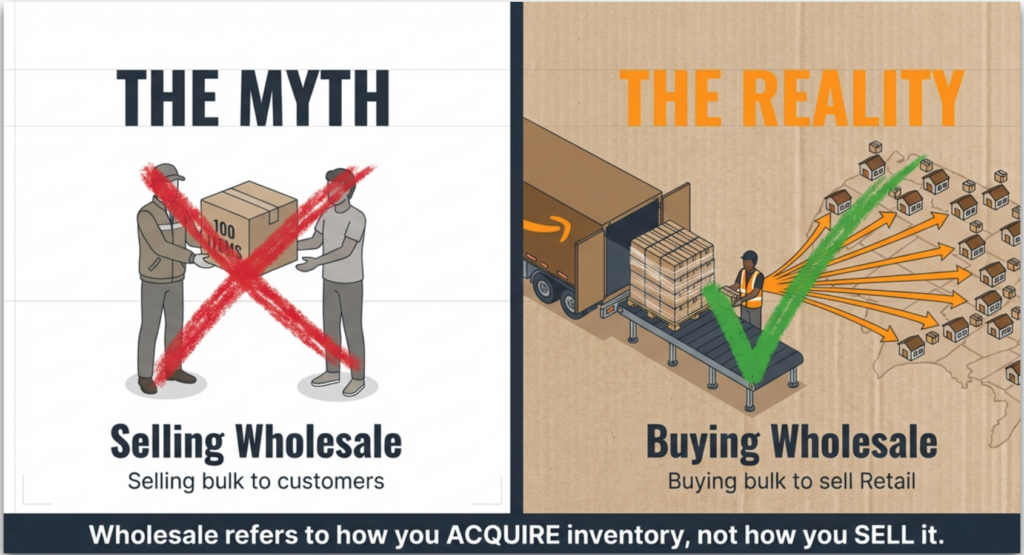
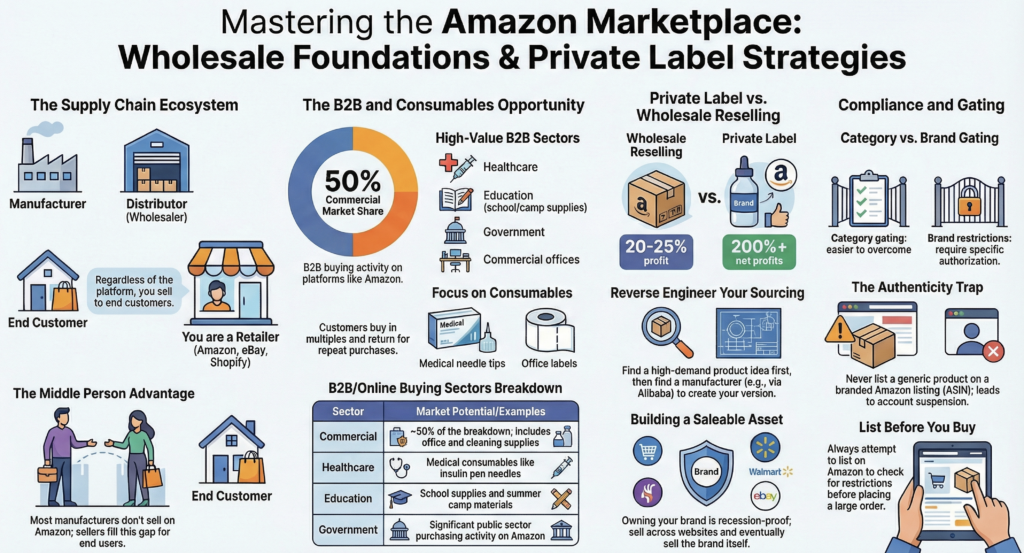
- Understanding Wholesale vs. Retail
- Wholesale involves buying in bulk from a distributor or manufacturer.
- Retail involves selling individual products to the end customer.
- Sellers on platforms like Amazon, eBay, Poshmark, Macari, Etsy, Walmart, Shopify, or WordPress are considered retailers.
- Supply Chain Model
- The end customer purchases from the retailer (seller).
- The retailer purchases inventory from a source, which can be a retailer, distributor, or manufacturer.
- Distributors are often referred to as wholesalers and act as intermediaries for manufacturers.
- Manufacturers and distributors can sometimes be the same entity.
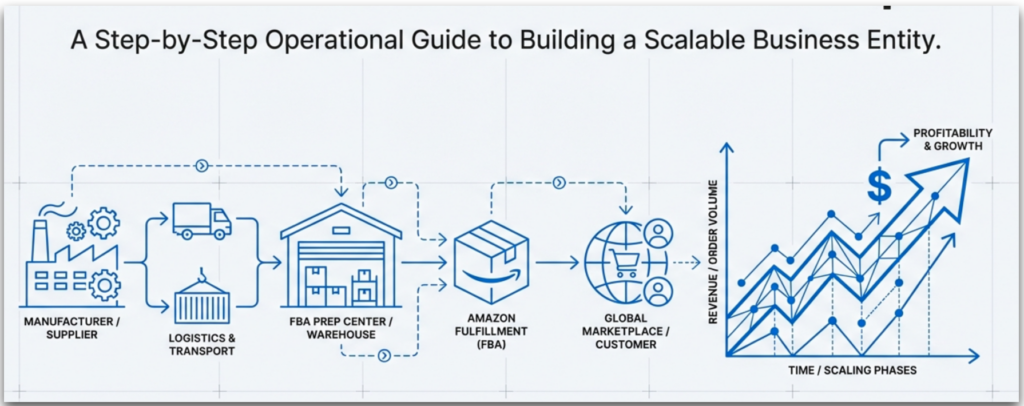
- Wholesale Process Overview
- Purchase from a distributor in large quantities.
- Receive inventory at home or a prep center.
- Label and prep products.
- Send products to Amazon for fulfillment.
- The goal is to buy in large quantities to achieve a low enough price for profitable resale to the end user.
B2B Opportunities and Consumable Products
- Business-to-Business (B2B) Sales on Amazon
- Significant B2B activity occurs on Amazon and other online platforms.
- Focus on products suitable for businesses, such as office supplies and cleaning supplies.
- B2B sales allow for selling in bulk and offering volume discounts.
- Target Sectors for B2B
- Healthcare
- Education (e.g., school supplies, summer camp materials)
- Government
- Commercial (approximately 50% of the breakdown)
- Consumable Product Strategy
- Identify products that are regularly consumed and require repeat purchases.
- Example: Insulin pen needles, which are consumable and purchased in bulk by health practices.
- Example: Urinal screen deodorizers, which are bought in multiples by businesses like bars, restaurants, and movie theaters.
Private Label and Own Brand Development
- Sourcing from Manufacturers (Alibaba)
- Alibaba is a platform for finding manufacturers, not a wholesaler.
- Allows for creating a private label product with custom branding and packaging.
- Offers potential for endless supply and better pricing compared to branded wholesale.
- Profitability Example (Insulin Pen Needles)
- Cost per piece from manufacturer: 2.2 cents.
- Cost per box of 100 pieces: $2.20.
- Selling price on Amazon: $12.97.
- Net profit per unit: $4.76, representing a 216% ROI (before shipping).
- Shipping costs for light items like needles are marginal.
- Benefits of Own Brand
- Higher profit margins.
- Reduced reliance on a single platform like Amazon; products can be sold on Walmart, eBay, and a dedicated website.
- Builds a saleable business that can be resold for a higher multiple of annual sales.
- Provides a recession-proof opportunity by diversifying sales channels.
- Product Idea Generation
- Focus on finding a product idea first, then reverse-engineer to find a supplier.
- Use existing product categories (e.g., diabetic supplies) to identify related items for a product line.
Amazon Listing and Authenticity
- Listing a New Private Label Product
- Required elements: product name, photo (can be temporary), UPC code, title, description.
- Crucial Step: List the item on Amazon before placing any orders to check for category or product restrictions.
- Category restrictions are generally easier to overcome or are auto-ungated (e.g., Health and Household is not gated).
- Brand restrictions apply when trying to sell an established brand’s product without proper authorization.
- Addressing No Sales Velocity for New Brands
- New brands will have no existing sales history or recognition.
- Strategies to build traction:
- Sponsored advertising on Amazon.
- Utilize the Vine program by giving away 25 units for free to generate reviews.
- Encourage friends and family to purchase to boost initial sales rank and reviews.
- Authenticity Claims and Alibaba Sourcing
- Problem: Buying unbranded products from Alibaba/China and attempting to sell them on an existing Amazon listing for a branded product.
- Reason for rejection: Even if the physical product is identical, it is considered inauthentic because it does not carry the brand and packaging expected by the buyer from the original listing.
- Solution: When sourcing from Alibaba or similar platforms, always create a new, unique listing for the private label product. Do not list it on another brand’s ASIN.
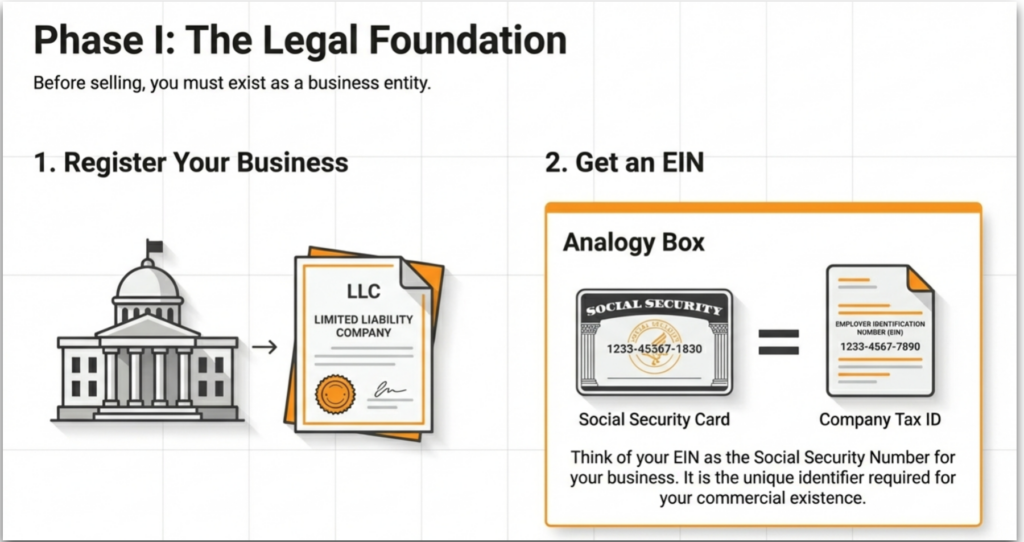
Business Registration Requirements
- For US Wholesalers:
- A registered business (e.g., LLC).
- An Employer Identification Number (EIN).
- A sales tax ID.
- Prime Corporate offers free business registration (state filing fees apply).
- For International Sourcing (e.g., China):
- These documents are not required when buying directly from manufacturers in China.
Next Steps
- Customer Support will:
- Post the Prime Corporate link in the group.
Business Entity Building and Exit Strategy
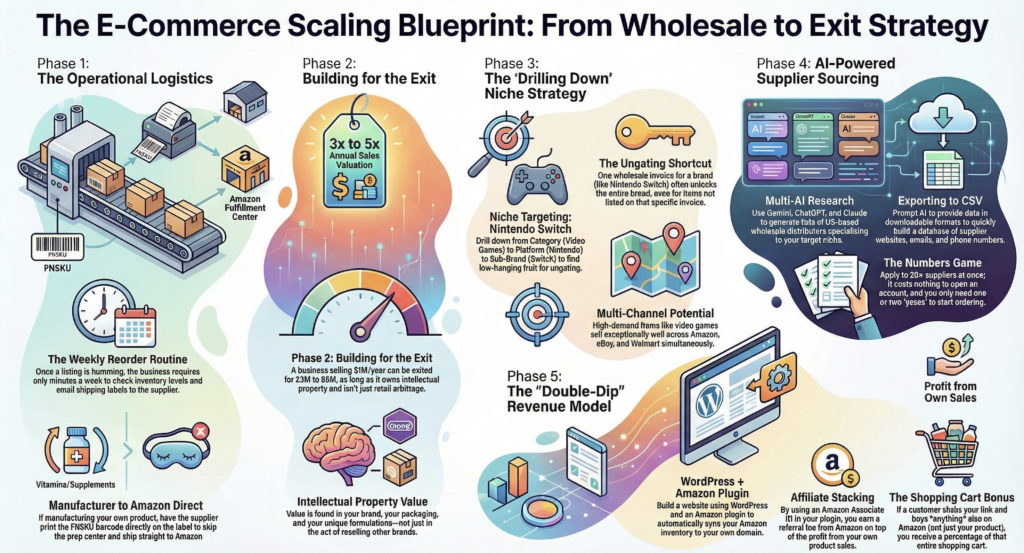
- Focus on building a business with a clear exit strategy.
- E-commerce businesses typically sell for 3 to 5 times annual sales.
- A consumable product is crucial for higher business valuation and easier scaling.
- Businesses with intellectual property are more attractive to buyers than retail arbitrage or wholesale models.
Operational Guide for E-commerce
- Product Sourcing:
- Manufacturer/Supplier: Identify wholesalers, distributors, or manufacturers.
- Logistics and Transport:
- Prep Center: Used for products not manufactured by the seller.
- Direct to Amazon: Possible if manufacturing own product and printing FNSKU barcode directly on packaging.
- Inventory Management (for own manufactured products):
- Weekly Inventory Check: Log into Amazon weekly to assess remaining inventory.
- Ordering: Order enough units to cover the next week’s sales, aiming for 45 days of inventory.
- Shipping Labels: Generate shipping labels using Prep From Home for better pricing (or Seller Central for higher cost).
- Supplier Communication: Email shipping labels to the manufacturer, who then ships directly to Amazon without additional prep.
- Long-Term Vision: The process aims for operational freedom, where weekly tasks are minimal once the business is established.
Wholesale Sourcing Strategy (US-based Distributors)
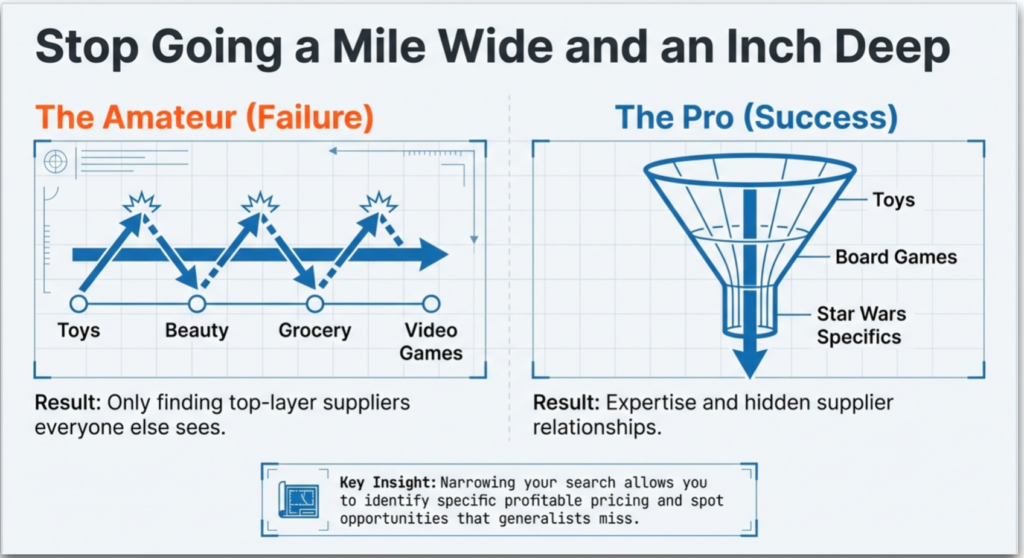
- Niche Down: Focus on specific categories, subcategories, and brands.
- Example: Video Games -> Nintendo -> Switch.
- Ungating Process:
- Brand-Specific Invoices: One invoice for a specific brand (e.g., Nintendo Switch) can ungate multiple products within that brand/platform, even if the specific product is not on the invoice.
- Check Restrictions: Not all products within a brand are restricted; some may be listed without prior approval.
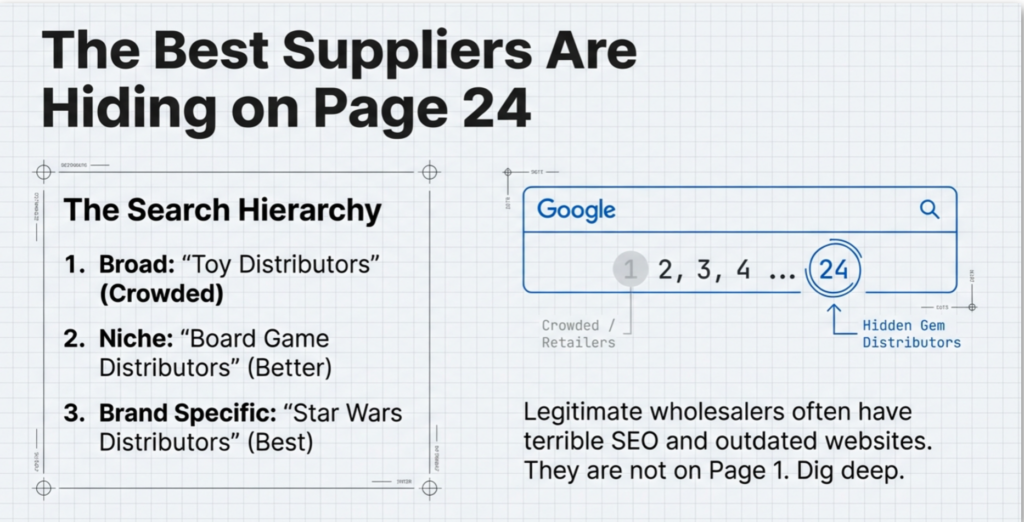
- Finding Wholesalers:
- Google Search: A primary method for finding suppliers.
- AI Tools: Utilize AI platforms like Gemini, ChatGPT, and Claude for supplier research.
- Gemini: Provided a list of 25 suppliers with contact info in a chart format, but struggled with direct CSV download.
- ChatGPT: Provided a list of 19 suppliers, some of which were not dedicated video game wholesalers, but offered a direct CSV download.
- Claude: Considered the most effective, providing a list and direct CSV download with comprehensive details.
- Consolidate Lists: Combine and deduplicate supplier lists from various AI sources into a single spreadsheet.
- Wholesaler Application:
- Apply Broadly: Apply to all potential suppliers (e.g., 20+ from the compiled list) as applications are typically free and do not require immediate orders.
- Initial Order Expectation: Be prepared for initial orders between $1,000 and $2,000 once approved.
- Video Games as a Starting Niche: Recommended due to being lightweight, easy to ship, high sales volume, profitability, popularity, and effective invoices for ungating.
Leveraging Amazon Affiliate Program with WordPress
- WordPress Website: Build a website using WordPress.
- Amazon Plugin: Install an Amazon plugin on the WordPress site.
- Automated Product Display: Input a seller ID into the plugin to automatically display all Amazon listings on the website.
- Amazon Associate ID: Sign up as an Amazon Associate (affiliate) and integrate the Associate ID into the plugin.
- Dual Income Stream:
- Earn from own product sales on Amazon.
- Earn affiliate commissions from Amazon for referring traffic from the website.
- Expanded Affiliate Earnings: Earn a percentage on all items purchased in a customer’s Amazon shopping cart, not just the specific product referred from the website.
- No Inventory Required: This model allows earning without holding any inventory.
- Curated Content: Feature own brand products alongside other top-selling products (found via tools like Spy Rivals) on the website to maximize affiliate potential.
Future Training and Events
- Upcoming Internet Mastery Accelerator #4: Scheduled for 5-6 weeks from now.
- Topics: Listing items (including bundles and own products), multi-channel fulfillment (eBay, Walmart, own website with Amazon’s multi-channel), and strategies for gated items.
- Cost: $200 during the event, increasing to $300 afterward. Includes replays and 200 prep credits.
- Dedicated Events:
- An all-day event on the proper way to list items not currently on Amazon.
- A full-day event on affiliate marketing.
- Event Schedule: The current 2.5-day event is the last of its kind in 2026. All future events from 2027 onwards will be held on the Internet Mastery at Sea Cruise Conference.
Action Items
- Customer Support will:
- Host an all-day event on the proper way to list items not on Amazon.
- Host Internet Mastery Accelerator #4 focusing on listing items, multi-channel fulfillment, and gated items.
- Host a full-day event on affiliate marketing.
Wholesaler Vetting and Application Process
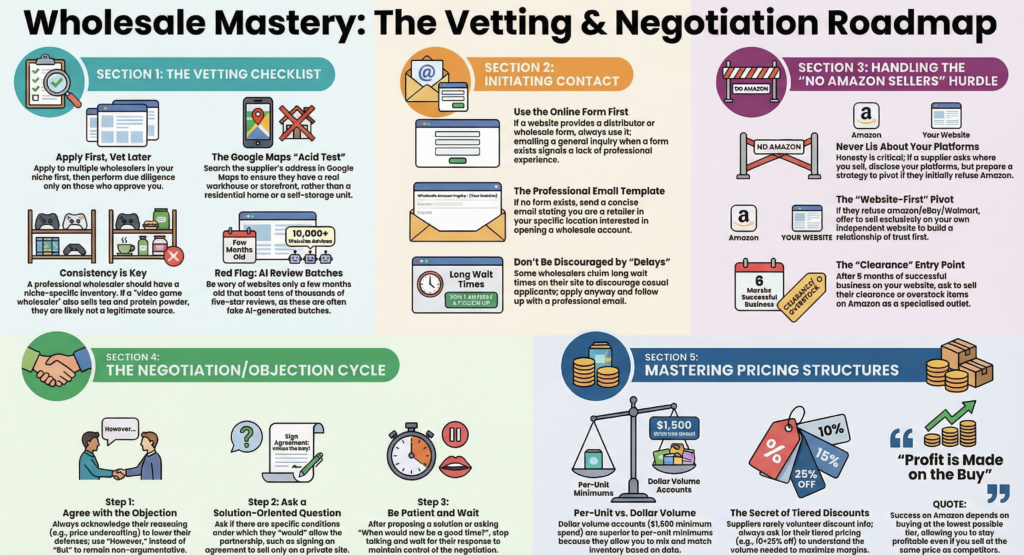
- Prioritize application over vetting:
- Apply to wholesalers first.
- Vet only those who approve the application.
- Vetting steps for approved wholesalers:
- Verify address via Google Maps:
- Input the wholesaler’s address into Google Maps.
- Confirm it is a legitimate business (storefront, warehouse), not a self-storage unit or residence.
- Assess website professionalism:
- Ensure the website appears professional.
- Check for product consistency (e.g., a video game wholesaler should not also sell protein powder and tea).
- Review customer feedback:
- Be cautious of websites with a high volume of five-star reviews in a short period (e.g., 20,000 reviews for a seven-month-old site).
- Conduct due diligence, as AI-recommended suppliers are not automatically five-star.
- Verify address via Google Maps:
- Contacting wholesalers:
- Online forms:
- The easiest, fastest, and best method if available on the website.
- Avoid emailing if a form exists, as it may suggest a lack of understanding.
- Email:
- Use for websites without an application form.
- Suggested script: “Hello, I am a retailer located in [location] and am interested in opening a wholesale account. Please let me know what you need from me. I look forward to hearing from you.”
- Phone calls:
- Acceptable if an application is not approved.
- In-person:
- Historically effective but less so in 2026 due to declining trade shows.
- Good for local businesses or referrals.
- Online forms:
Negotiation Strategies
- Handling “We don’t work with Amazon sellers” objection:
- Never lie about selling on Amazon.
- Ask “why”: Understand the wholesaler’s specific reasons (e.g., bad experiences, price undercutting, direct competition).
- Propose alternative selling channels:
- Offer to sell products exclusively on a personal website, not on third-party platforms like Amazon, eBay, or Walmart.
- Build a relationship by demonstrating sales volume and business capability through the personal website.
- Later, inquire about selling clearance or overstock items on Amazon.
- Leverage a personal website: A personal website becomes crucial for brands that do not want products sold on Amazon.
- The Objection Cycle:
- Ask: Request to buy from the supplier.
- Receive “No”: Do not stop at the first “no.”
- Agree and ask a question: Acknowledge their objection (e.g., “I understand you don’t sell to Amazon sellers, that makes sense to me. However, can I ask you a question?”). Use “however” instead of “but.”
- Offer a solution: Provide a solution to their objection (e.g., “Would I be able to sell your products if I didn’t sell them on Amazon, but only on my own website?”).
- Be patient: Wait for their response.
- Repeat: If the answer is still “no,” reiterate understanding, offer another solution, and ask another question.
- The cycle continues until a “yes” is received or the vendor stops providing reasons for their refusal.
- Confidence through information:
- Conduct thorough research to understand the market and other suppliers.
- Knowing that a supplier is one of only a few in the US, or that others are selling their products on Amazon, provides leverage.
- Strategic questioning:
- Employ questions like, “When would now be the best time for me to start selling your products on Amazon?” to subtly influence responses.
Pricing and Discounts
- Understanding wholesaler pricing models:
- Per-unit pricing: Requires buying a minimum number of units (e.g., 24, 48 units, or a case). This can be problematic if sales forecasts (e.g., from Spy Rivals data) indicate lower demand than the required purchase quantity.
- Dollar volume pricing: Requires spending a minimum dollar amount (e.g., $1,500) regardless of the specific product mix. This is preferred as it allows for more flexible purchasing of various items to meet the total volume.
- Tiered discounts:
- Most suppliers offer tiered discounts based on purchase volume, but they often do not volunteer this information.
- Always ask about tiered discounts after an account is opened.
- Discounts typically range from 10% to 25% off the already discounted wholesale price, based on units purchased or money spent.
- Understanding these tiers helps set long-term goals, even if the highest tier is not immediately achievable.
- Profit calculation:
- Profit is primarily determined by the buying price, not the selling price.
- Securing better buying prices through volume discounts significantly increases profitability.
Mark Leas’s Business Update
- Current revenue: Approximately $930,000, aiming for $1 million.
- Amazon account challenges:
- Currently experiencing “Amazon hell” with an upcoming interview on 2/24 to verify identity and invoices.
- Similar to a previous experience where Amazon requested a death certificate to verify a deceased account holder.
- Jerky product supply issue:
- Unable to obtain more jerky product due to a fire at the supplier’s plant.
- The supplier is attempting to use other locations for smoking and packaging but has not yet resumed supply.
- Mark and Susan have an agreement to sell the brand’s jerky, not a private label.
- Consideration for private labeling with other manufacturers faces high upfront capital requirements.
- Business split:
- Approximately 40% wholesale and 60% retail arbitrage.
- Wholesale volume increases in Q4.
- Retail arbitrage remains a significant part of the business, especially for consistent reorders.
- Retail arbitrage reorders:
- It is possible to find products from retailers like Target and Walmart that can be consistently reordered, contrary to the common belief that clearance items are one-time purchases.
- Success lies in identifying specific niche products.
New Initiatives
- Internet Mastery Podcast:
- A new program is being developed, similar to the “Team Up Tuesdays” interview format.
- The goal is to film 40 podcast episodes featuring interviews with Accelerator list members.
- The podcast will cover challenging topics and different perspectives.
Action Items
- Customer Support will:
- Send an invite to Mark Leas and Susan for the first Internet Mastery podcast episode within the next 10 days.
- Mark Leas will:
- Participate in the Internet Mastery podcast interview after 2/24.
Wholesale Analyzer Overview and Strategy
- Wholesale Analyzer pricing is now $3.99 and $5.79 for three months of NAD.
- The tool is in beta, and any bugs will be fixed.
- It is considered the single greatest tool for wholesale product sourcing, automating manual lookup processes.
- To use, upload a CSV file containing product data, with at least one UPC code column.
- A sample CSV file for download will be added to the platform.
- The analysis process takes approximately 7-8 minutes for 1895 items.
- Data displayed is similar to Spy Rivals or BOLO search, indicating selling status (green) and profitability (red).
- Key data points include net profit, ROI, buy box, ASIN, rank, category, subcategory, and number of sellers.
- The data shown in the demonstration was four months old, so it is not 100% accurate for current market conditions.
- Filtering Strategy:
- Set a minimum ROI of 30% for wholesale products.
- Filter by rank, initially less than 100,000, then refined to less than 75,000.
- Prioritize sorting by rank (best-selling) over profit, as all items meet the minimum 30% ROI.
- Inventory Strategy: Go wide rather than deep; split purchases across five to eight products instead of buying many units of a single product, even if it sells quickly.
- Wholesale Analyzer significantly reduces time spent on manual product research, eliminating the need for extensive copy-pasting and checking for profitability or Amazon presence.
- The search function for specific brands (e.g., Nintendo) needs to be fixed.
- Product Examples:
- Adam’s Venture: Potential deal with a buy price of $14, selling for $30, and 20 units/month. Negotiating the buy price to $11 could yield a 32% profit.
- Flipper the Pets Friendly Edition: Profitable with a 45% profit ($9 profit per unit) and 8 units/month sales.
- The refresh function re-analyzes the uploaded catalog with real-time data, saving the hassle of re-uploading the same file.
- It eliminates products not found on Amazon from search results.
- Recommendation is to upload new catalogs weekly (e.g., Mondays) to ensure updated data.
Wholesale Process and Ungating
- Wholesale Sourcing Steps:
- Get application approved.
- Vet the wholesaler.
- Obtain product catalogs.
- Determine volume discounts, preferring dollar volume over units.
- Upload catalogs into Wholesale Analyzer.
- Utilize the generated Spy Rivals data for analysis.
- Professionalism for Applications:
- Using a professional email address that matches the website domain name increases the chances of wholesale application approval.
- Ungating Process:
- Only the wholesaler’s invoice is required for ungating products.
- Do not provide additional information like box labels or shipping addresses if they differ from the invoice, as this can lead to rejection.
- When submitting an invoice, ensure the “bill to” address matches the Amazon account’s address on file, and the “ship to” address can be the prep center’s address.
- To prove invoice authenticity, provide a paper trail including screenshots of the initial email, attachment, and the invoice itself (both screenshot and PDF).
- Wholesaler Competition:
- Avoid buying from or competing with distributors/wholesalers who also sell on Amazon, as they can always undercut prices.
- Spy Rivals Data Interpretation:
- Monthly sales figures from Spy Rivals indicate how many units you will sell, not the total market sales.
Internet Mastery Events
- IM Accelerator 5.0:
- The price will increase from $199 to $299.
- Current attendees receive the early bird price.
- Internet Mastery Live Event:
- Scheduled to take place in Boca in two weeks.
- Attendees are asked to confirm their attendance (in-person or virtual).
Action Items
- Customer Support will:
- Fix the search function within Wholesale Analyzer.
- Add a sample CSV file template for download within Wholesale Analyzer.
- Add a suggested template for download inside Wholesale Analyzer.
- Bob and Tammy Lewullis will:
- Get tickets for Accelerator 4.
