LevelUp Event Details – Full Replays & More
Level Up, held live from Boca Raton, FL was an incredible event! Thank you to everyone who joined us both live and virtually. It’s now time for you to take the information provided and implement it – taking this opportunity to LEVEL UP your business.
And, special congratulations to all of our new ICON MEMBERS – the journey to your first million (and beyond) with your own products has just begun!
Action Items
Customer Support
☐ Present AI session tomorrow during event
Unassigned
☐ Send PayPal case to a case manager for review
☐ Give evening talk about funding and business credit
☐ Open doors and provide breakfast and coffee tomorrow
☐ Be on camera for interview tomorrow
☐ Write down specific ‘level up’ business goals now
☐ Join breakout groups by focus: wholesale, private label, retail
IM Level Up 2026 Event Overview
- The event focuses on helping attendees advance their e-commerce businesses.
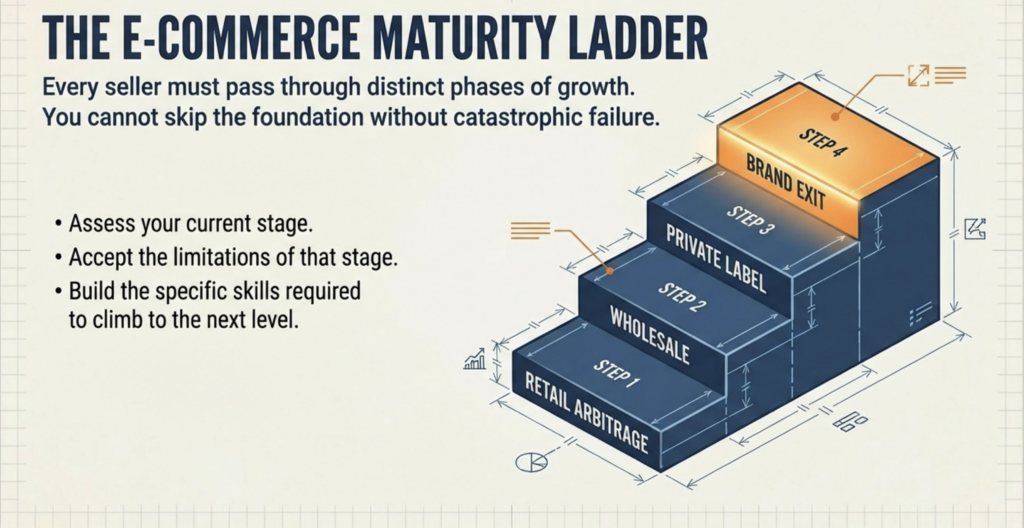
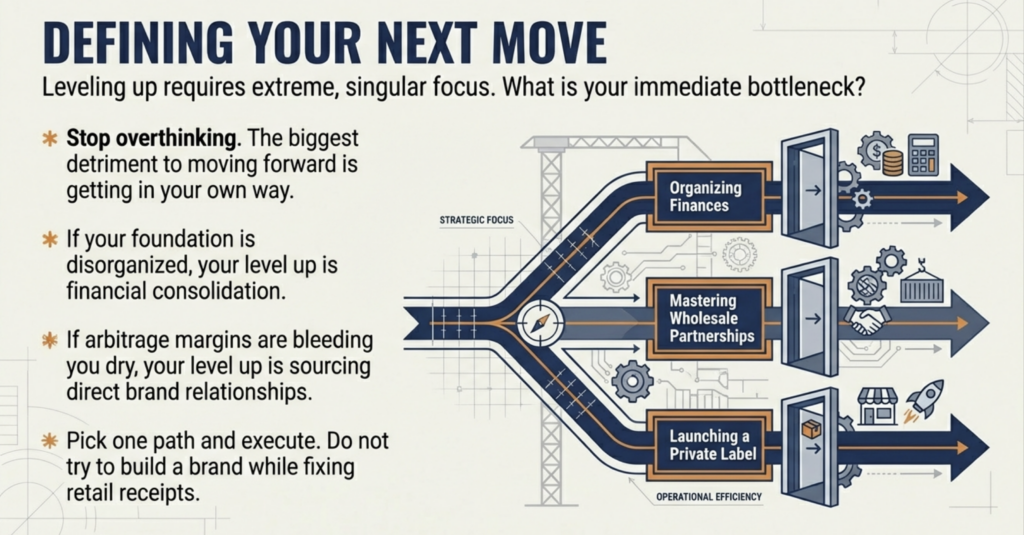
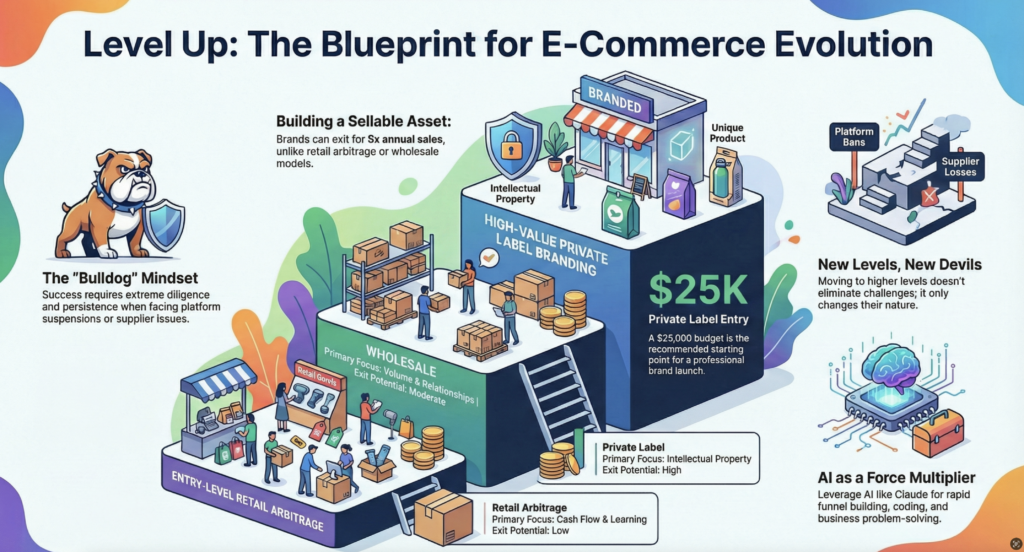
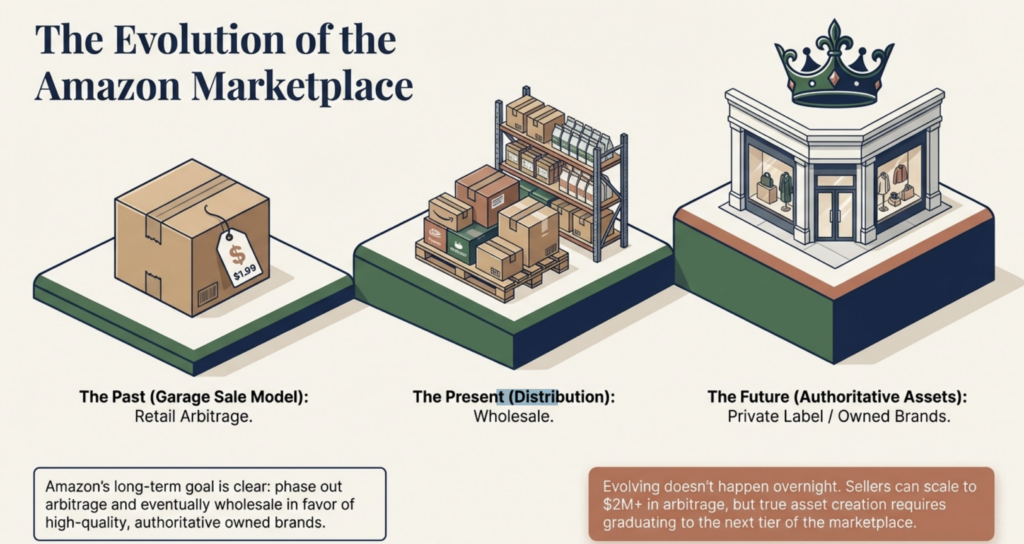
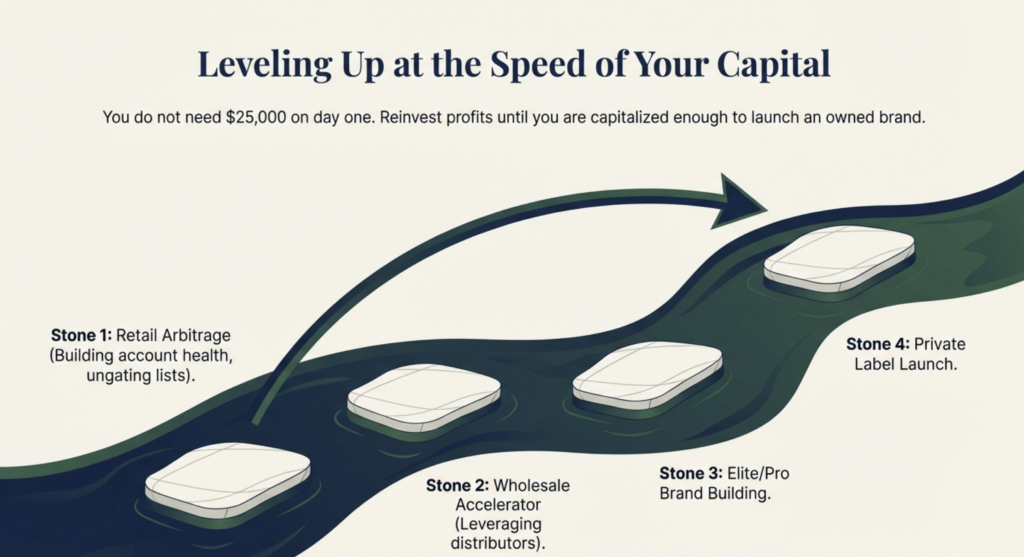
- The theme is “Level Up,” aiming to take businesses from their current stage to the next, such as from retail arbitrage to wholesale, private label, or branding.
- This is the last in-person event of this type, with future annual events planned on a cruise ship starting at the end of February 2027.
- The event emphasizes hands-on exercises and collaborative work.
Business Growth and Opportunities
- Long-term Vision:
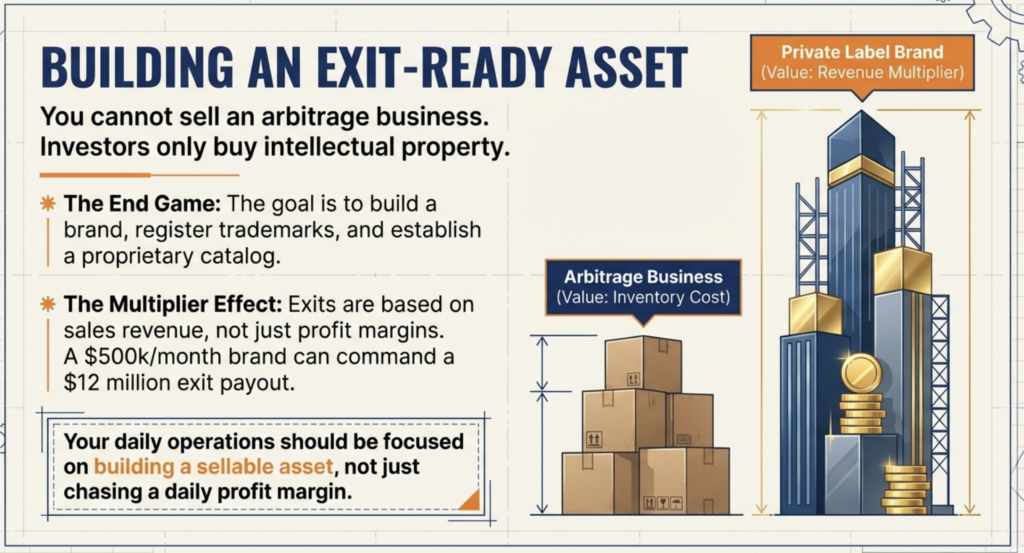
- The goal is to build own products and brands that can be exited, citing an example of a business selling for $12 million after reaching $6 million in annual sales.
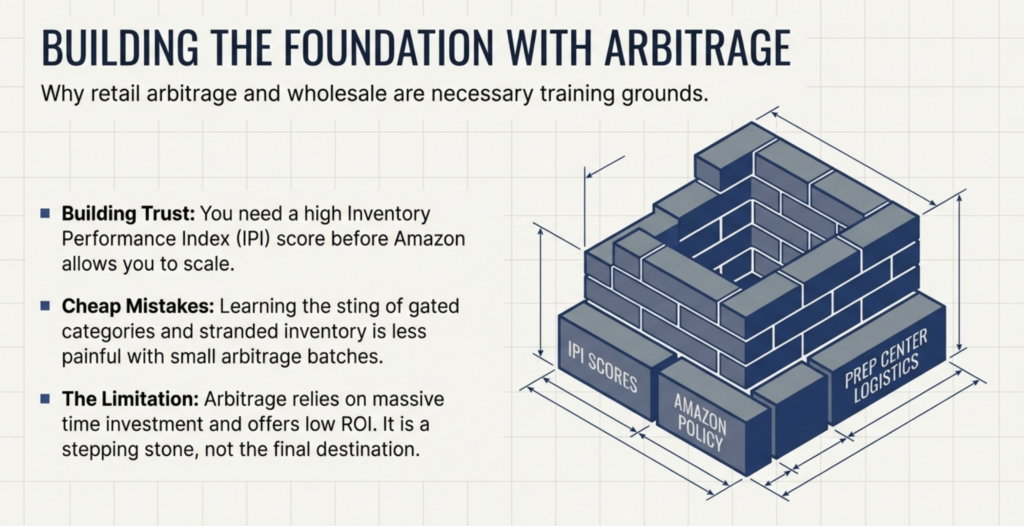
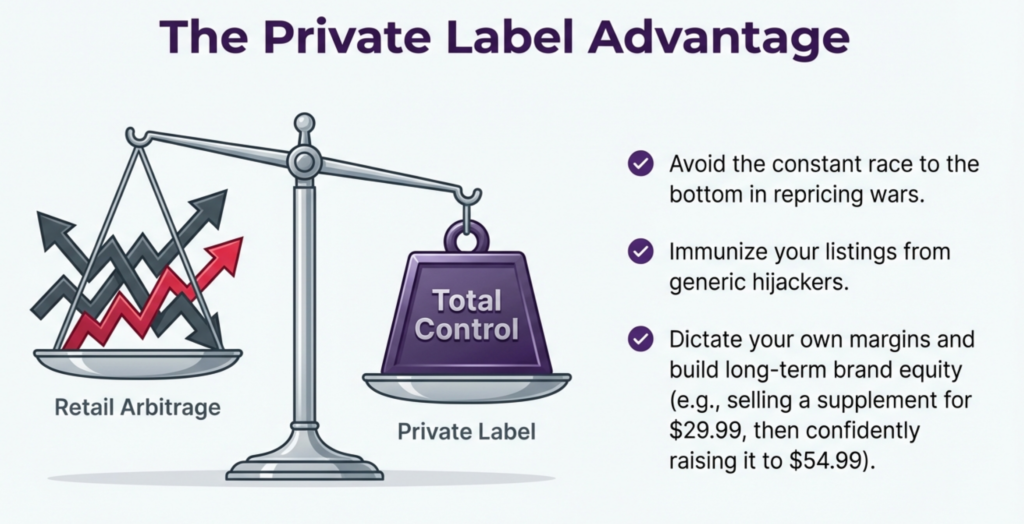
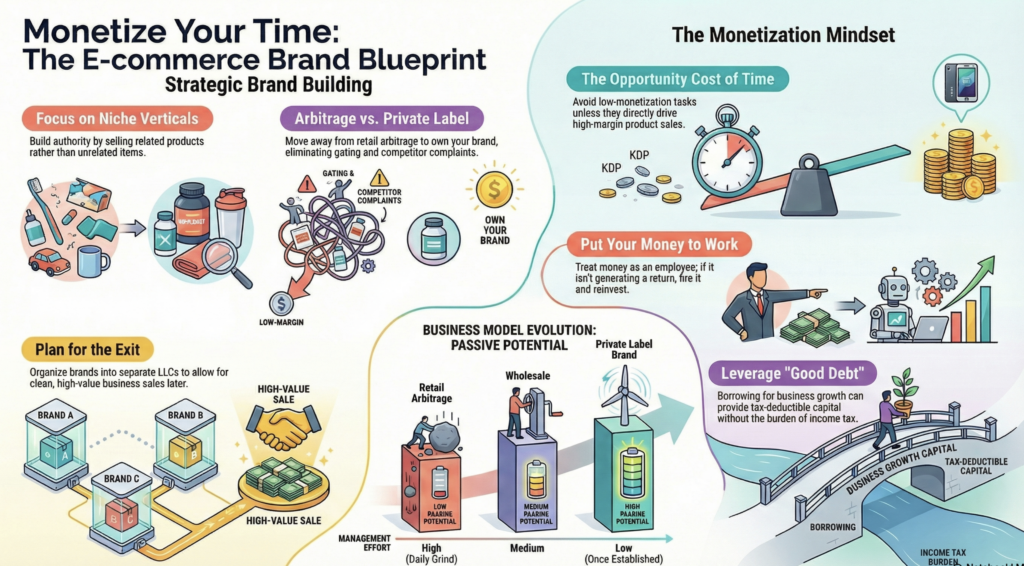
- Retail arbitrage and wholesale are generally not suitable for building an exit-able asset due to lack of intellectual property.
- Attendee Level-Up Goals:
- Tammy: Seeks definable business goals.
- Bob & Tammy: Plan to add more wholesale and start private label.
- Caitlin: Aims to branch out into other marketplaces like eBay and Shopify, with an eventual goal of creating an own brand.
- Eric: Focuses on building an e-commerce website to sell retail arbitrage products, then moving into wholesale.
- Linda: Needs to allocate more time for retail arbitrage and sourcing wholesalers, also interested in developing own products and exploring other marketplaces.
- Joe: Desires to create an own brand, specifically focusing on downloadable products to avoid inventory.
- Wayne: Plans to develop a website for World War II printed items, potentially using print-on-demand, and assist a friend in branding hair products.
- Paul: Seeks a fluid and profitable business, moving towards branded or private label products, and utilizing AI, particularly for KDP.
- KDP is noted as not a significant revenue stream unless driven by passion for writing, rather than income.
- Joe: Aims to streamline business finances and treat the operation more like an investment, continuing with retail arbitrage.
- Eric: Intends to import products from another country to sell wholesale, requiring clarification on the distinction between wholesaler and retailer roles on Amazon.
- Robin: After a first year with $50,000 in sales but 99% at a loss, plans to find profitable goodwill sellers and initiate private label by June or July, having already started brand registry.
- Lisa: Needs to establish a solid base in wholesale or retail before learning and pursuing private label.
- Janet: Seeks to minimize admin and prep center fees, address challenges of working alone, and improve financial management.
- Tina: Started two months ago, aiming for a well-rounded e-commerce presence with own products and brand, exploring platforms like TikTok Shop.
- Carleen: Successfully tested winter socks on Amazon, generating $2,000 in sales, and made two sales on TikTok Shop.
- Vondras: After nearly two years and financial losses, the goal is to break even by meticulously scrutinizing product purchases and profit margins.
- John: Seeks a better understanding of existing tools, specifically Spy Rivals, to enhance current retail arbitrage operations and ensure profitability.
- Carol: Aims to delegate daily business responsibilities, including product sourcing and administrative tasks, to overcome overthinking and find focus.
- Shirley: Focuses on building a stronger wholesale foundation by developing direct partnerships with smaller to medium-sized brands.
- Bobby: Plans to identify replenishable everyday products, secure reliable suppliers, build a catalog of own-brand products, and ensure profitability before expanding to other Amazon ventures.
- Marketplace Diversification:
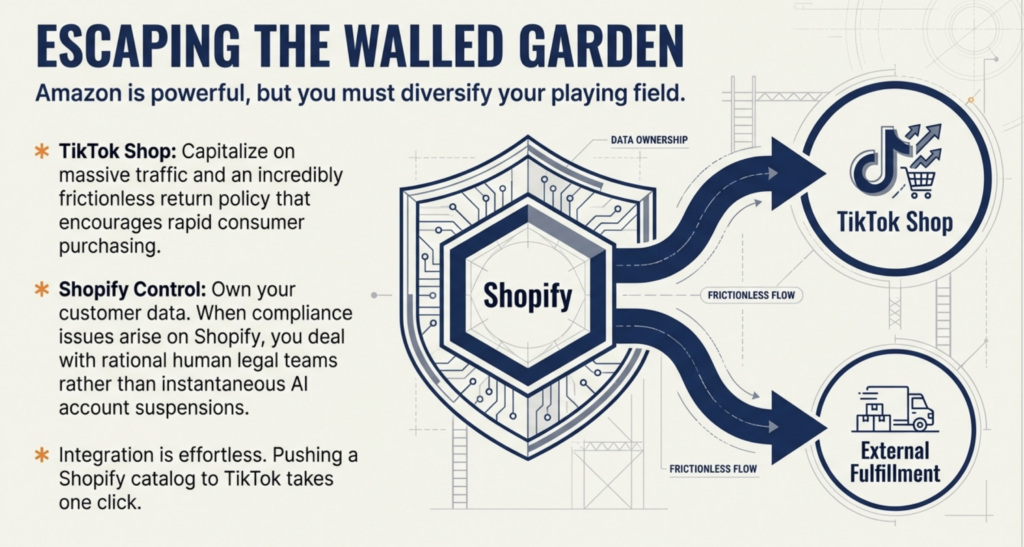
- Exploring platforms beyond Amazon, such as Shopify and TikTok Shop, is encouraged.
- TikTok Shop offers an easy integration with Shopify and a simple return policy, contributing to high sales volume.
Challenges and Diligence
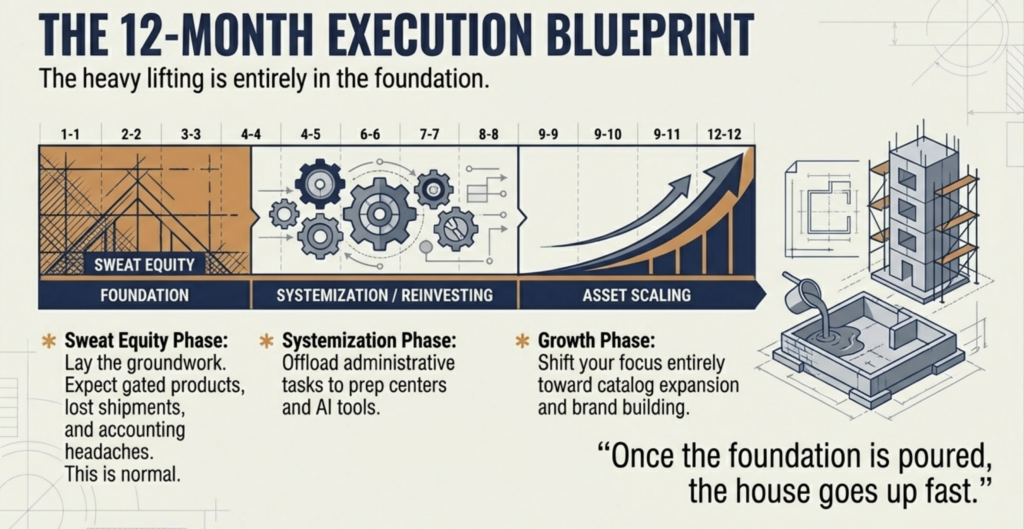
- Universal Business Hurdles: Challenges are inherent at every level of business, from retail arbitrage to private label and branding.
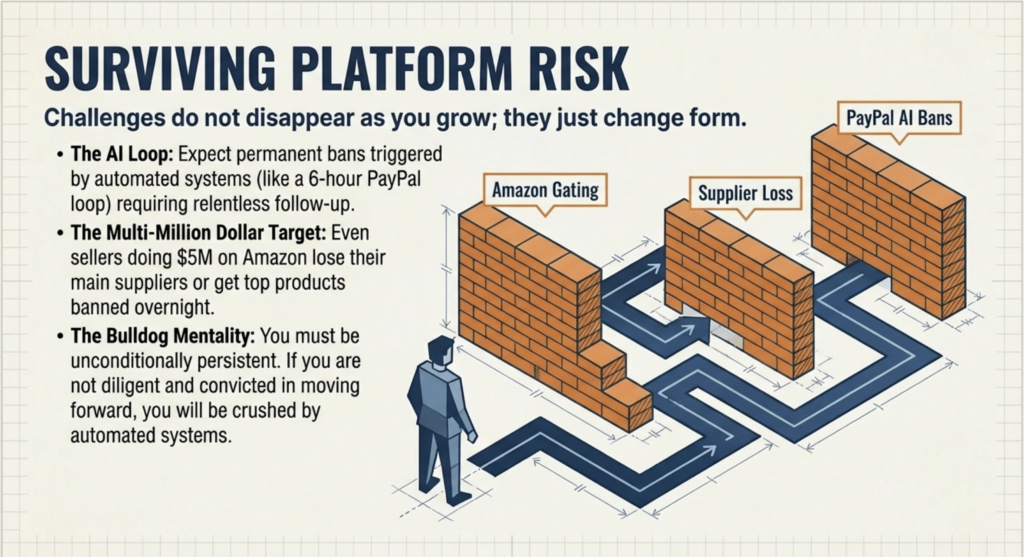
- Examples include Amazon product bans, supplier issues, and payment processor problems (e.g., PayPal account suspension).
- Importance of Diligence: Overcoming challenges requires persistence and a “bulldog” mentality, as demonstrated by the host’s experience with PayPal.
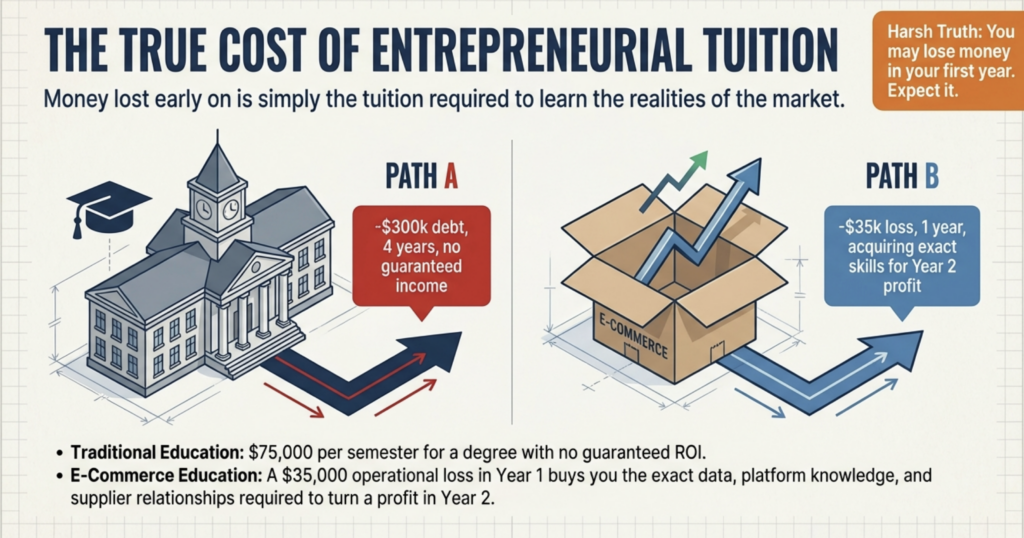
- Learning from Mistakes: Initial losses in business are viewed as an investment in education, providing valuable experience on what not to do and how to adapt.
- Amazon Scrutiny: As businesses grow, they face increased scrutiny from Amazon, necessitating a deep understanding of policies and effective communication.
- An example includes an account suspension due to an associated credit card used by another restricted account.
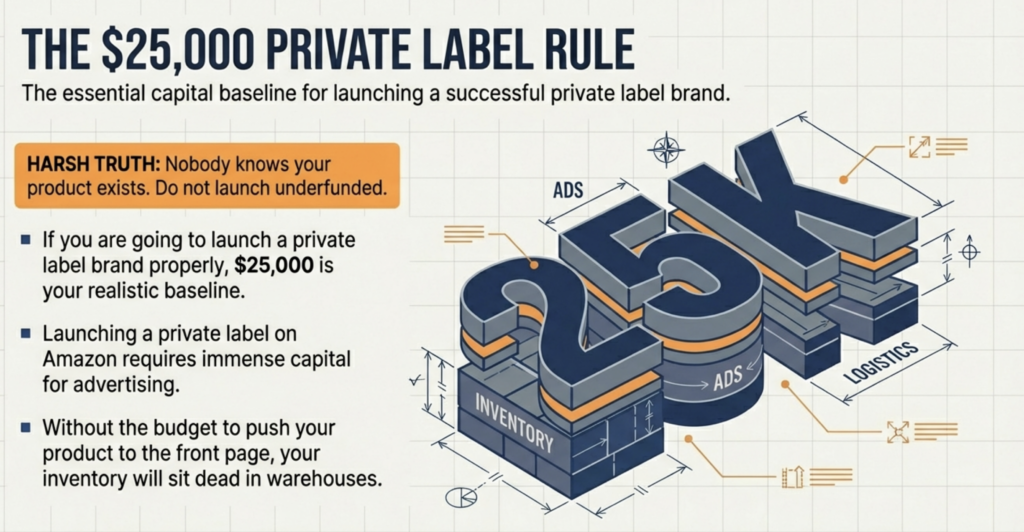
- Private Label Risks: Private label ventures require a significant initial investment, estimated at $25K to start correctly.
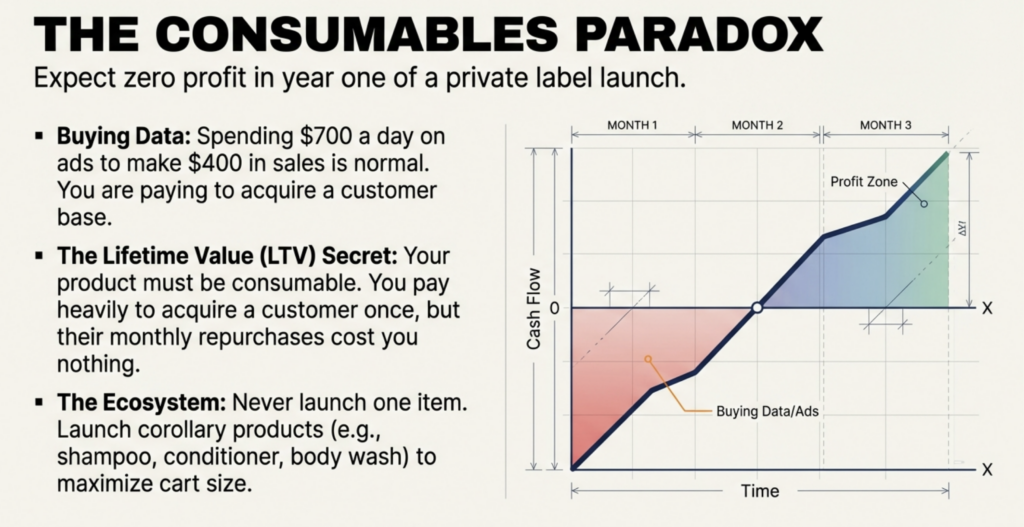
- It is important to anticipate minimal to no sales in the first year and to have sufficient cash flow to cover advertising and operational costs until profitability is achieved (e.g., breaking even in month two, profitable in month three for consumable products).
- Launching with multiple, complementary products is recommended to mitigate risk and increase customer lifetime value.
Financial Considerations
- Investment vs. Cost: Business expenses should be viewed as investments for growth rather than mere costs.
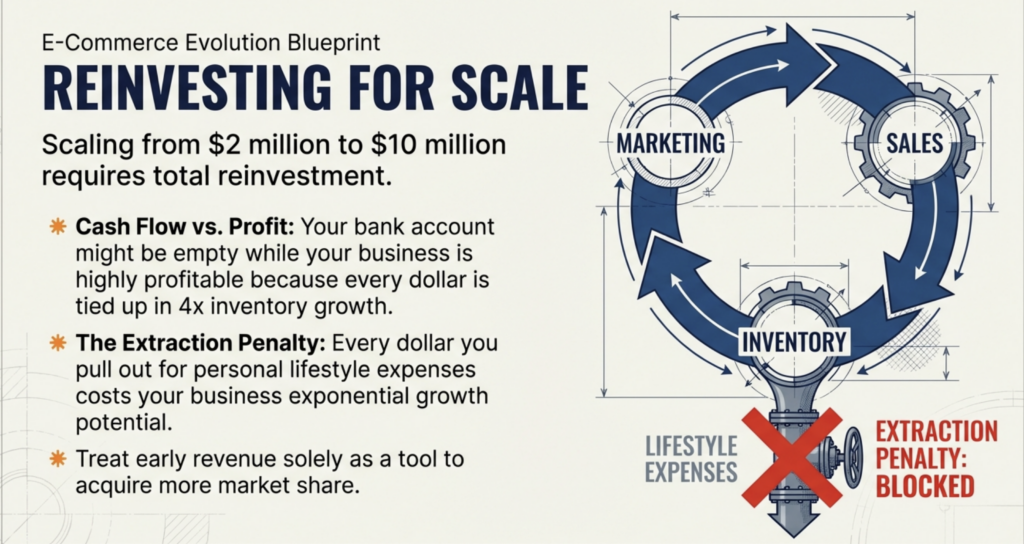
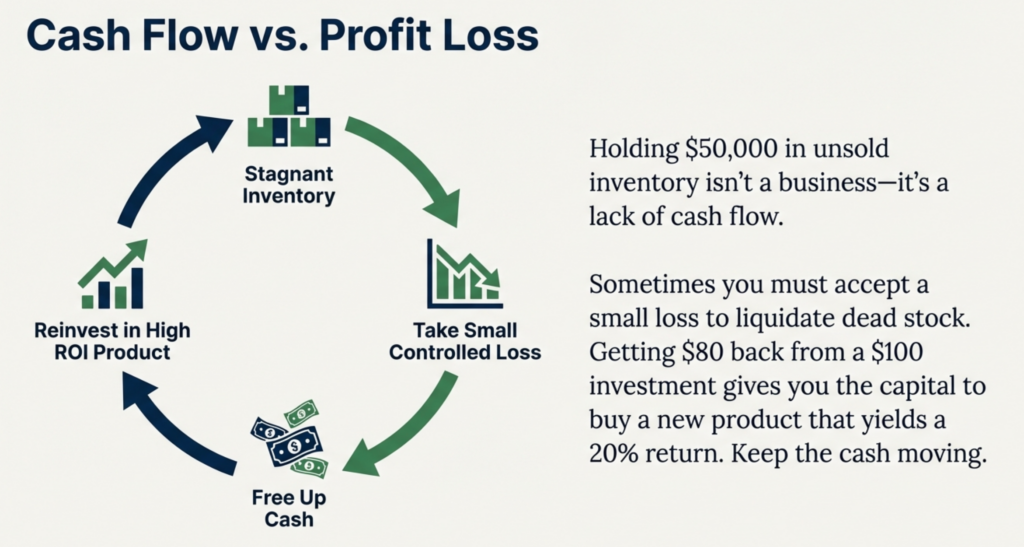
- Cash Flow vs. Profit:
- Cash flow involves money continuously entering and leaving the business for reinvestment.
- Profit is reflected in the growth of inventory and overall business value, even if the bank account balance remains low due to reinvestment.
- Reinvestment for Scale: Continuous reinvestment of profits is crucial for scaling a business from, for example, $2 million to $10 million in recurring revenue.
- Funding: Ty, a funding company owner, will discuss opportunities for business credit to support scaling and growth.
Role of AI in Business
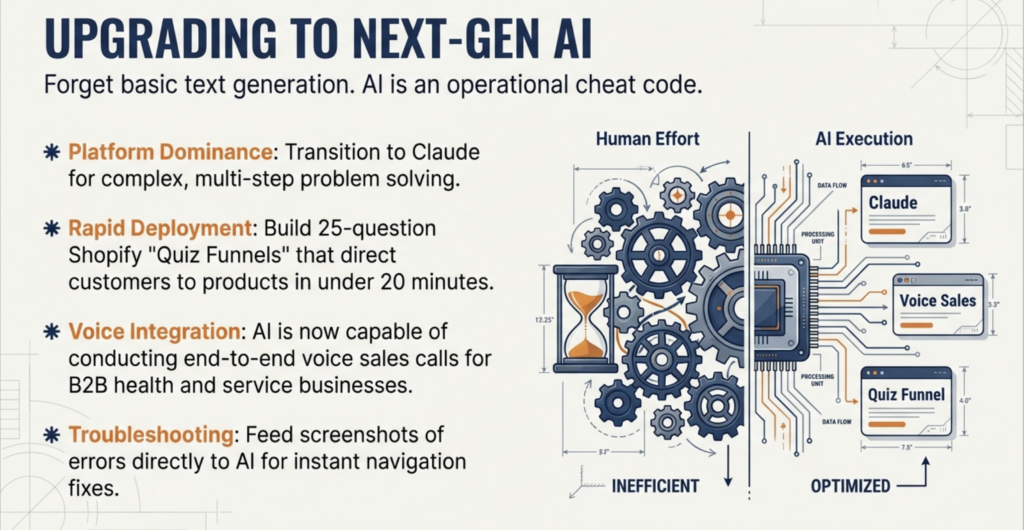
- AI Tools: ChatGPT, Gemini, and Claude (currently preferred by the host) are powerful AI tools.
- Applications: AI can be used for various tasks, including building quiz funnels, generating creative content, and even conducting sales calls.
- Interaction Style: AI responds better to direct, assertive communication rather than overly polite language.
- Limitations: AI is not perfect and requires human oversight and correction.
- Future Impact: AI is rapidly changing the business landscape, potentially leading to new opportunities in “human interaction” as technology automates more roles.
Action Items
Customer Support
☐ Complete and submit funding applications tomorrow
Ty Talbot – Biz Funding
☐ Post the Seven Figures App / Internet Mastery application link in the chat
☐ Notify Customer Support which applicants are approved tonight
☐ Finalize affiliate/referral payment arrangement with Customer Support
☐ Record note about different credit scoring models (FICO vs. Credit Karma) for future messaging
Debt and Money Mindset
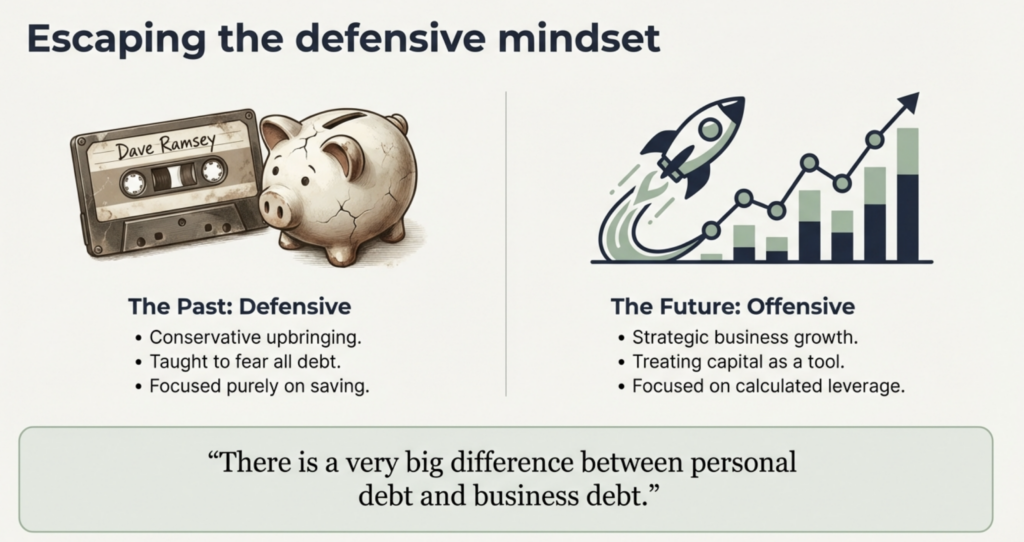
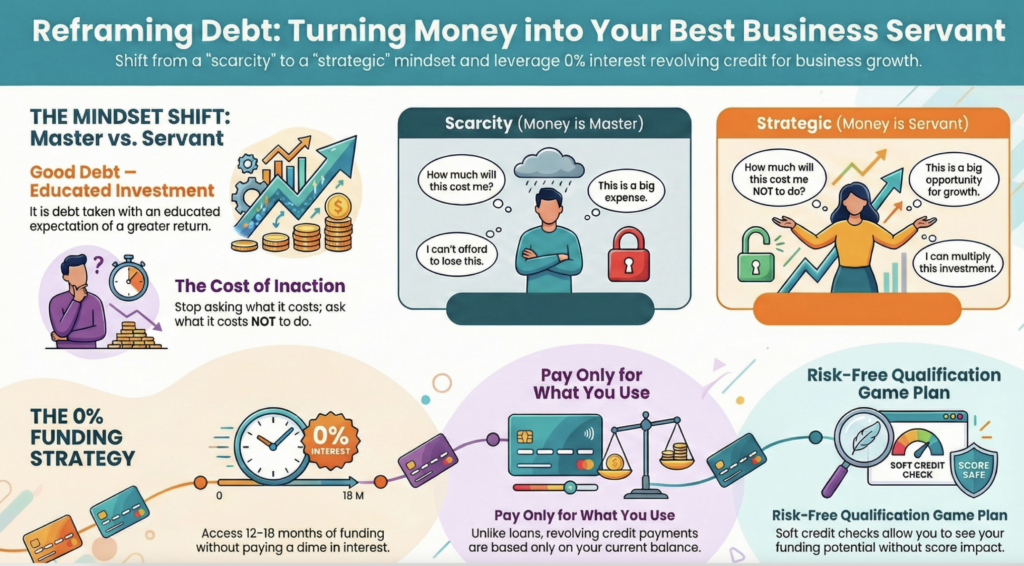
- Distinction between personal and business debt:
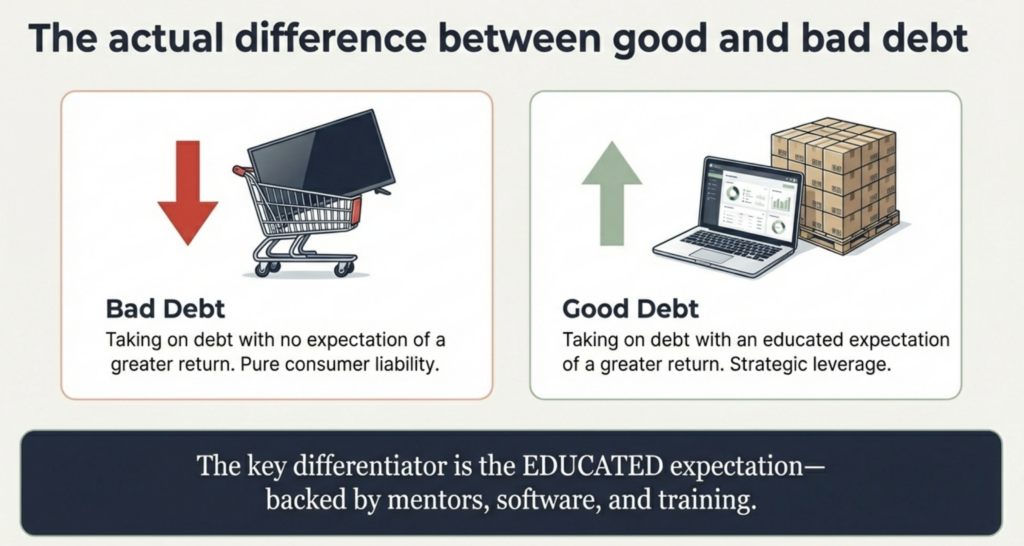
- Bad debt is taken without expectation of greater return.
- Good debt involves an educated expectation of a greater return, supported by mentors, software, or training.
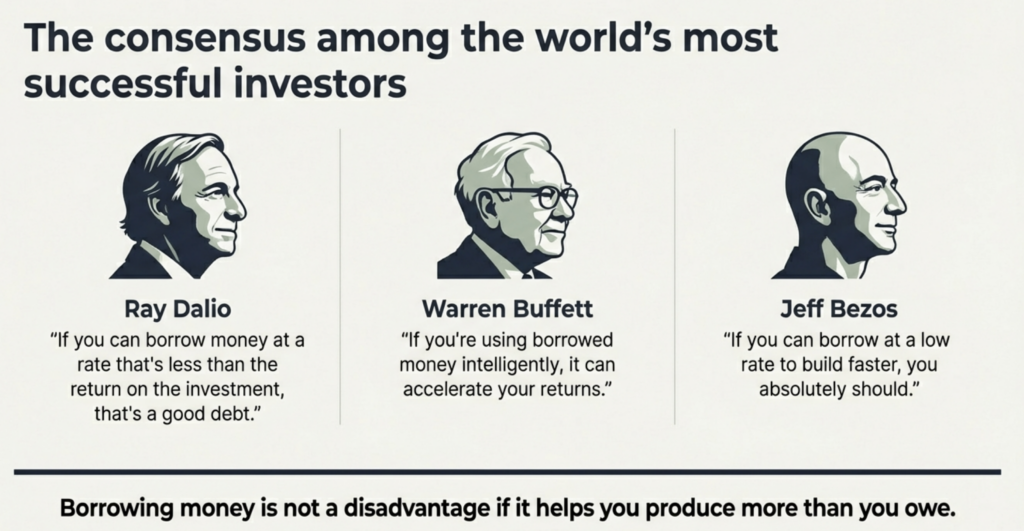
- Ray Dalio, Warren Buffett, and Jeff Bezos support intelligent borrowing for accelerated returns and faster growth.
- Reframing money as a tool:
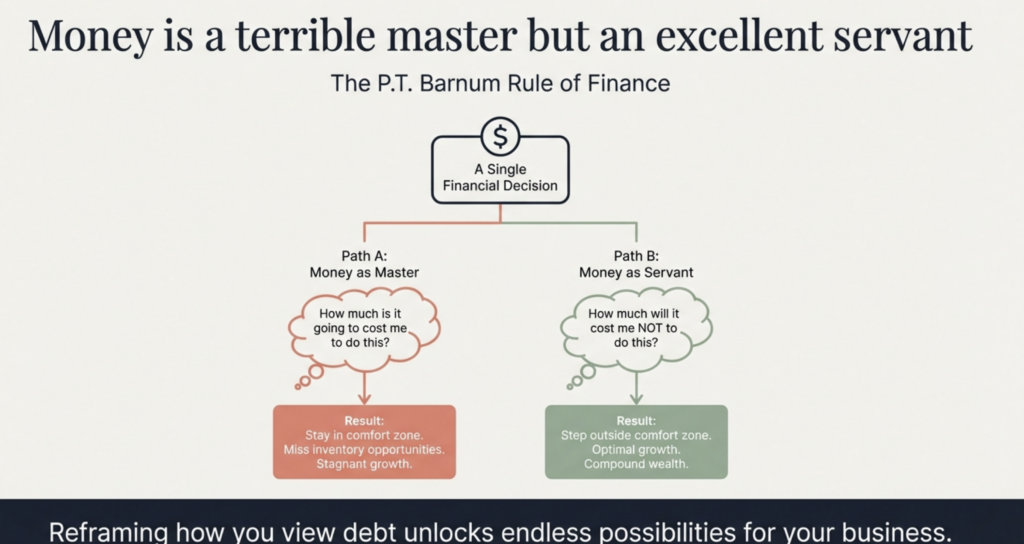
- Money should be an excellent servant, not a terrible master.
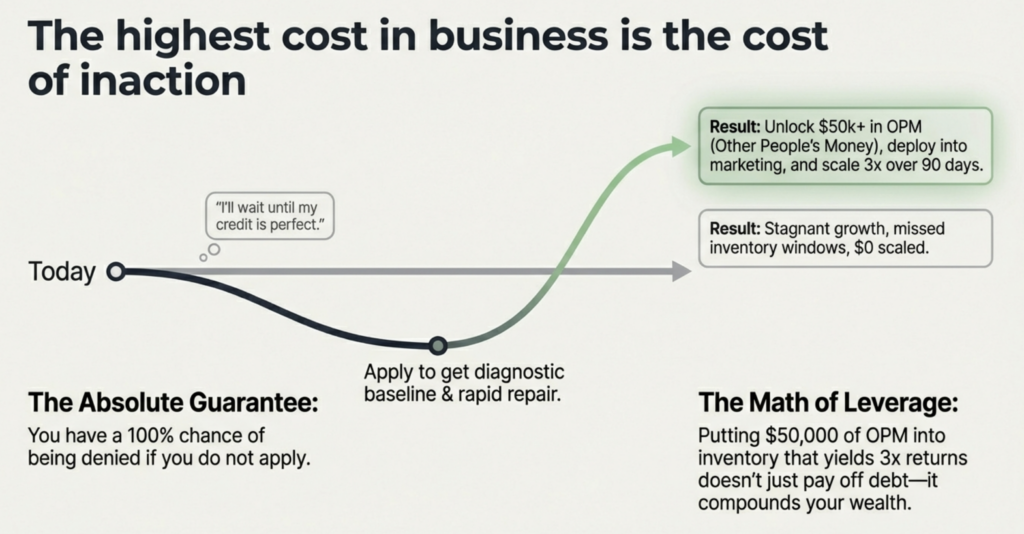
- Shifting perspective from “how much will this cost me?” to “how much will this cost me not to do this?”
- Viewing expenses as opportunities and losses as potential for multiplication.
- Optimal growth occurs outside one’s comfort zone.
Revolving Credit for Business Funding
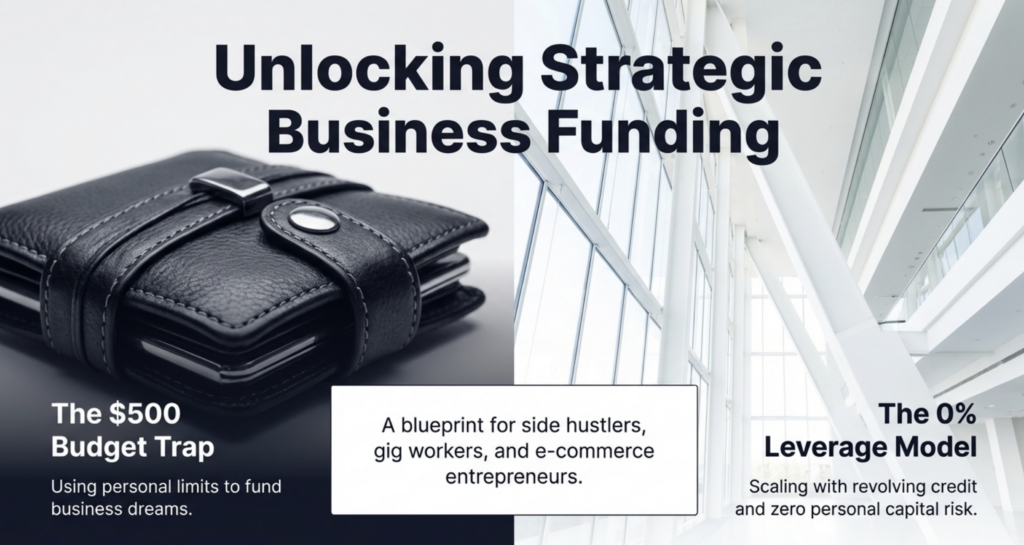
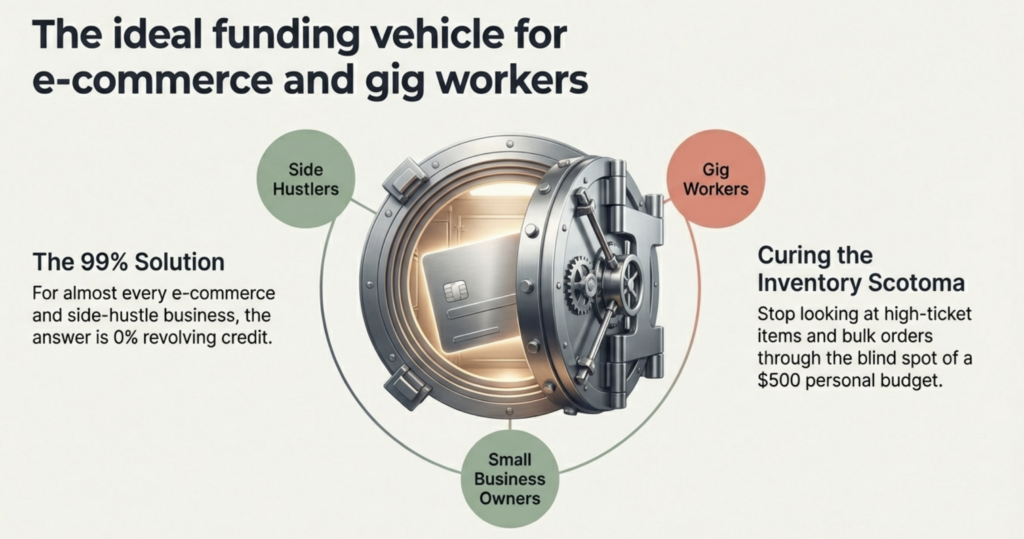
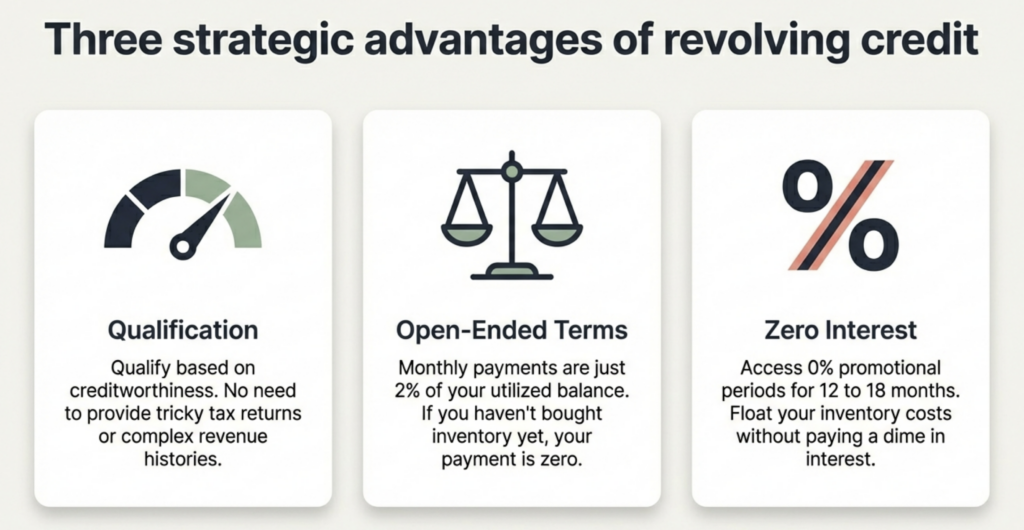
- Recommended funding type: Revolving credit, such as 0% interest personal or business credit cards.
- Key advantages:
- Qualification based on creditworthiness: Beneficial for business owners who strategically manage income for tax purposes.
- Monthly payments based on balance: Crucial for inventory-driven businesses, with payments at 2% of the balance (0% if no money is spent).
- 0% interest promotions: Available for 12 to 18 months.
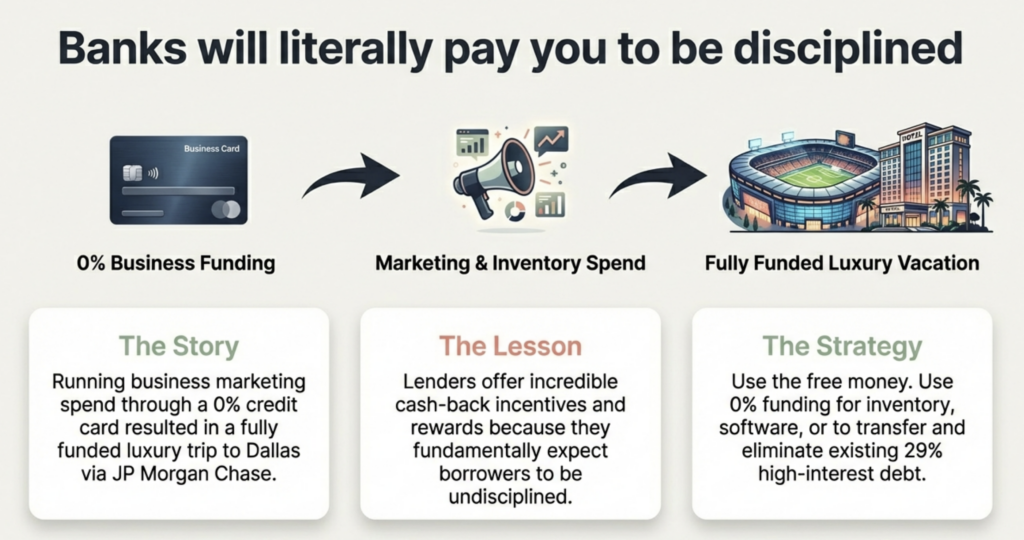
- Cash back and incentives: Financial institutions pay users to use their money.
- Use cases for 0% interest funding:
- Purchasing inventory.
- Paying for marketing, software, and education.
- Consolidating and moving high-interest debt to 0% interest.
Seven Figures App and Credit Management
- Application process:
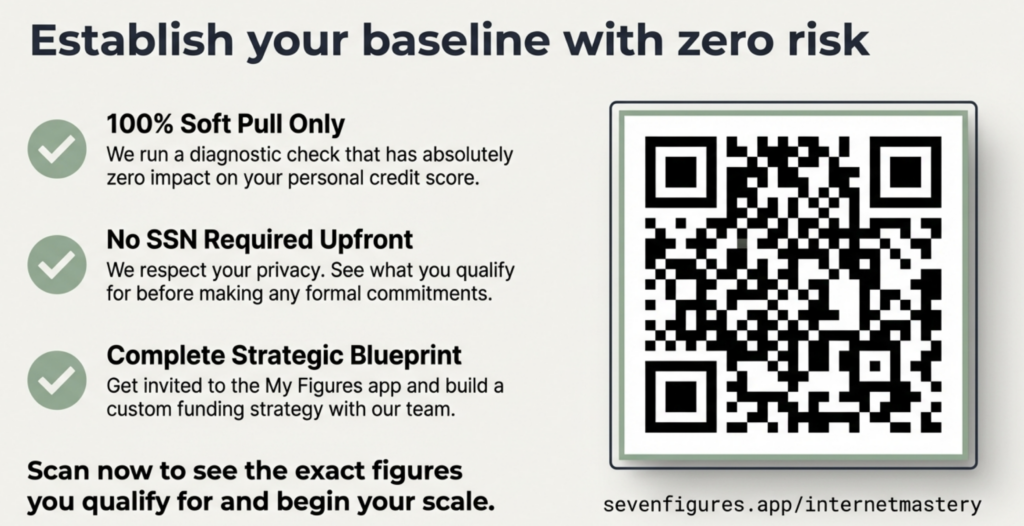
- Accessed via sevenfigures.app/InternetMastery or QR code.
- Involves a soft credit check with no impact on credit score.
- Provides a game plan and understanding of credit factors, regardless of qualification.
- Platform features:
- Users create an account to view funding results, including 0% credit cards and unsecured term loans.
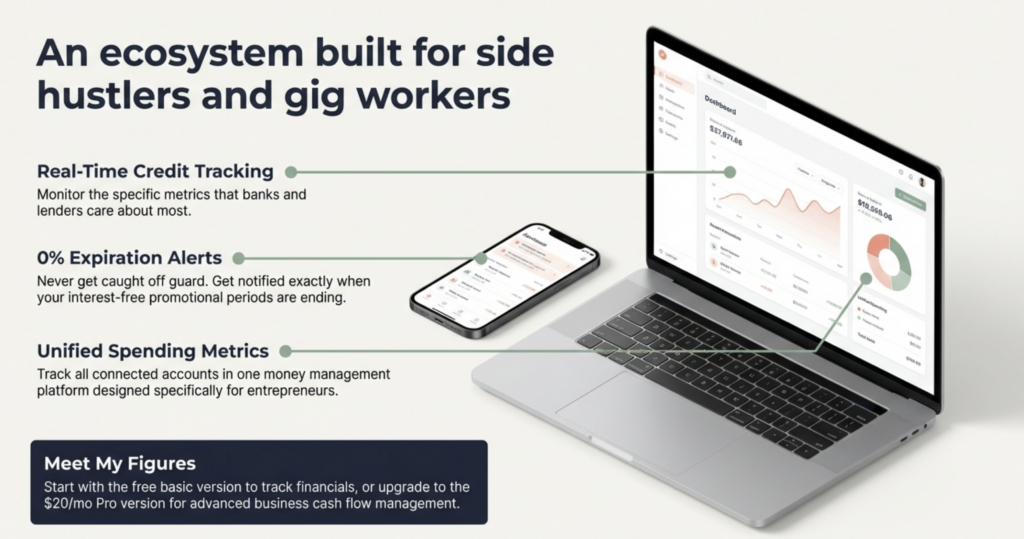
- Helps connect new accounts to track spending, debt, and 0% interest expiration dates.
- Offers a free version for basic financial overview.
- A “good version” is available for $20 a month for enhanced features and guidance.
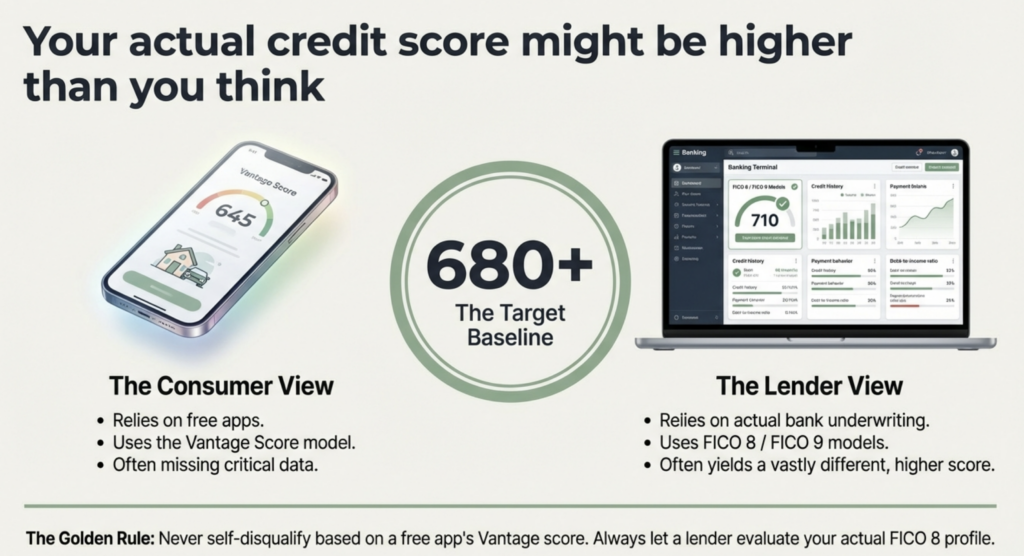
- Credit score requirements:
- Current minimum credit score for lenders is 680.
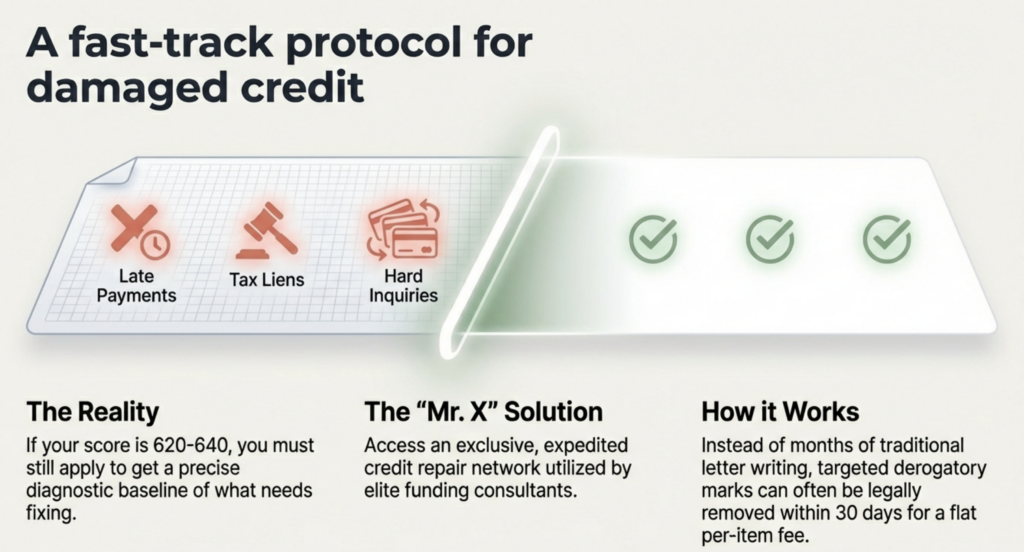
- Applying is still recommended for those with lower scores (e.g., 620-640) to identify issues and develop a repair strategy.
- Credit Karma’s Vantage Score may differ significantly from FICO 8/9 scores used by actual lenders.
- Credit repair services:
- A specialist can remove negative items from credit reports for a fee ($600-$1,000 per removal).
- This includes late mortgage payments, credit inquiries, tax liens, and delinquent derogatory student loan remarks.
- The process is expedited, with removals occurring quickly (e.g., overnight for a late payment).
- Funding timeline: Once approved, funding is typically received within 5 to 7 days.
Application Strategy and Business Credit
- Joint applications for couples: Husband and wife should each apply individually to maximize funding potential by leveraging separate credit profiles.
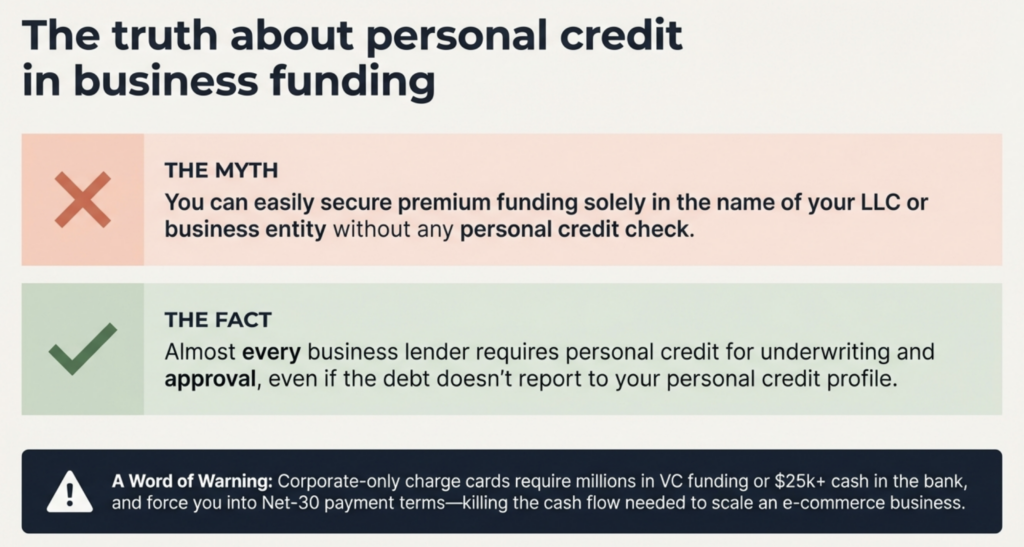
- Personal credit’s role in business funding:
- Almost all business lenders consider personal credit for approval, even if the business credit is separate.
- Relying solely on business credit without personal credit involvement is not realistic in the current lending environment.
- Importance of applying:
- Applying, even with a low credit score, provides valuable insight into one’s credit report and potential for improvement.
- “100% of you will not be approved if you don’t apply.”
- The credit world is a “game” that can be played strategically to maximize funding.
- Success story: Cheryl, an attendee, received significant 0% interest funding in August, which proved very helpful for her business.
Action Items
Unassigned
☐ Activate and accept attendees logging into the community portal
☐ Collect ASINs from chat and pull each into Spy Rivals for review
☐ Be ready to join for a split-screen segment about your background and success
☐ If not activated, notify Melissa in the chat so you can be activated
Event Overview and Funding Update
- Day two of the Internet Mastery Level Up event focuses on technology, starting with the community and Spy Rivals.
- Online attendees are welcome to turn on cameras, and the chat is enabled for interaction.
- Some attendees applied for funding on day one.
- An attendee was not approved but received a link to Ty’s company for guidance.
- Ty’s company helps individuals align with qualification requirements, with past successes of qualification within 90 to 120 days.
Spy Rivals: History, Versions, and Data
- History of Spy Rivals
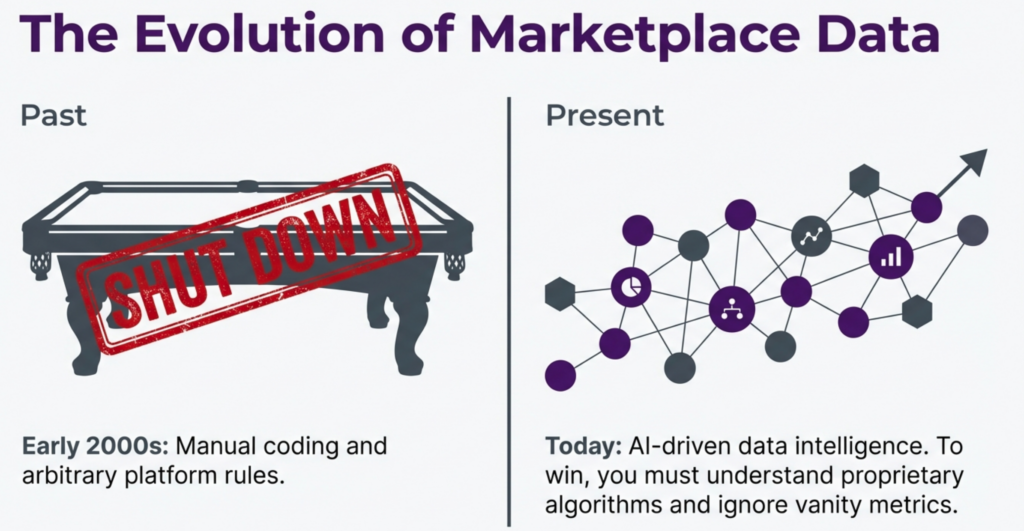
- Speaker’s background includes selling $20 million on eBay, recognizing the need for technology in 2001-2002.
- Created the first professional website-like eBay listings, offering 24 color choices for pool tables, which eBay later shut down due to policy.
- Learned to rephrase “choose your felt color” to “felt color can be customized at the conclusion of the auction” to navigate eBay policies.
- Developed “Template Optimizer” for automated Amazon listing graphics and “Auction Optimizer” for eBay data analysis, a precursor to Spy Rivals.
- Started selling on Amazon in 2014, aiming to create differentiating technology.
- Spy Rivals was the first Amazon software for identifying selling products.
- The original developer passed away in September 2021, leading to a complete rebuild of the Internet Mastery community and Spy Rivals from scratch.
- The rebuild in 2021 integrated AI and other community aspects, leading to continuous advancement in technology and programs.
- Spy Rivals Versions
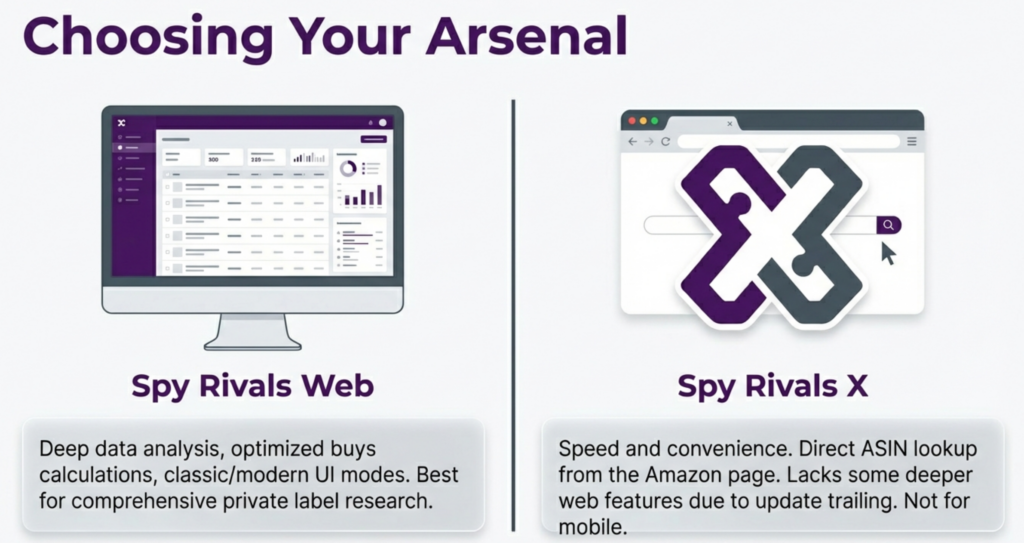
- Spy Rivals Web offers full functionality and more features.
- Spy Rivals X is a Google Chrome extension that trails behind the Web version due to Google’s approval process for updates.
- Spy Rivals X will not include all features, such as optimized buys.
- Spy Rivals X is not available on mobile; the mobile app is recommended for scanning.
- A “classic mode” is available for users who prefer the old version, but this option will eventually be removed.
- Data and Accuracy
- Data is obtained directly from Amazon, with proprietary algorithms and AI generating formulas.
- The tool is built based on actual daily business practices, not solely for selling features.
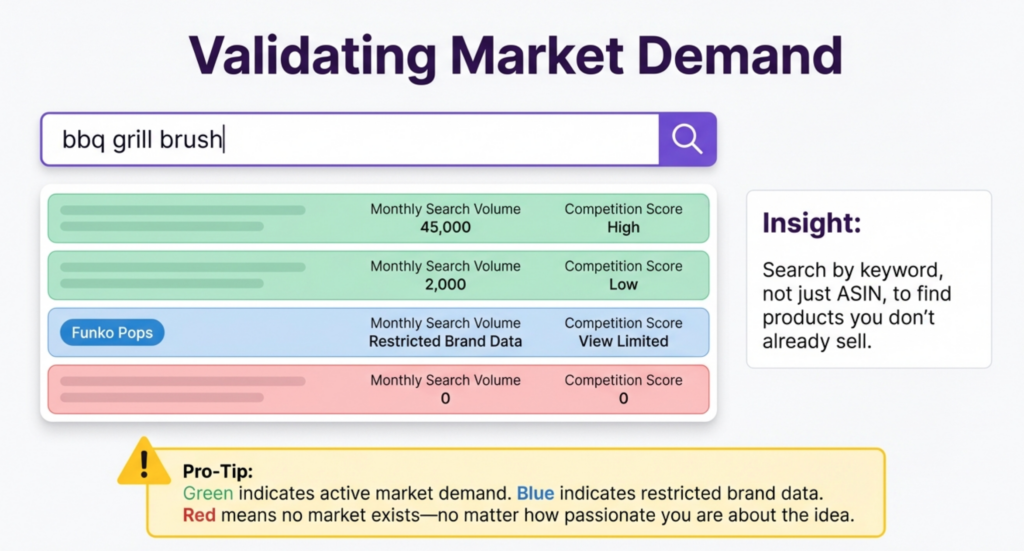
- “No data” for a product means Amazon is not providing the data, not necessarily that the product is not selling.
- Amazon sometimes restricts data access, as seen with Funko Pops, which are now mostly “blue” (restricted data) and not allowing new sellers.
Strategic Product Research and Private Labeling with Spy Rivals
- Activation and Access
- In-person attendees are activated; online attendees need to inform Melissa in the chat for activation.
- Attendees can use laptops to follow along.
- Using Spy Rivals for Product Research
- ASIN Lookup:
- ASINs can be copied from Amazon URLs and pasted into Spy Rivals Web.
- Spy Rivals X offers a “Spy Rivals Lookup” shortcut for direct access to the Web version.
- Spy Rivals Web functions on any mobile browser.
- Keyword Search (Example: Barbecue Grill Brush):
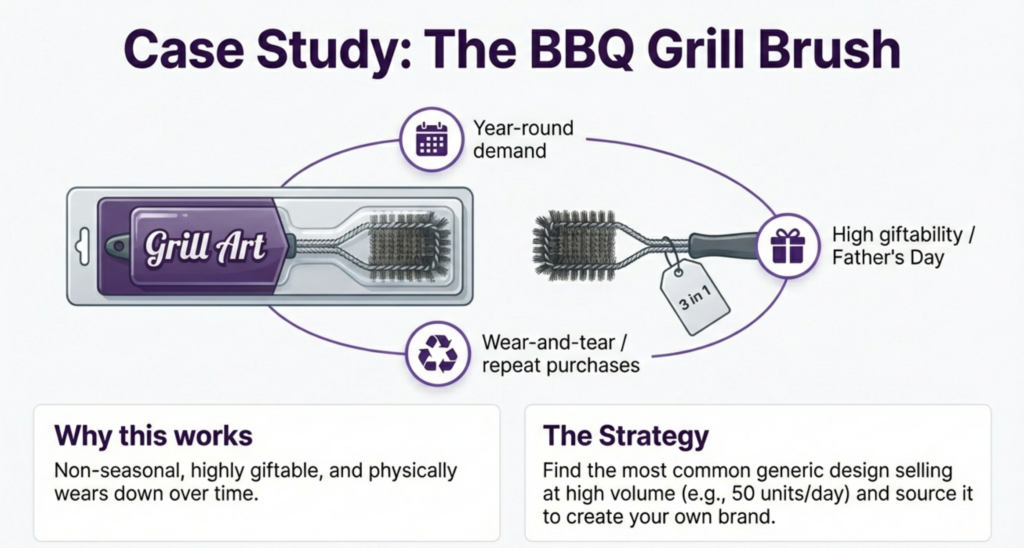
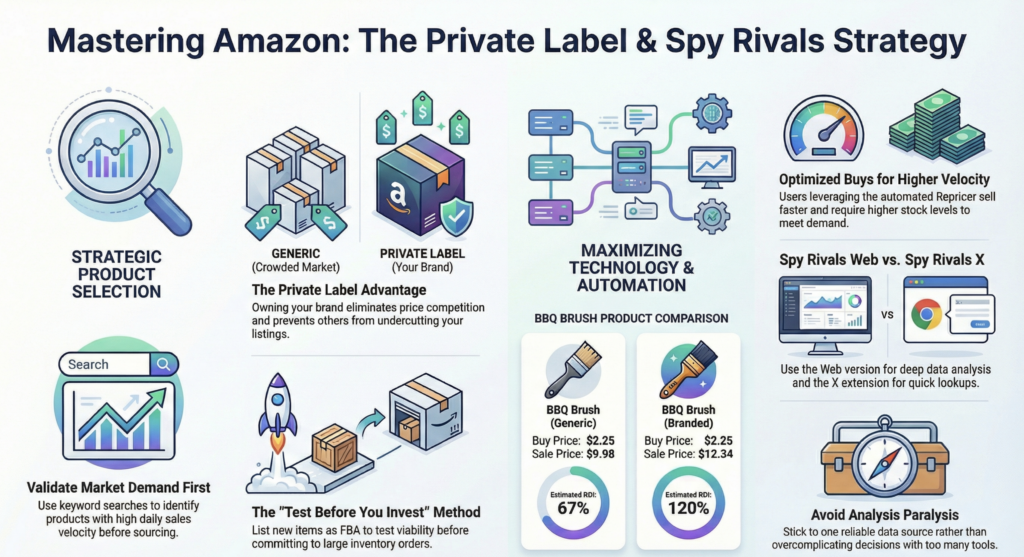
- Searching for keywords like “Barbecue grill brush” reveals market patterns, popular designs, and pricing.
- Identifies generic products versus branded ones, allowing for comparison of pricing and sales velocity.
- Helps identify related products for potential bundling or cross-selling.
- Alibaba Sourcing and Profitability:
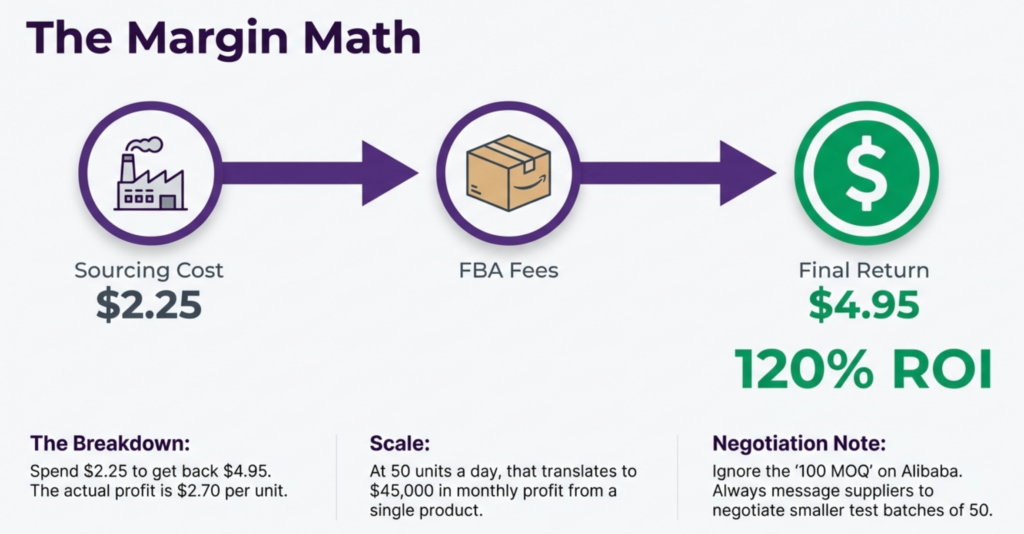
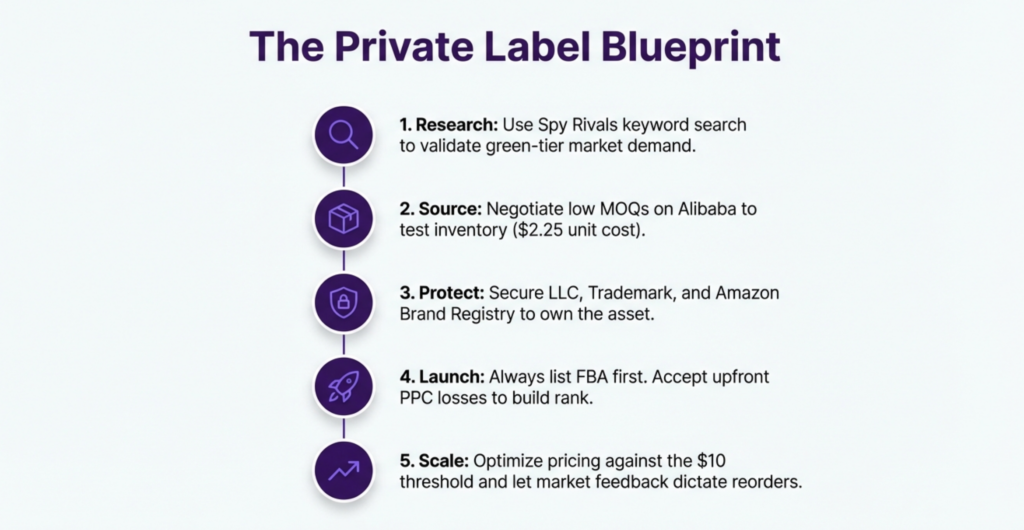
- A similar “Grill brush” was found on Alibaba for $2.25, compared to $12.34 on Amazon.
- Minimum order quantity (MOQ) is 100 pieces, but is negotiable.
- There is no true “exclusive” when sourcing from China.
- Profitability Calculation: With a buy price of $2.25 and selling 52 units per day, the ROI is 120%, yielding a $2.70 profit per unit and a total of $4.95 paid by Amazon.
- This can translate to a potential profit of $1,500 per day or $45,000 per month from one product in one marketplace.
- Considers expanding sales to other platforms like Walmart, eBay, Shopify, and TikTok Shop, estimating 10% cumulative sales from these additional channels compared to Amazon.
- An initial investment for 100 units would be $225 plus shipping.
- ASIN Lookup:
- Brand Registry and Gating
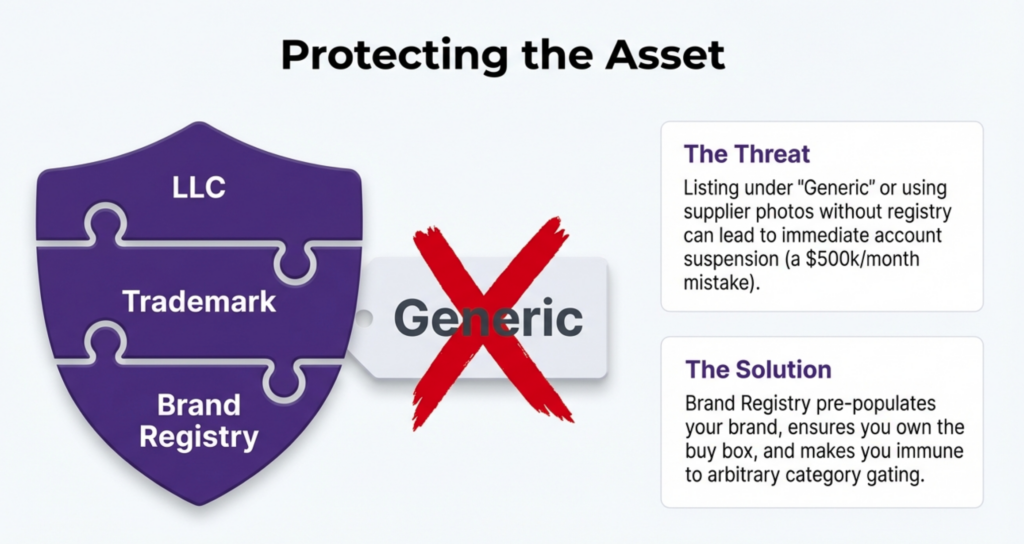
- Brand Registry is free to apply for and requires a trademark for the brand name and an LLC.
- It grants ownership of the brand name on Amazon, preventing others from selling on your listing.
- Amazon policies change frequently; what was acceptable previously may not be now.
- Brand Registry eliminates restriction issues for your own brand, as Amazon cannot restrict an approved brand.
- Warning: Listing items under a “generic” brand to bypass gating will lead to account suspension, as no invoice can be provided for a generic brand.
- Listing New Products on Amazon
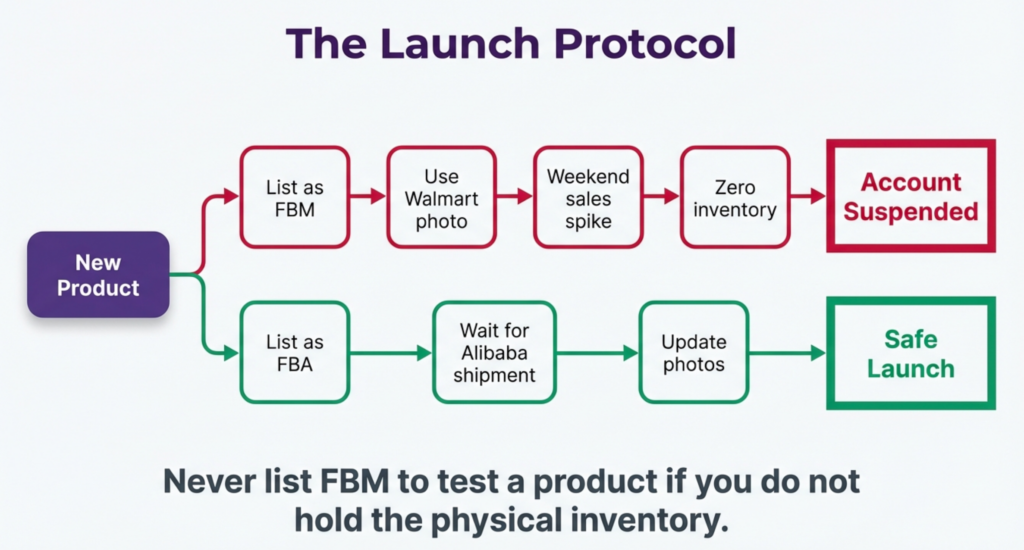
- New items should be listed as FBA, not FBM, to prevent accidental sales before inventory arrives.
- If listing as FBM, set the quantity to 0.
- Use original photos (e.g., from Walmart, or AI-generated and doctored) instead of stock photos.
- Listing images can be updated once professional photos are available.
- Example: Rebranding “Board Nutrition” to “Dr. Seinfeld” involved new bottles, labels, and updating listing images with “old packaging, new packaging” notices.
- Velocity and Profitability
- Good velocity (daily estimated sales greater than one) and profitability are crucial.
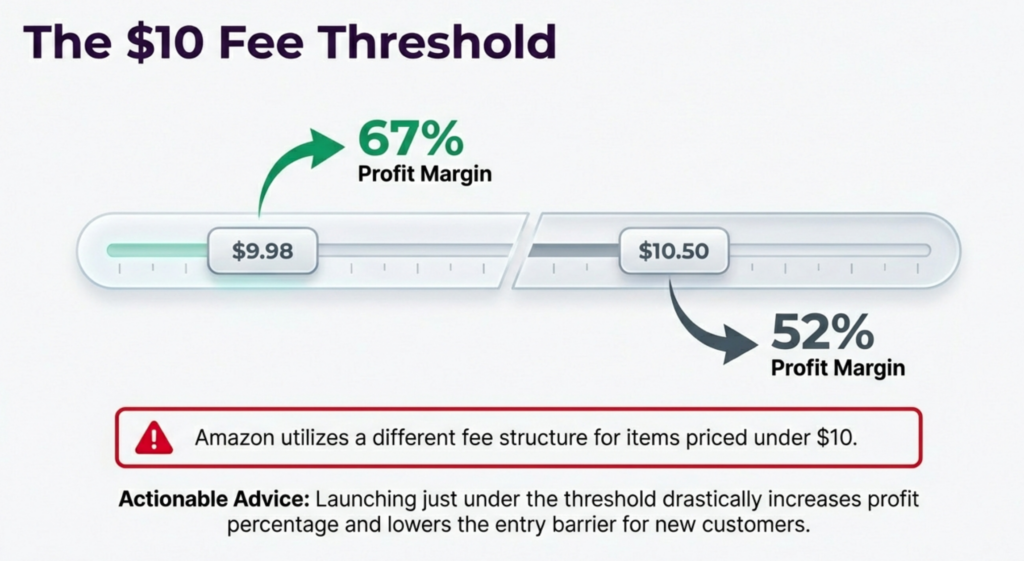
- Amazon charges lower fees for products priced under $10, which can increase profit margins.
- Strategic Pricing: Launching a product at a lower price (e.g., $9.98) can attract initial traffic, with prices raised after gaining reviews and traction.
- Advertising for New Products
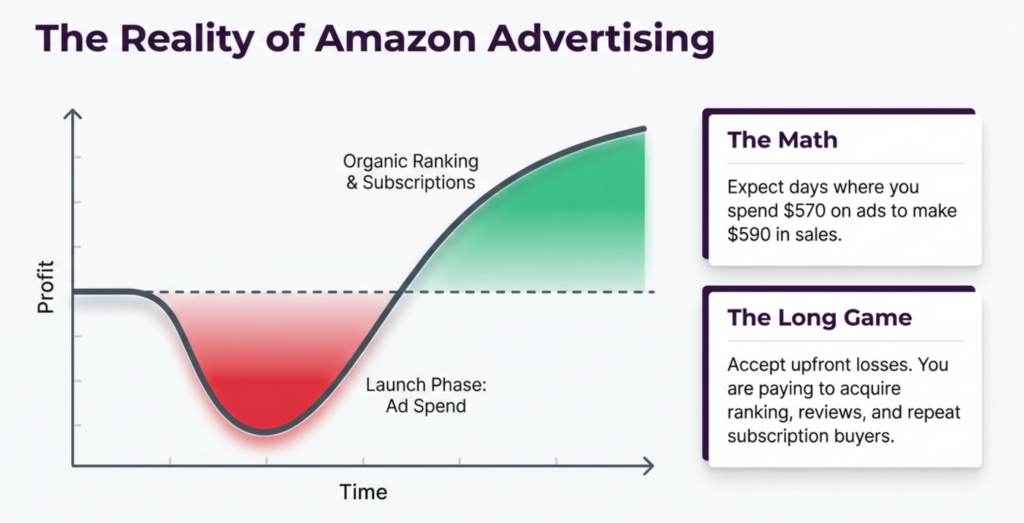
- Paid advertising is essential for new products to gain visibility on Amazon.
- Expect initial losses on advertising.
- Hiring professionals for advertising is recommended.
- Advertising is not a permanent expense; it can be scaled back once a product gains traction.
Spy Rivals Philosophy and Business Mindset
- Focus on Key Metrics
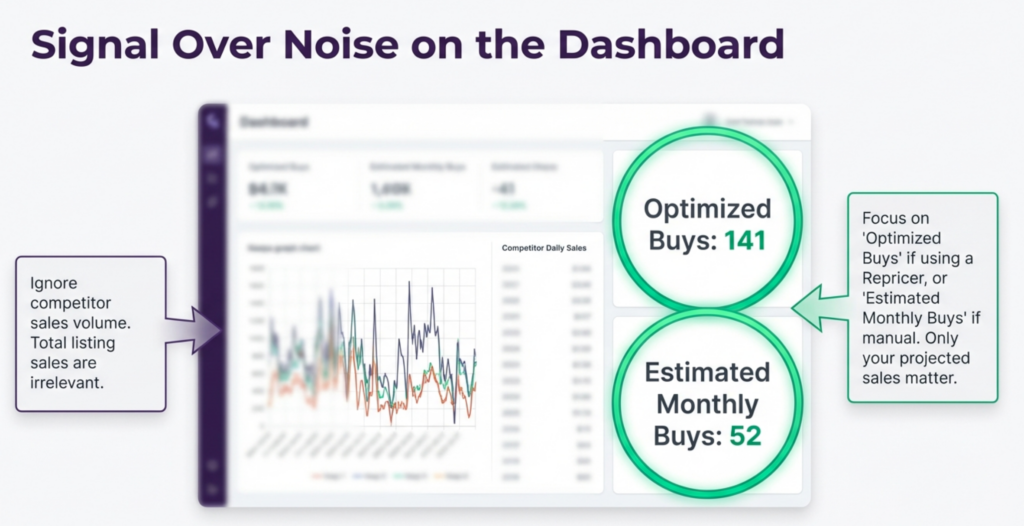
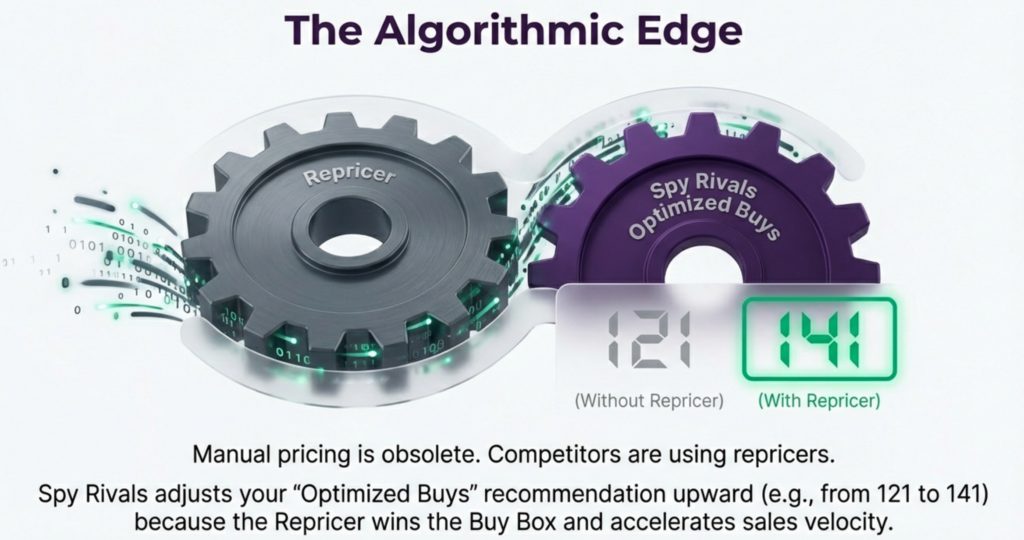
- Focus on optimized buys (when using the Repricer) or estimated monthly buys (without the Repricer).
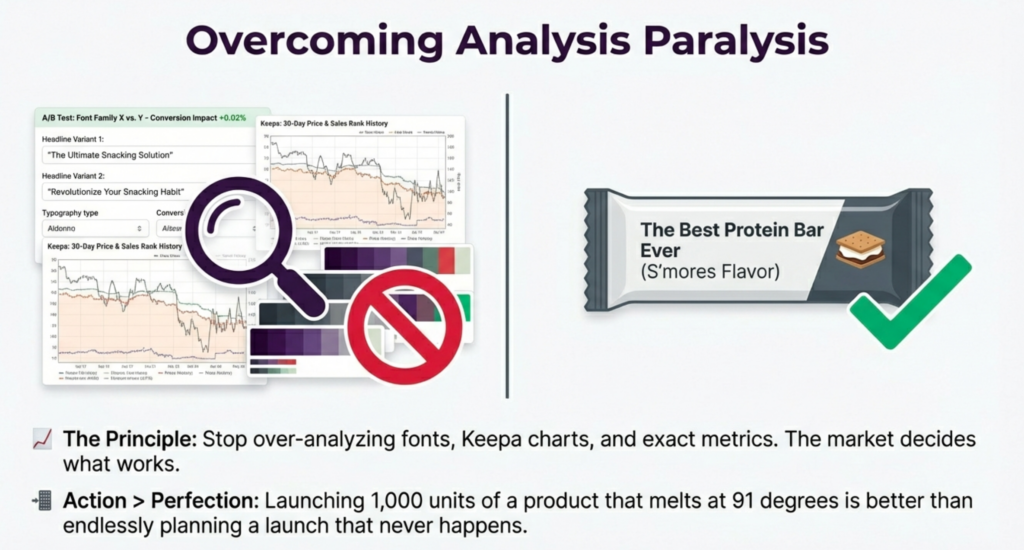
- Historical data is not personally used; emphasis is placed on action over analysis paralysis.
- Embrace Mistakes and Market Feedback
- Mistakes are inevitable; the focus should be on selling and learning from the market.
- Product success is determined by market demand, not personal preference.
- Example: Investing in a protein bar business and choosing a less popular flavor due to personal preference was a “stupid” decision, but led to learning about branding and market testing.
- Not every product will be a winner; persistence is key.
- Spy Rivals for Private Label Validation
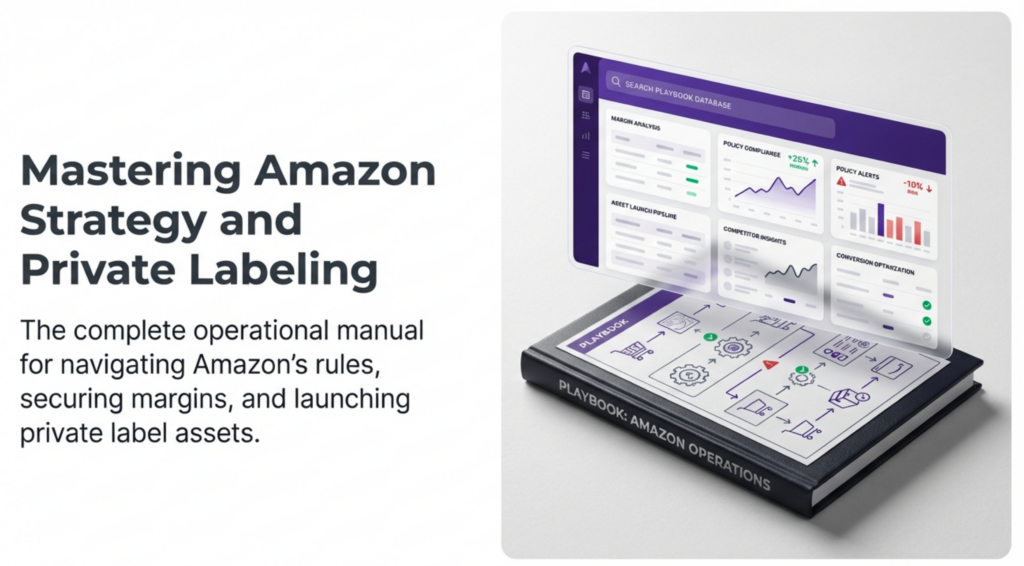
- Spy Rivals is crucial for private label products to assess market demand and value for a product or similar items.
- Example: A Vitamin D3 search shows high demand for popular brands, indicating a viable market.
- High demand often means more competitors, but also a proven market.
- The strategy is to copy what works and improve upon it, rather than reinventing.
- Repricer Interaction
- Spy Rivals displays average 30-day and 12-month prices, indicating price fluctuations.
- For private label products, the price is controlled by the seller and does not fluctuate, eliminating the need for a Repricer.
- Retail or wholesale products necessitate a Repricer due to uncontrollable price fluctuations.
- Optimized Buys Fluctuation
- Optimized buys differ for each user because the system estimates sales based on individual account health (e.g., IPI score, sales history).
- Healthier accounts lead to more sales and easier ungating.
Action Items
Unassigned
☐ Add beta UI: show total number of repricer logs
☐ Notify team that new repricer appears to be not working
☐ Clarify ‘Trigger Amazon update’ label in beta notes
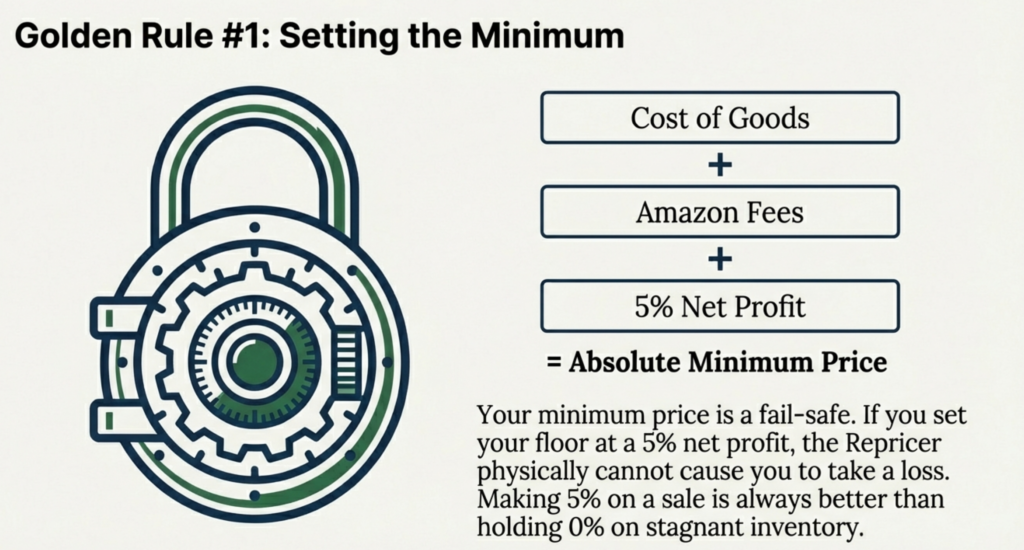
☐ Set item repricer minimum price to 5% net profit
Repricer Functionality and Importance
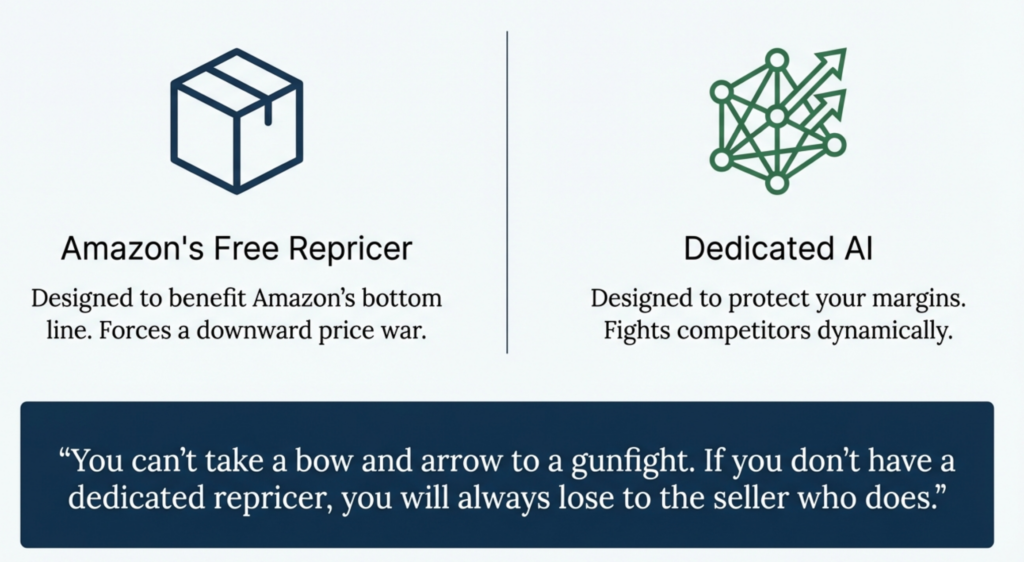
- The repricer is a crucial tool for competing on Amazon, as many competitors utilize similar technology.
- Amazon’s free repricer is not recommended as it prioritizes Amazon’s interests over seller profitability.
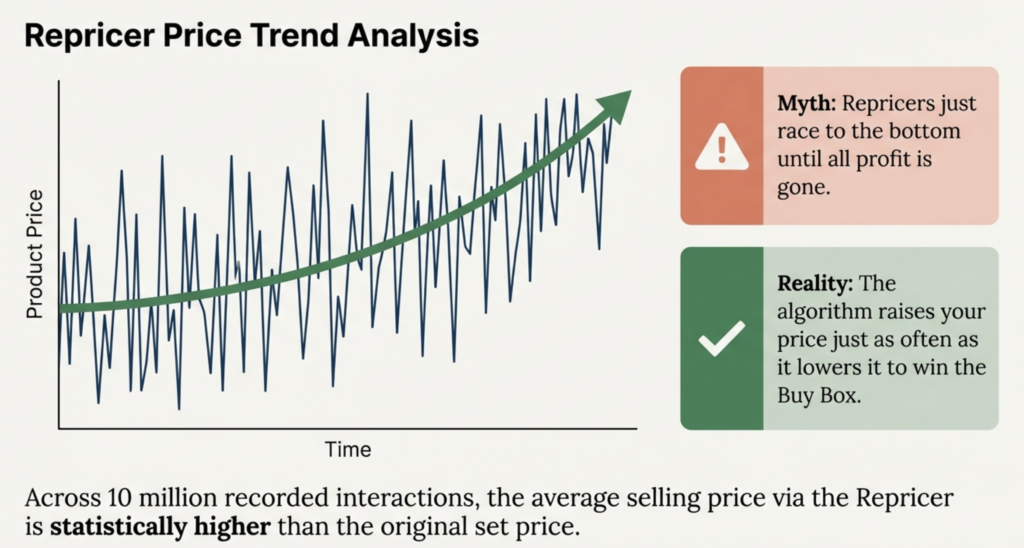
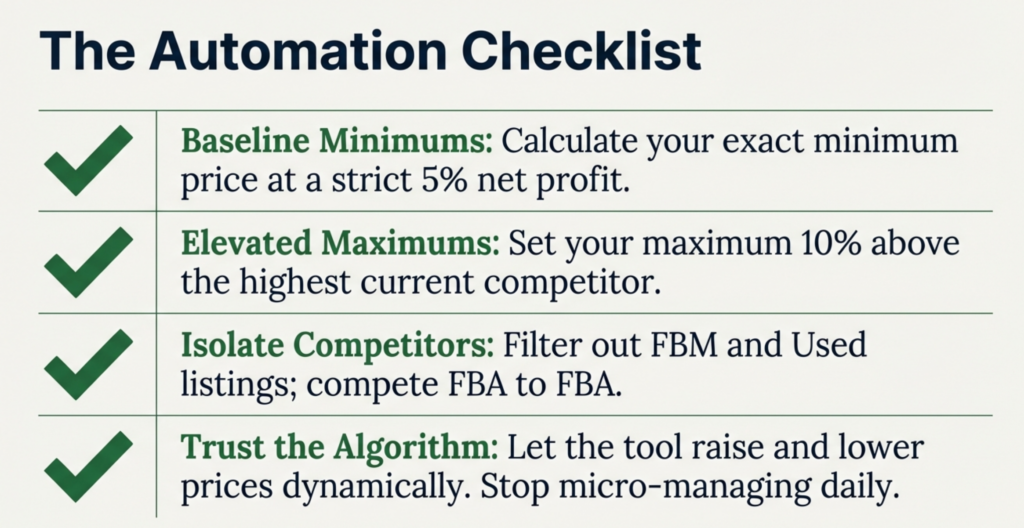
- The repricer dynamically adjusts product prices up and down to secure the buy box.
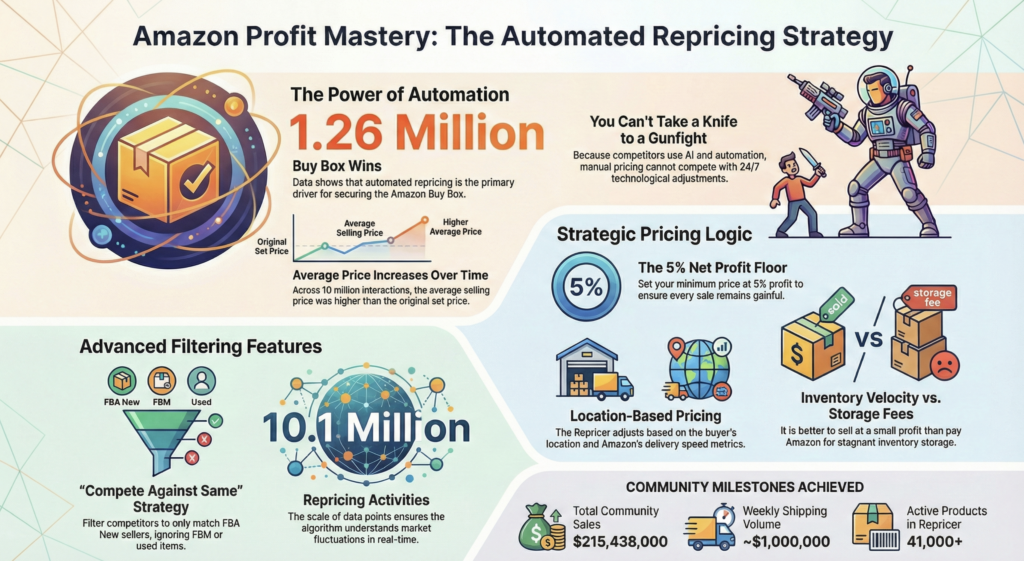
- The repricer’s average selling price across all products is higher than the initial set price over time, based on 10 million interactions.
- The repricer cannot cause financial losses unless the minimum price is intentionally set below the buy price.
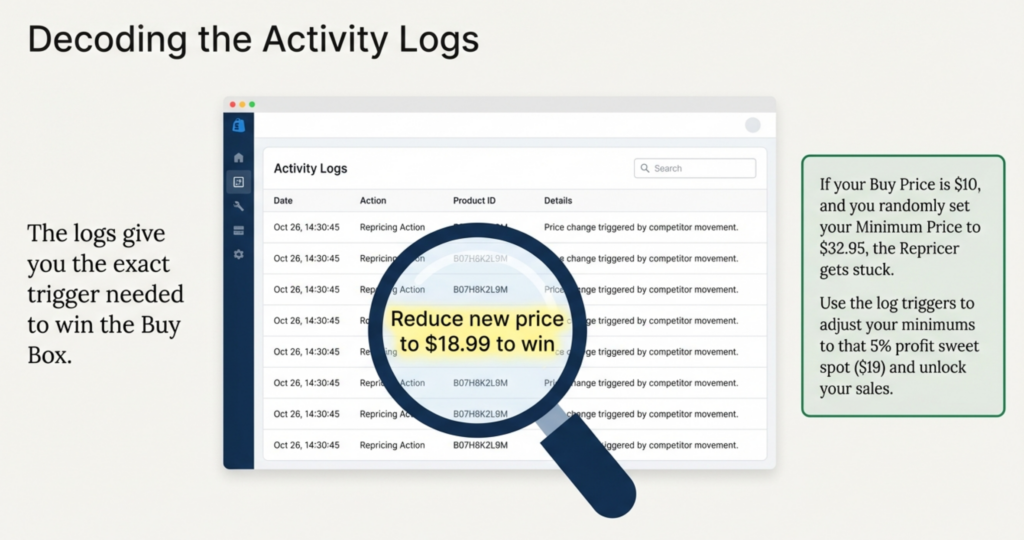
- Repricer logs provide insights into pricing activities and strategies for winning the buy box.
- Logs display activity for the last seven days due to the volume of data.
- The beta version of the repricer needs to display the total number of logs.
- The “Trigger Amazon update” button text is unclear and should be rephrased to “Update Amazon” for better understanding.
Repricer Configuration and Strategy
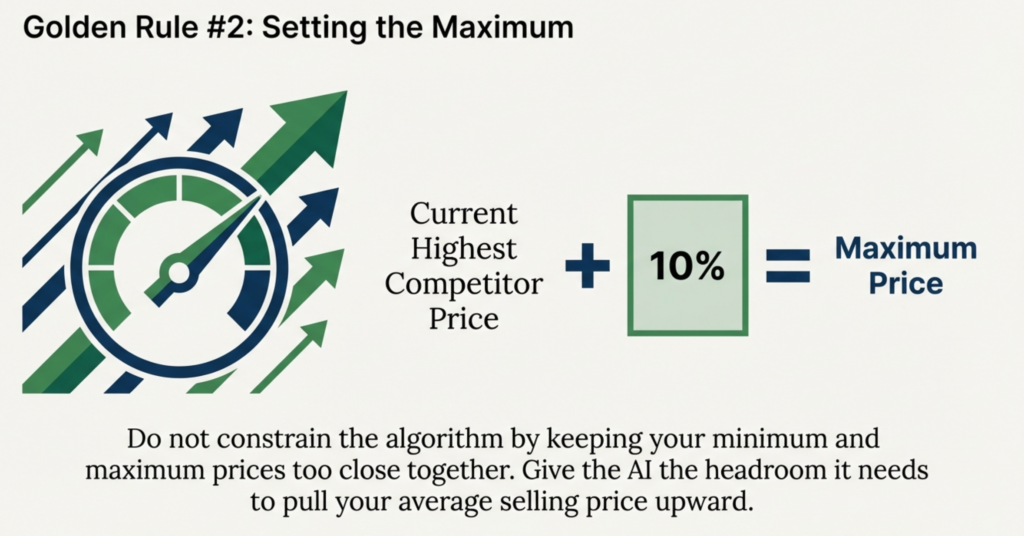
- Setting prices correctly is essential for profitability and sales velocity.
- The minimum price should be set to ensure at least a 5% net profit.
- The maximum price is recommended to be 10% higher than the highest competitor’s selling price.
- It is better to sell an item at a small profit or even a slight loss than to incur storage fees for unsold inventory.
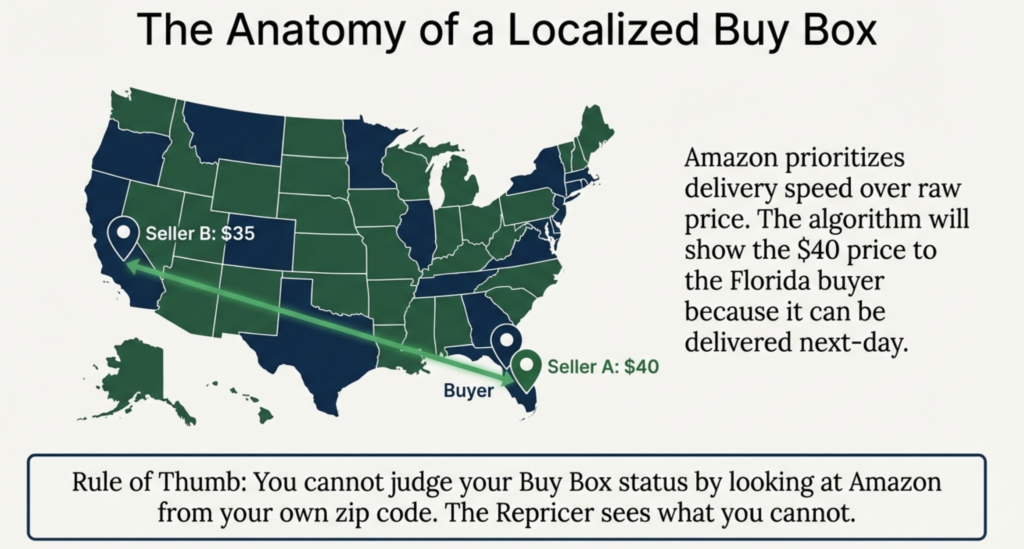
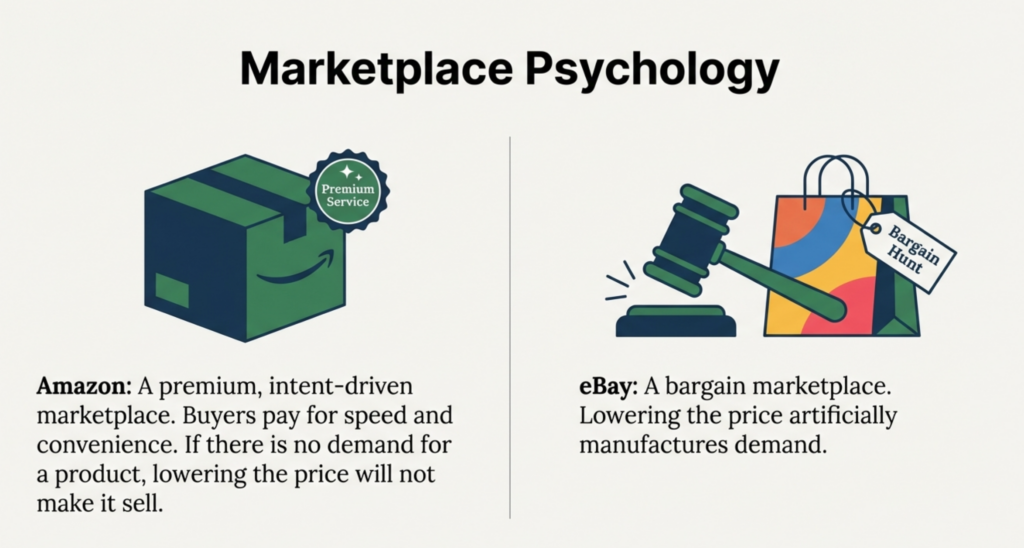
- Amazon is a premium marketplace, not a price-driven one like eBay.
- Lowering prices excessively on Amazon is often an ineffective strategy for increasing sales.
- For slow-moving inventory, consider listing items on other marketplaces (e.g., eBay, Walmart) and using Amazon’s multi-channel fulfillment.
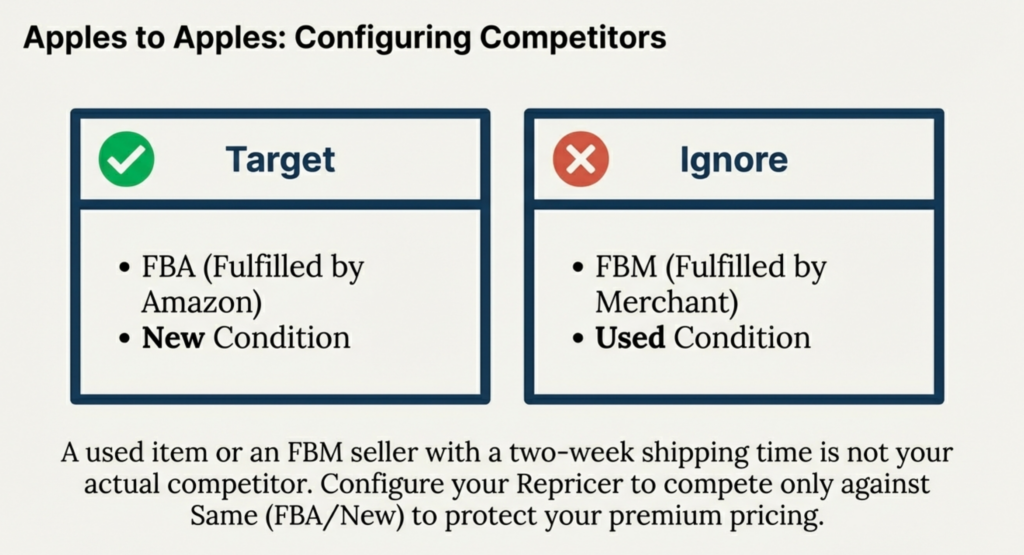
- The “Compete against same” feature allows sellers to compete only against FBA new sellers, ignoring FBM or used listings.
- This feature is particularly important for categories with many FBM or used items, such as video games.
Sales Performance and Marketplace Insights
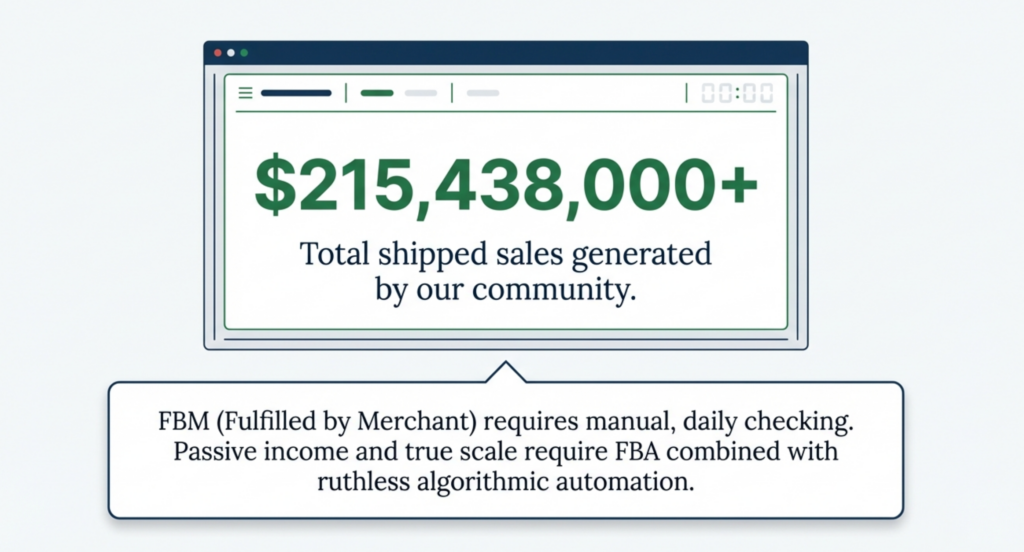
- The community’s total sales have reached $215,438,000, with sales growing at approximately $1 million per week.
- These sales figures reflect shipped items, not sold items, which accounts for discrepancies with Amazon account data.
- Sales trends vary by product category.
- General products typically experience a fourth-quarter spike.
- Supplements see a January, February, March surge due to New Year’s resolutions.
- FBA (Fulfillment by Amazon) is preferred over FBM (Fulfillment by Merchant) for passive income and automation.
- FBM requires daily monitoring and is not suitable for sellers seeking passive income.
- A spike in FBM sales before Christmas indicates FBA inventory sell-outs, leading sellers to relist as FBM.
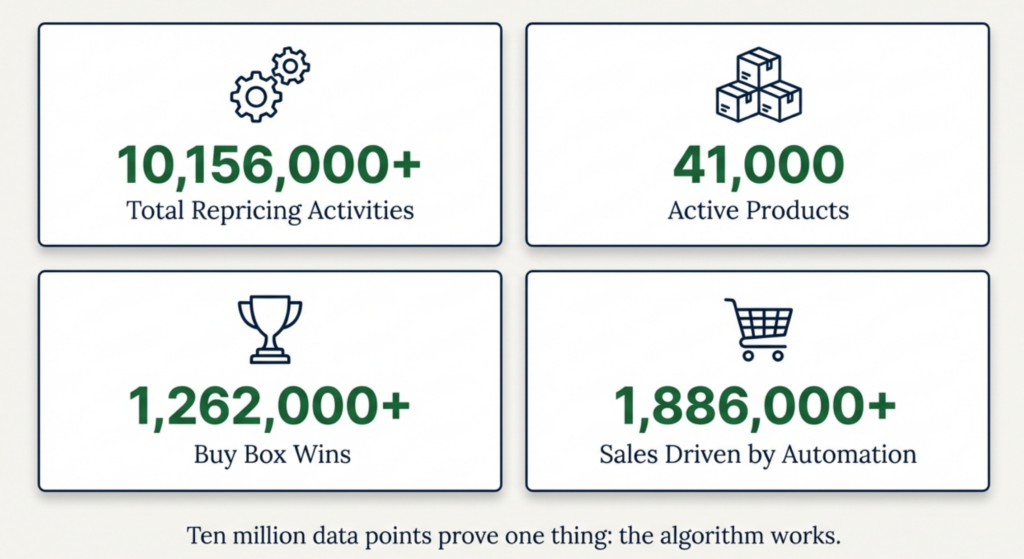
- Repricer statistics demonstrate its effectiveness:
- 10,156,000 repricing activities.
- 41,000 active products.
- 1,262,000 buy box wins.
- 1,886,000 sales attributed to the repricer.
Product Selection and Business Model
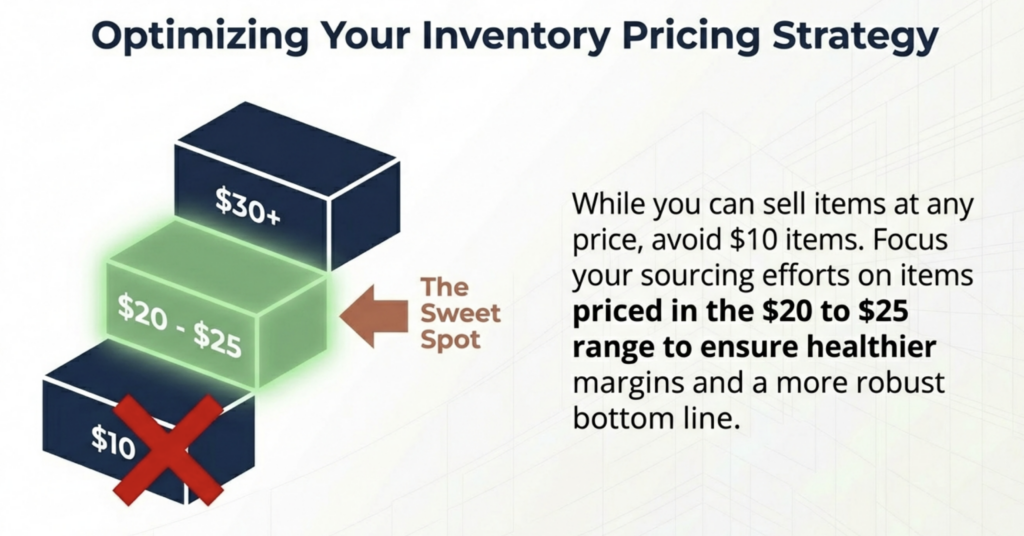
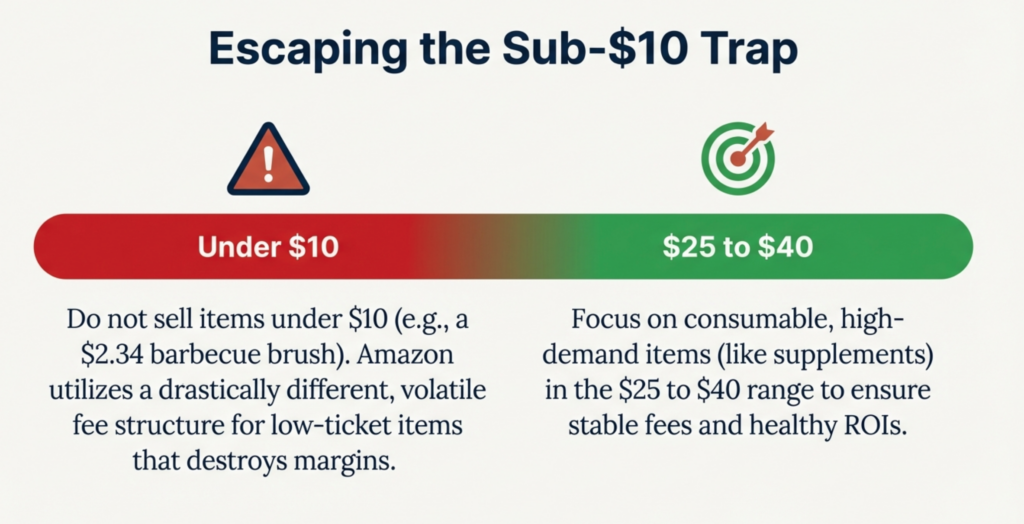
- Avoid selling items under $10 due to Amazon’s specific fee structure for low-priced products.
- Focus on higher-ticket items, ideally in the $25 to $40 price range.
- Supplements are considered an ideal product category due to:
- Consumable nature.
- Favorable price point.
- Good profit margins.
- Manufacturing in the U.S., avoiding customs and duties.
- The BOLO search tool is undergoing updates, with a new interface being tested to improve user-friendliness and data presentation.
Action Items
Unassigned
☐ Research private-label/brand opportunities and options
☐ Source additional inventory for sister to increase prep capacity
Tanner’s Journey with Internet Mastery
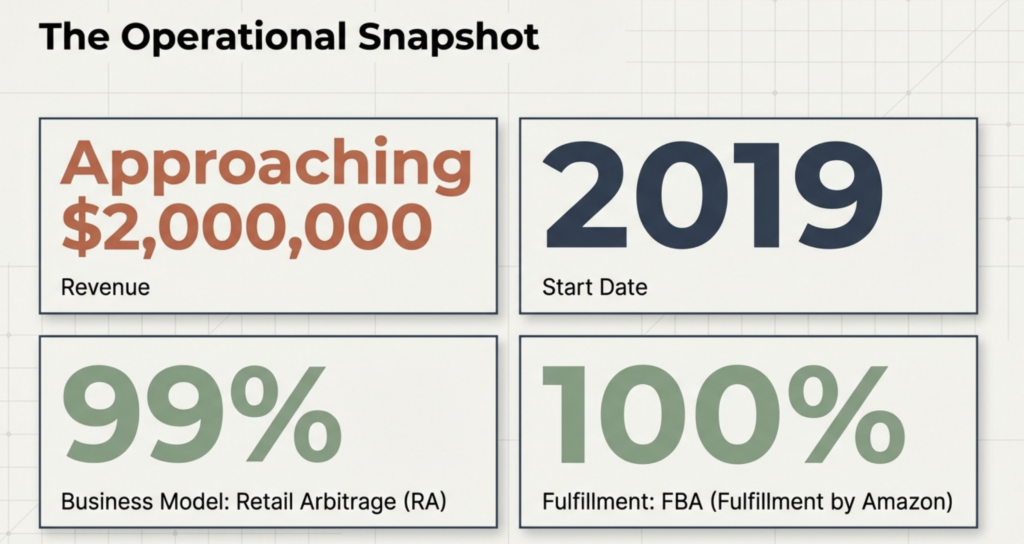
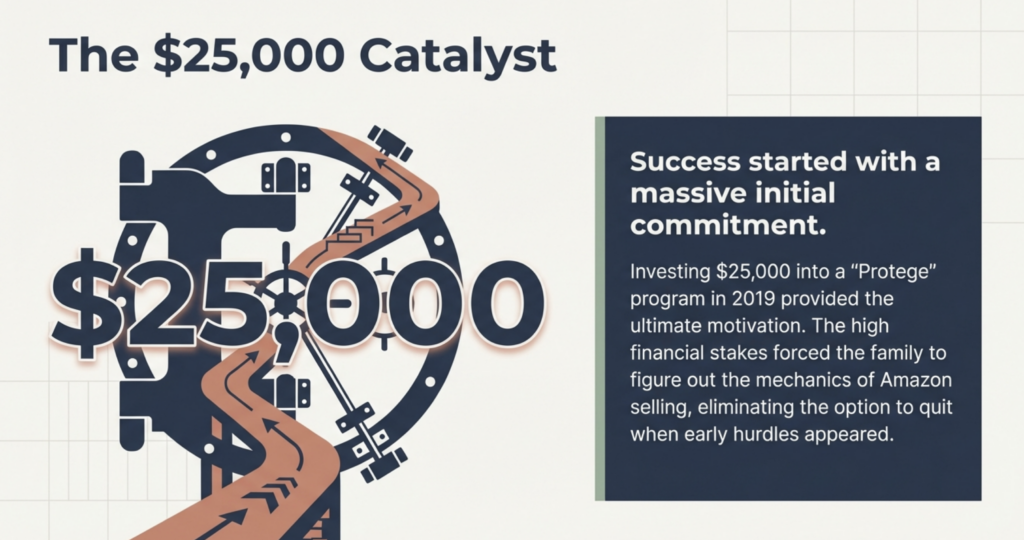
- Started with Internet Mastery in early 2019 after attending an in-person seminar in Arizona.
- Joined the Protege program, which cost $25,000.
- Initial experience was challenging due to a lack of social following and community support.
- COVID-19 helped by fostering a Facebook community, which increased motivation.
- Coaching improved significantly when brought in-house, replacing third-party partnerships.
Business Performance and Operations
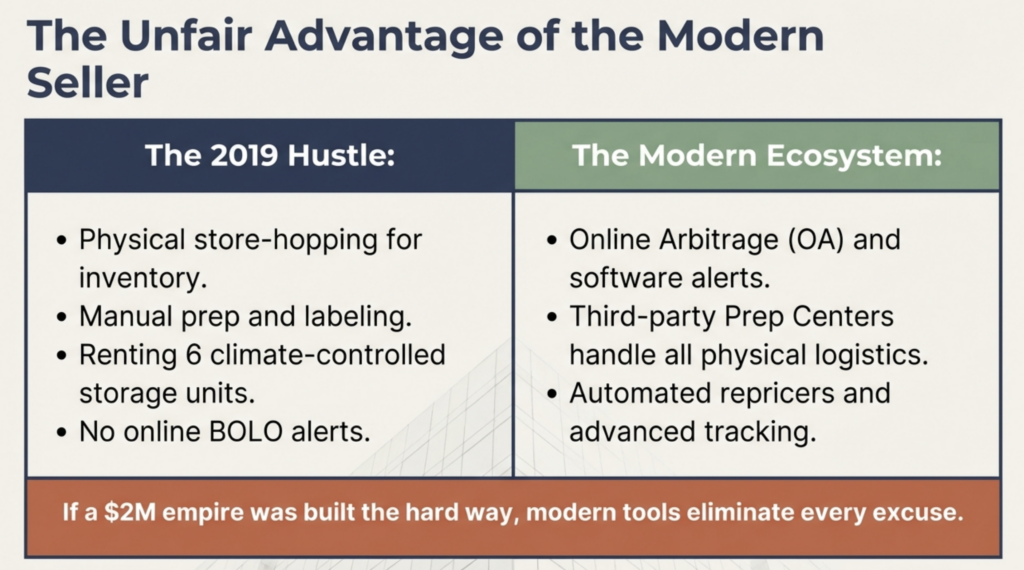
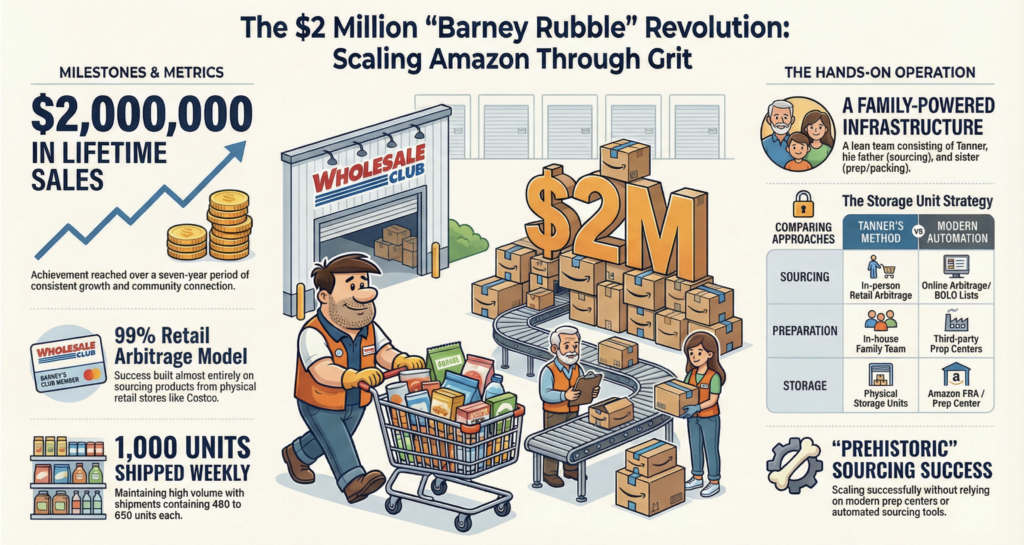
- Achieved nearly $2 million in sales on Amazon.
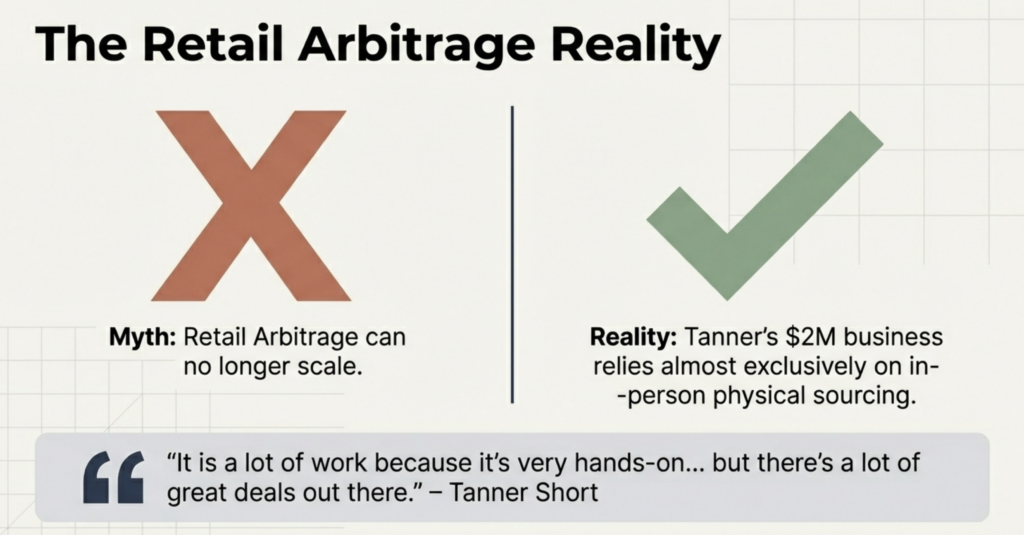
- Retail arbitrage accounts for at least 99% of sales.
- Experienced a slowdown during the holiday season due to losing several products, necessitating a business rearrangement.
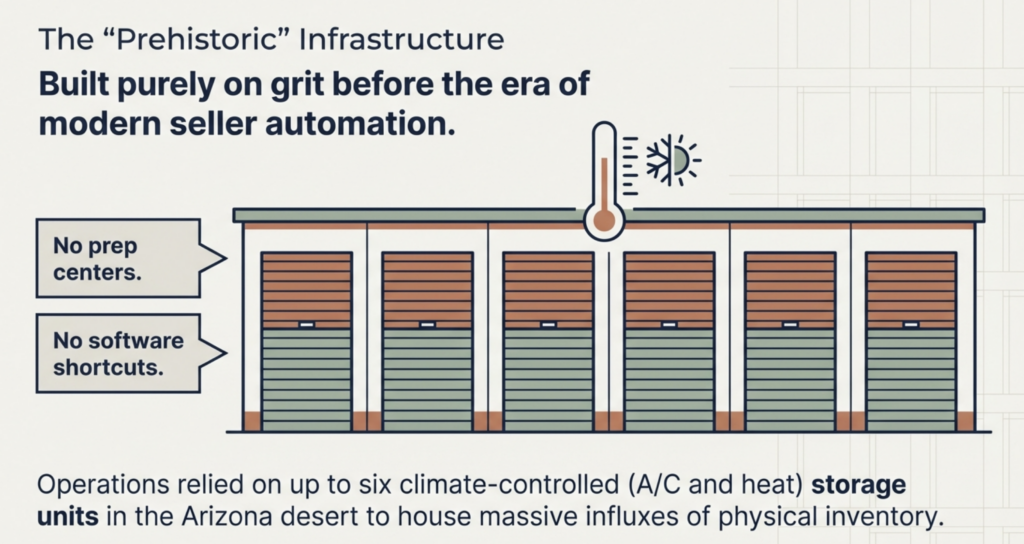
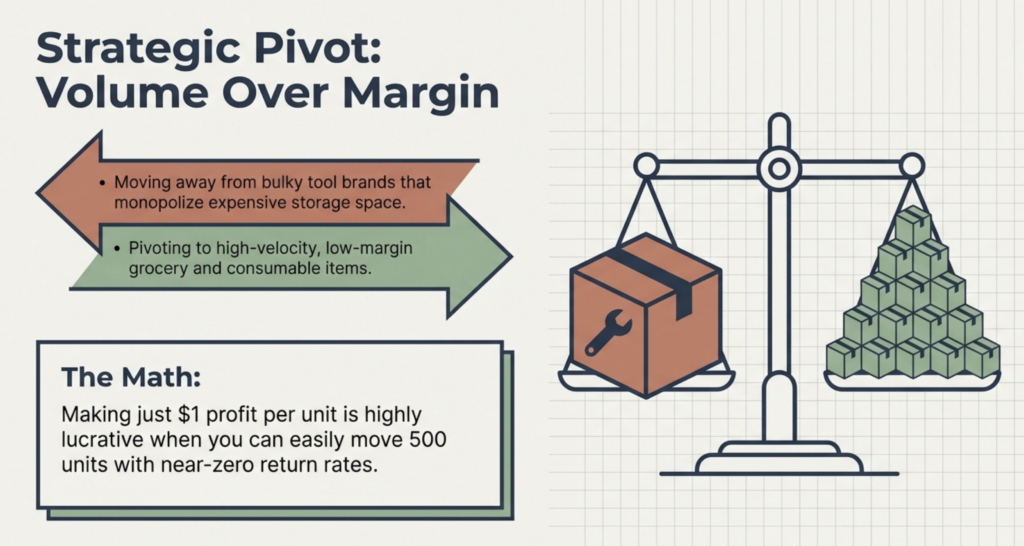
- Previously focused on larger products, now pivoting to smaller items, which led to condensing storage units.
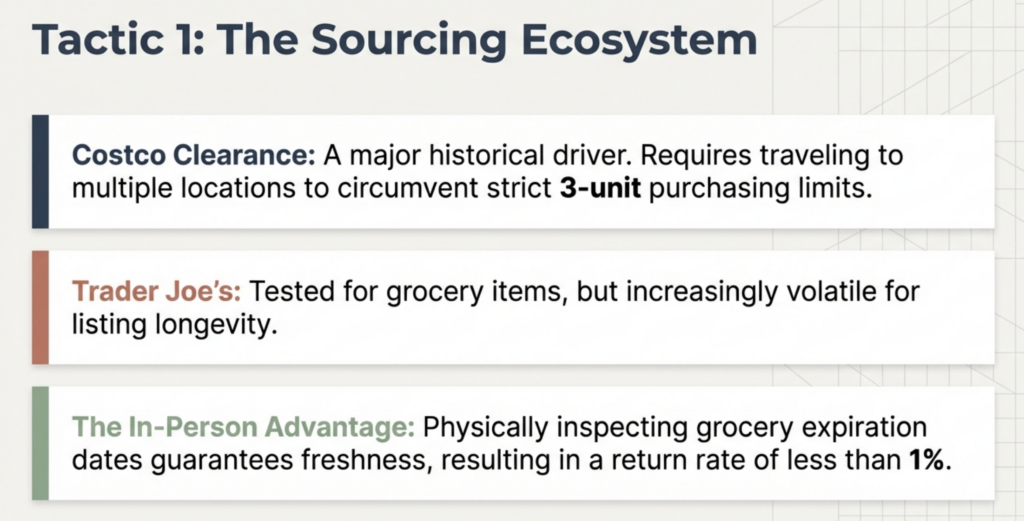
- Food products perform well with low return rates (less than 1%) and faster movement, despite smaller margins.
- Operates without a prep center, having built an in-house system over several years.
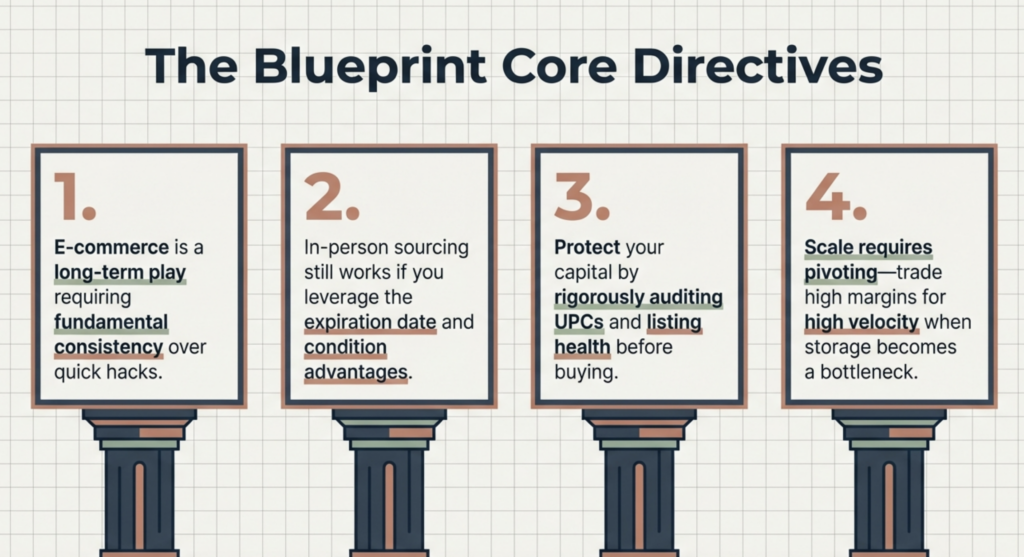
- Sourcing involves a mixture of online and in-person methods.
- Better deals are typically found in-person.
- In-person sourcing allows for verification of expiration dates, especially for food items.
- Key in-person shopping locations:
- Costco was a significant source for larger products and clearance deals, but supply has decreased post-COVID, requiring visits to multiple locations.
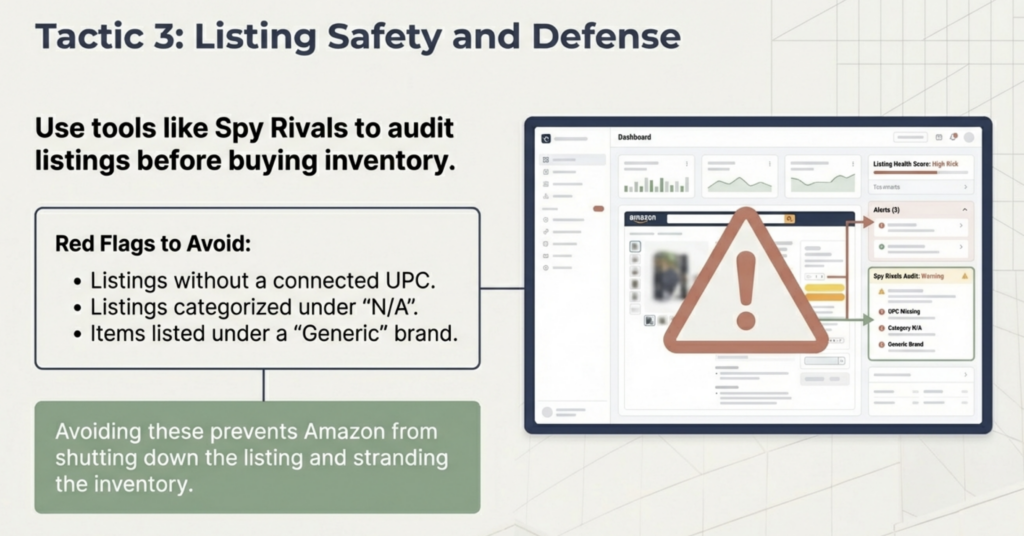
- Trader Joe’s previously offered good opportunities but now presents challenges with listing quality due to UPC/GTN exemption issues.
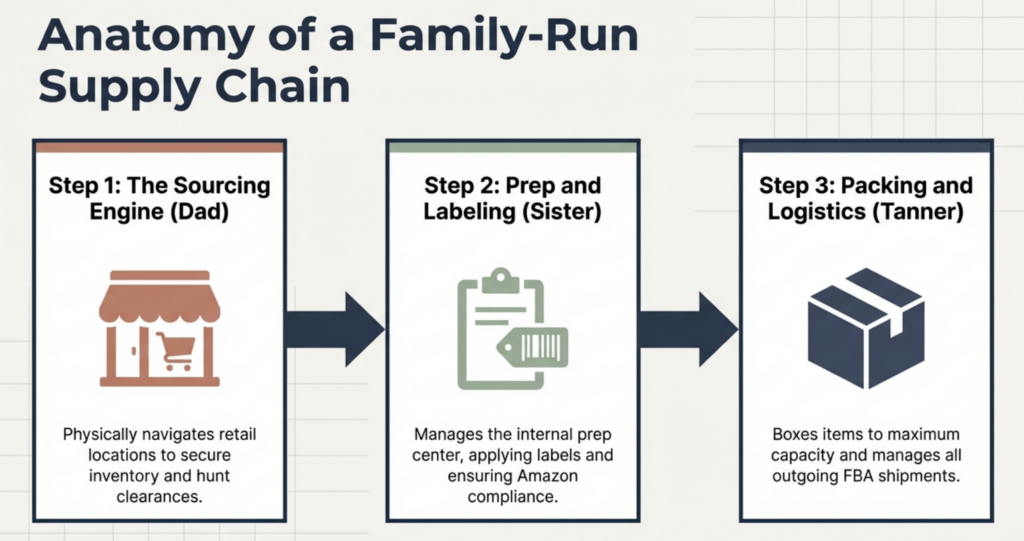
- The business is a family effort, with Tanner, his father, and his sister involved.
- His father primarily handles product purchasing.
- His sister manages most of the product prepping and packing.
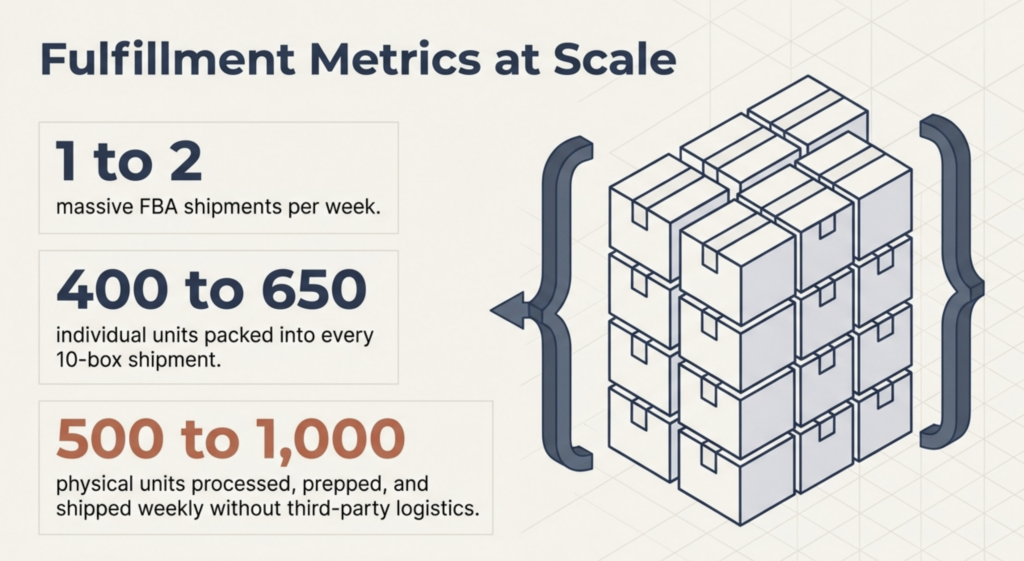
- Shipping volume averages 500 to 1,000 units per week, sent in 1-2 large FBA shipments.
- Sells exclusively on Amazon, but is considering Walmart for future expansion, which requires wholesale or private label models.
- Sourcing involves a mixture of online and in-person methods.
Challenges and Evolution
- Navigates Amazon ungating issues and identifies problematic listings (generic, no UPC/GTN) using tools like Spy Rivals.
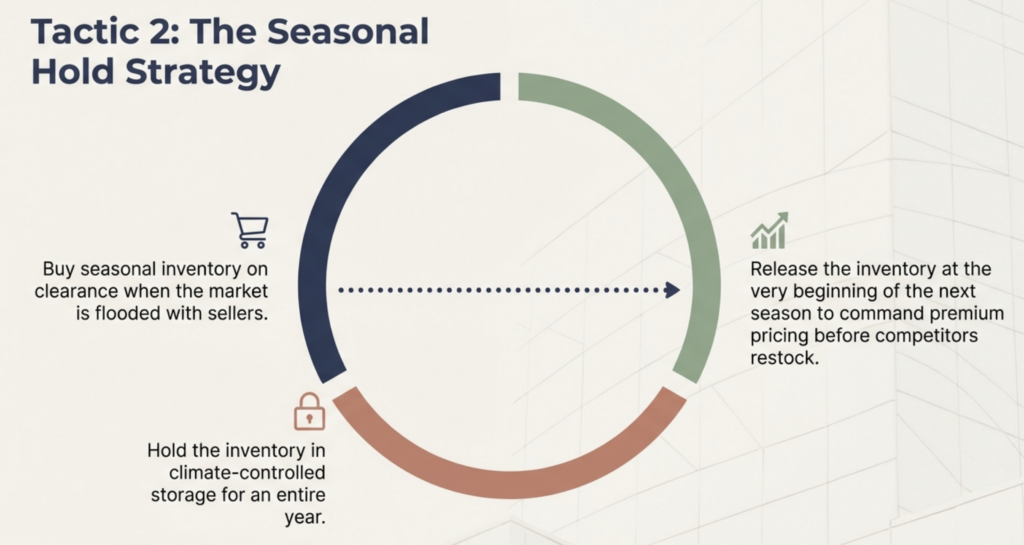
- Implemented a seasonal arbitrage strategy, holding products until the next season to sell at higher prices.
- The business model adapted significantly during COVID-19, shifting from exclusively in-store purchasing to incorporating online sourcing when stores were closed.
- Acknowledges that current tools and resources (prep centers, BOLO deals, repricers) offer significant advantages compared to when the business started.
Future Goals and Strategic Insights
- Aims to complete the business cleanup, condensing, and pivoting process.
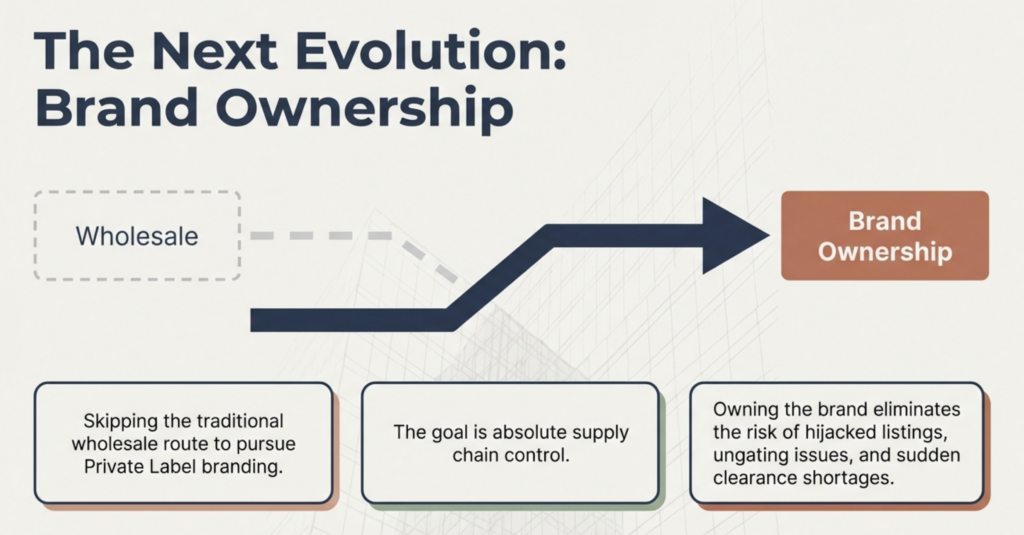
- Plans to transition from wholesale to developing an own brand/private label for greater control and long-term benefits.
- Will dedicate more time to research branding opportunities.
- Advice for new sellers:
- Retail arbitrage requires significant hands-on work, including shipping and building infrastructure, but it is profitable.
- Streamlining processes is highly recommended.
- Focus on brands that do not present ungating issues.
- Maintaining connection with the community and attending events is crucial for sustained growth and motivation.
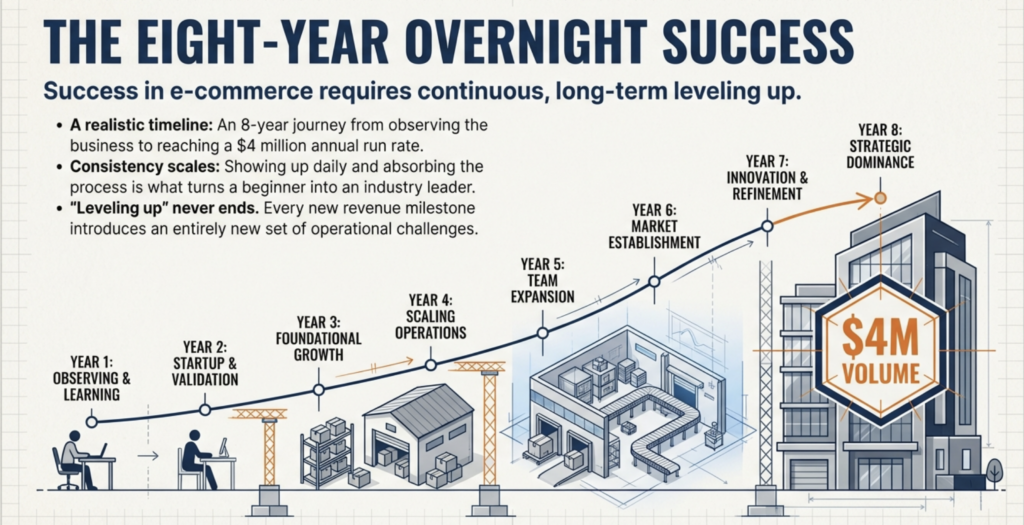
- Success in this business is a long-term endeavor, not an overnight achievement.
- A positive attitude and determination are essential for overcoming challenges.
Action Items
Customer Support
☐ Text Ty and arrange for Ty to call Lisa about setup timing
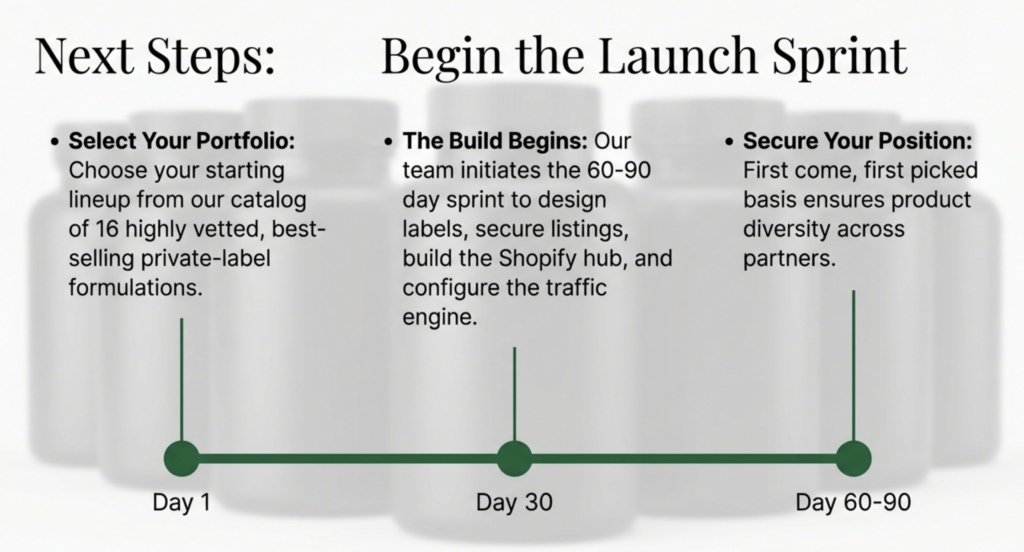
☐ Select product picks on a first-come, first-served basis (pick from 16-item private-label catalog)
☐ Submit Amazon shipping plan for half of your inventory (send 50 of 100 units to Amazon)
☐ Confirm the Shopify site build price (provide the amount entered)
☐ Provide label cost and take/send a photo of the label roll/example
☐ Confirm Facebook ads budget amount to include in the plan
☐ Sit down one-on-one to review formulation options and the 16-item catalog
☐ Raise the price for Paul as requested
Business Expansion Strategy: Level Up 2026
- Shifting Focus Beyond Amazon
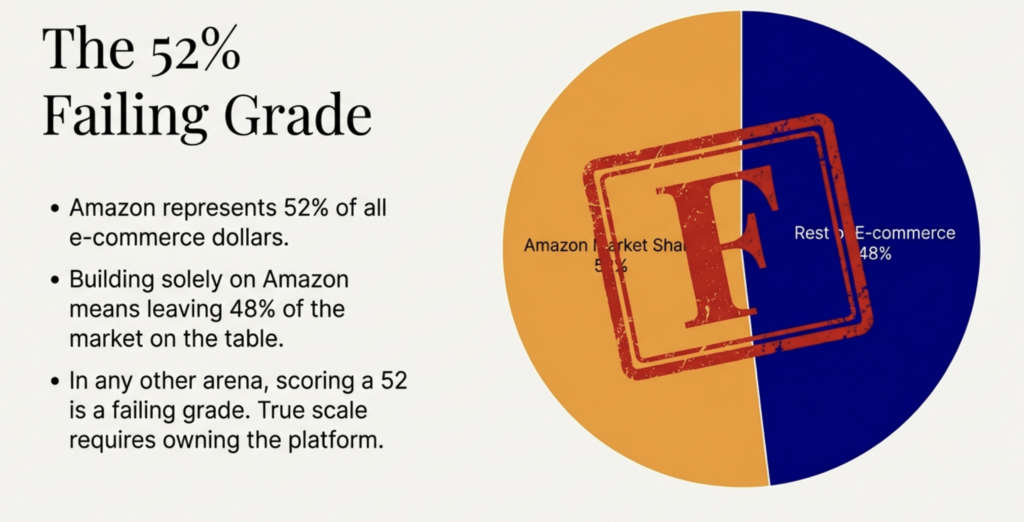
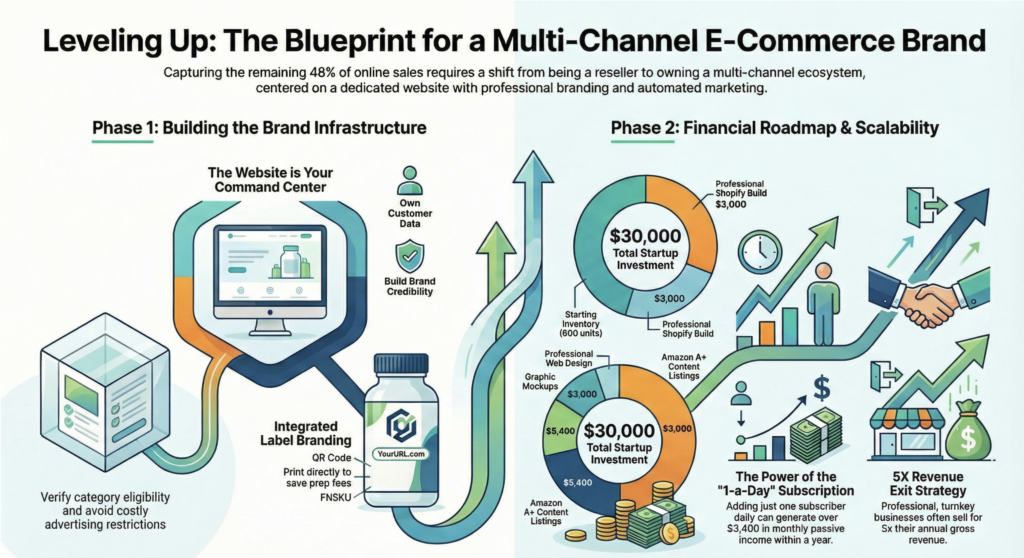
- Amazon accounts for 52% of online sales, leaving 48% of the market untapped.
- The strategy emphasizes thinking “bigger than Amazon” to capture this remaining market share.
- Website as the Core Platform
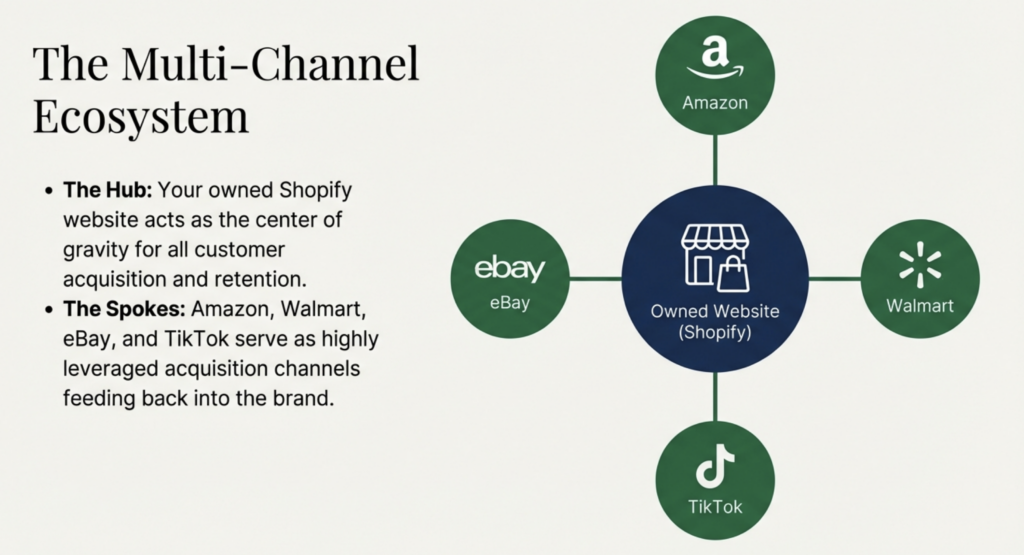
- A personal website, not just Shopify, is the central focus for sales.
- Shopify is a technology for building websites, similar to WordPress, which can be more powerful but less user-friendly.
- Products are to be listed on the website before Amazon.
- Product and Labeling Requirements
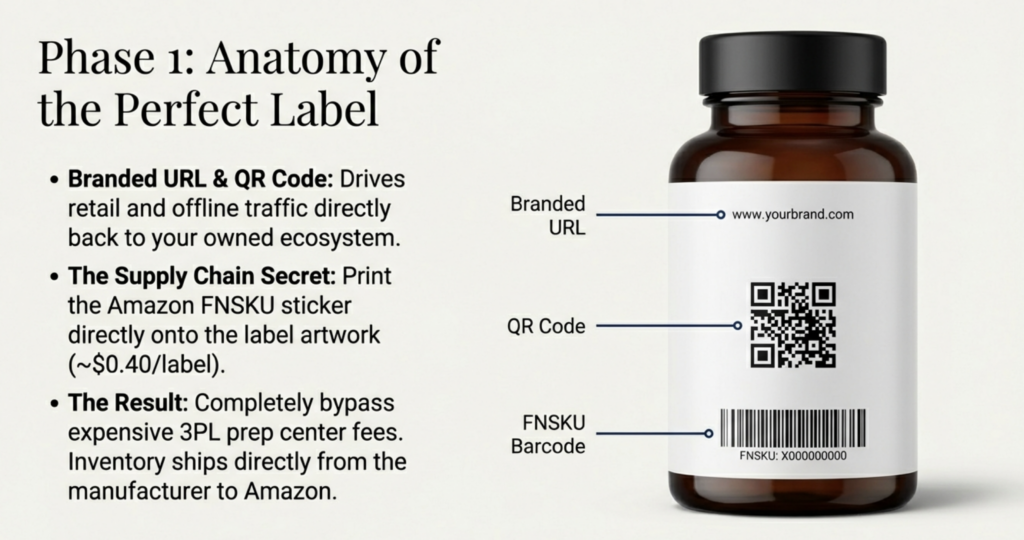
- Product labels must include the website URL (domain name) for advertising and credibility.
- QR codes are optional but can be included for aesthetic appeal and to link to the website.
- FNSKU stickers are to be printed directly on the product label, eliminating the need for a prep center and saving fees.
- UPC codes are not used on the speaker’s bottles; FNSKU stickers are preferred.
- Amazon Listing Creation
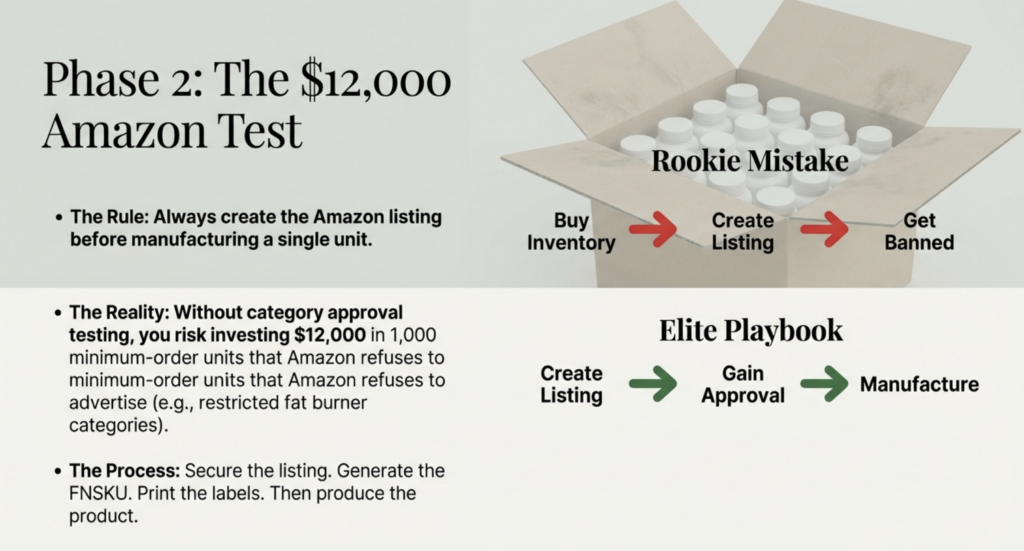
- Create Amazon listings early to verify product category approval and avoid issues (e.g., inability to advertise “Fat Burners”).
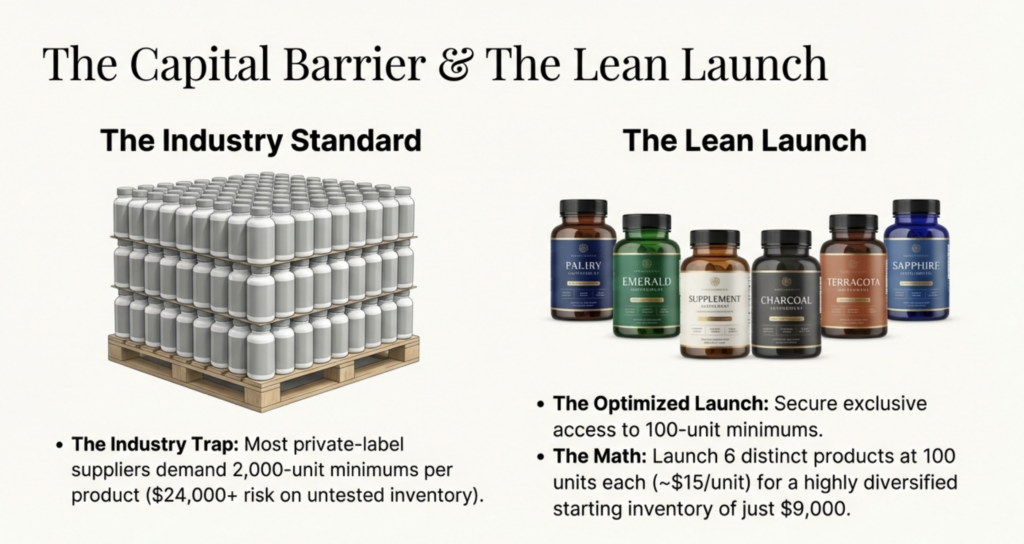
- Minimum order quantity for private label supplements is typically 2,000 bottles, though 1,000 was secured for the speaker’s first product.
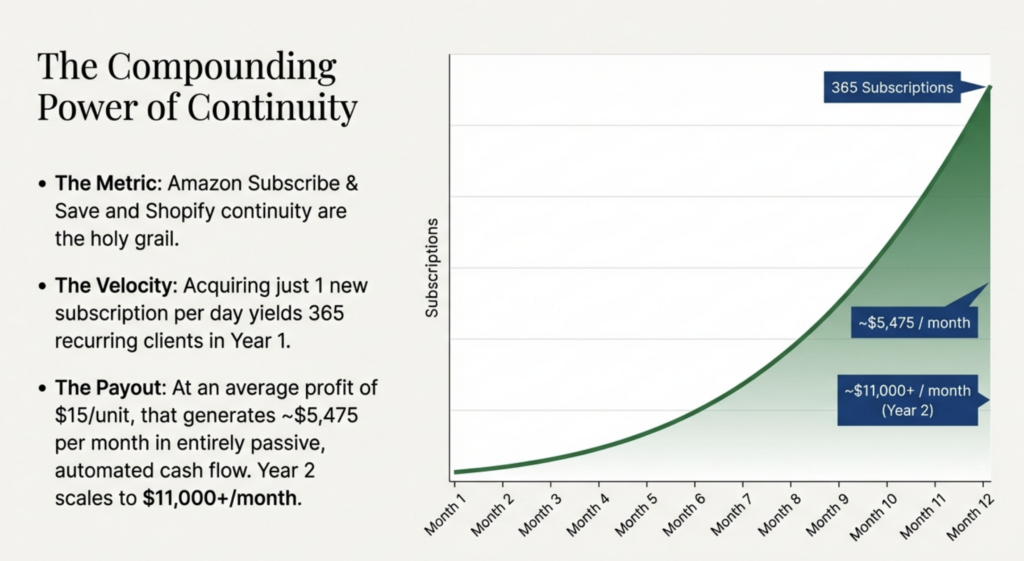
- Brand Registry is essential for participating in Amazon’s Subscribe and Save program.
- E-commerce Setup Costs and Components
- Graphic Design:
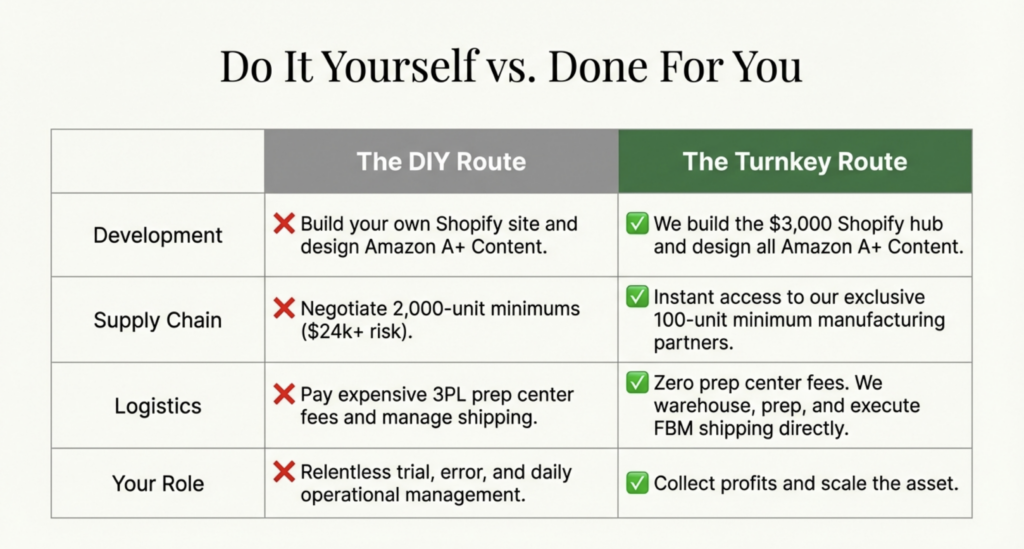
- 3D mockups and all necessary graphics for listings cost approximately $1,000 per listing.
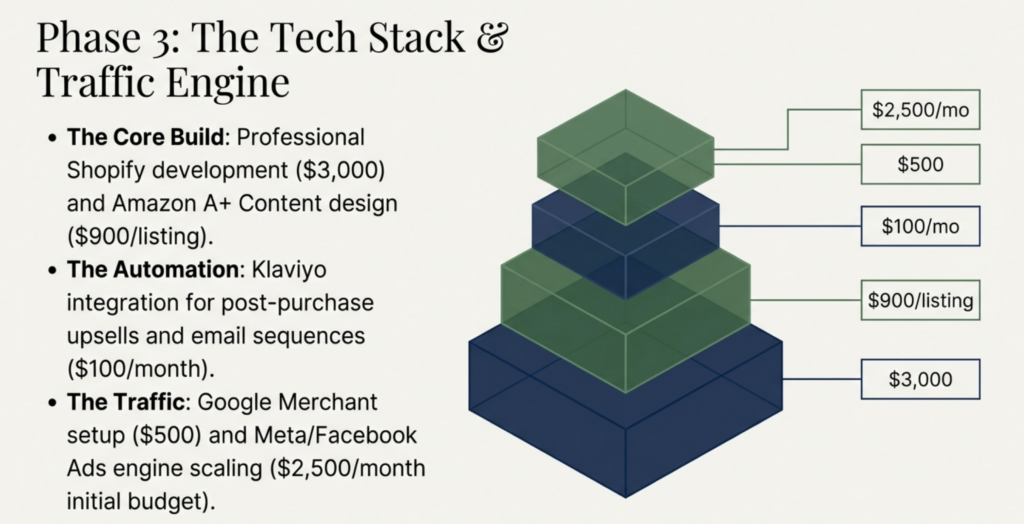
- Amazon A+ content listings cost about $900 per listing, totaling $5,400 for six listings.
- Labels:
- Cost approximately 40 cents per bottle.
- Minimum order for labels is typically 1,000, even for smaller product runs.
- Shopify Website:
- Professional development of a Shopify site costs around $3,000.
- Key plugins include Klaviyo for email automation ($100/month) and an affiliate program app (monthly cost).
- Advertising & Marketing:
- Google Shopping: Applying for approval costs about $500 if outsourced; results are free.
- Facebook Ads: An agency is recommended, charging based on results. An initial budget of $2,500 is suggested, including ad spend.
- Google advertising is not possible for certain products like peptides.
- Initial Inventory:
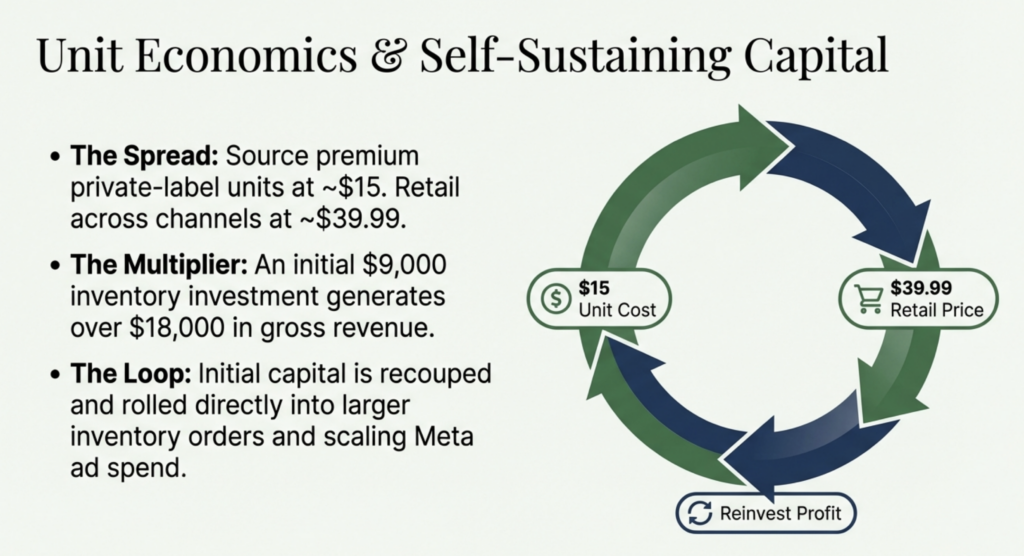
- Starting with six products, 100 units each, at a wholesale cost of $15 per unit, totals $9,000 for inventory.
- Payment Processing:
- Shop Payments, owned by Stripe, is recommended for processing transactions.
- Other Sales Channels Setup:
- Walmart setup costs approximately $3,000 if outsourced.
- TikTok setup costs approximately $1,500 if outsourced and is considered more challenging than Walmart.
- Graphic Design:
- Estimated Startup Investment
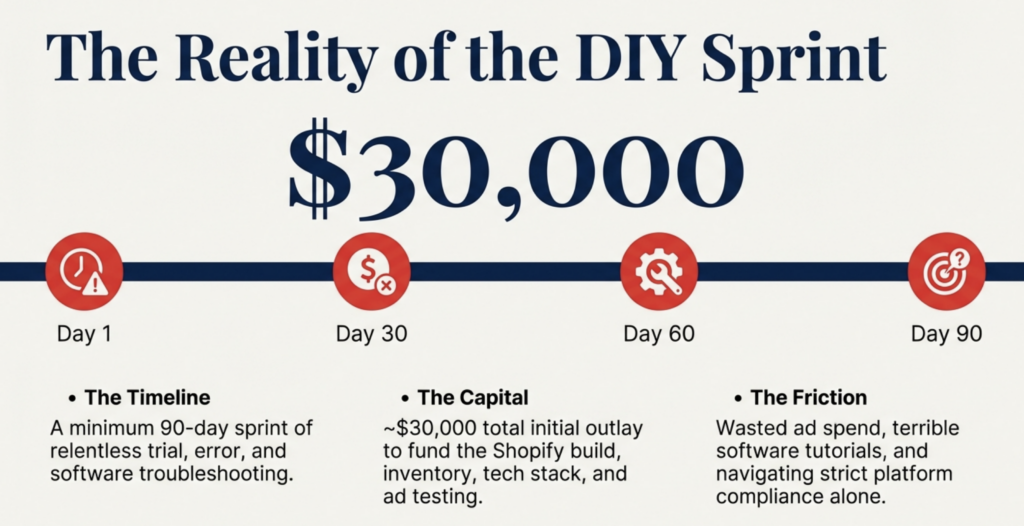
- The total initial investment for a comprehensive setup, including 600 units of product, is estimated at $30,000.
- This covers website build, graphic design, labels, initial inventory, and initial advertising setup.
- Business Timeline and Profitability
- It takes approximately 90 days to get fully up and running (3-4 weeks for website, 1 week for labels/artwork, 3-4 weeks for product production).
- Profitability is projected around 18 months, with cash flow returning in months three and four.
- Profits are intended to be reinvested to scale advertising and growth.
- Business Valuation and Exit Strategy
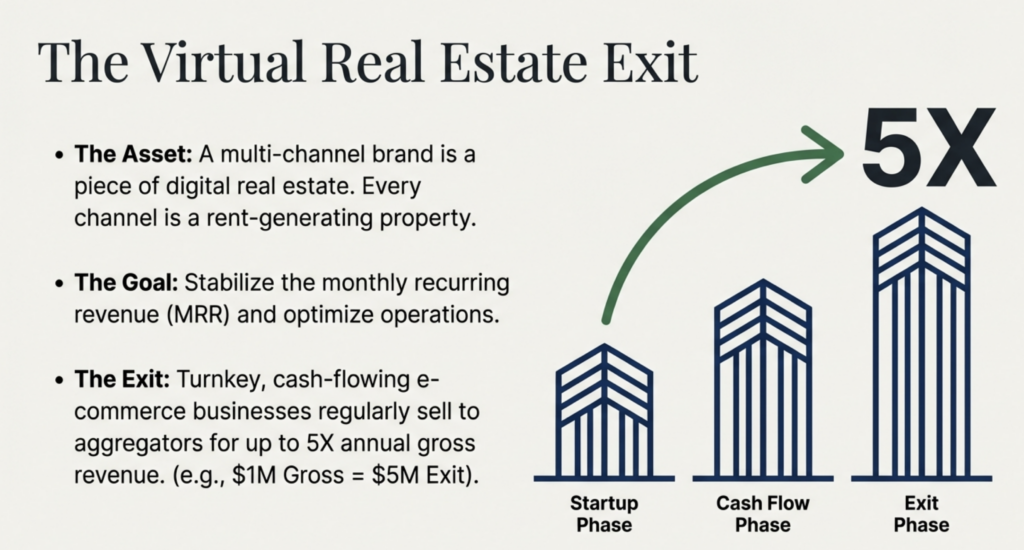
- A business’s exit price is typically five times its annual gross revenue.
- The goal is to build a “virtual real estate” portfolio with multiple sales channels to increase business value.
- New Program Offering
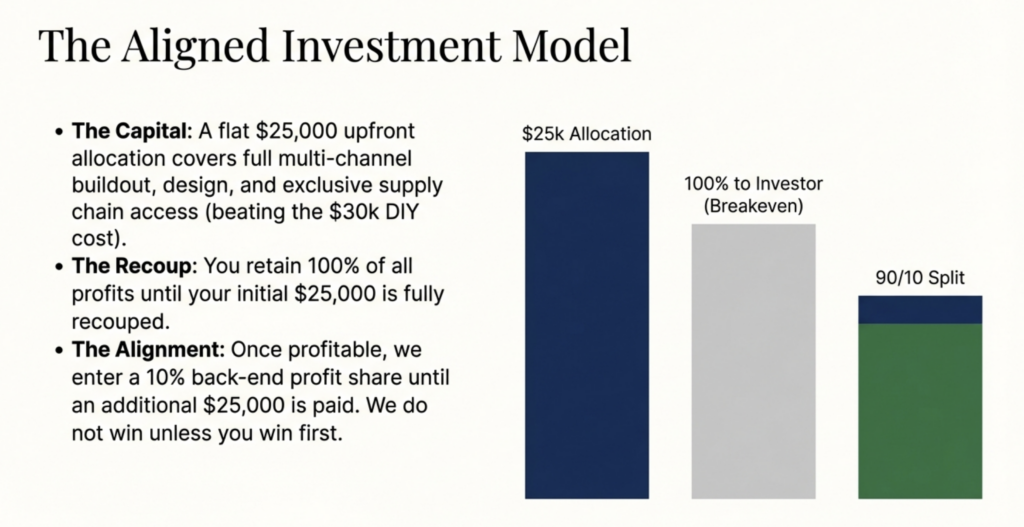
- A program is offered at $25,000 (or $10,000 upfront plus $5,000/month for four months).
- This program includes full setup: Shopify site, A+ content, labels, and optimization.
- After achieving $25,000 in profit, participants will pay 10% of their profit until an additional $25,000 is paid to the program provider.
- The initial $25,000 largely covers the actual costs of building the infrastructure.
- Product Sourcing and Fulfillment
- The program leverages an existing supplier relationship to allow for smaller initial orders (100 units per product) from a catalog of 16 best-selling supplements.
- Product selection is on a first-come, first-picked basis, with a limit of three people per product to ensure variety.
- Custom product formulation is available for an additional fee of $5,000-$7,500.
- The team will handle fulfillment for Shopify orders (FBM) by shipping products directly to customers for approximately $3 per order, with no storage fees.
- Only half of the initial inventory (50 units per product) will be sent to Amazon, with the remainder stored for FBM.
- Working Capital
- An initial working capital reserve of $5,000 is suggested.
- Profits from sales are expected to cover ongoing inventory purchases and advertising, creating a self-sustaining cash flow.
- Internet Mastery Focus Shift
- Internet Mastery plans to halt new advertising and focus on supporting existing members and the new program participants.
Action Items
Unassigned
☐ Send accelerator training link to at‑home attendees
☐ Text Customer Support to confirm pre‑approval so balance payment can be scheduled
Day One Recap and Q&A
- Customer Support initiates a recap of day one, inviting questions from attendees and online participants.
- Discussion on Amazon’s requirements for supplements:
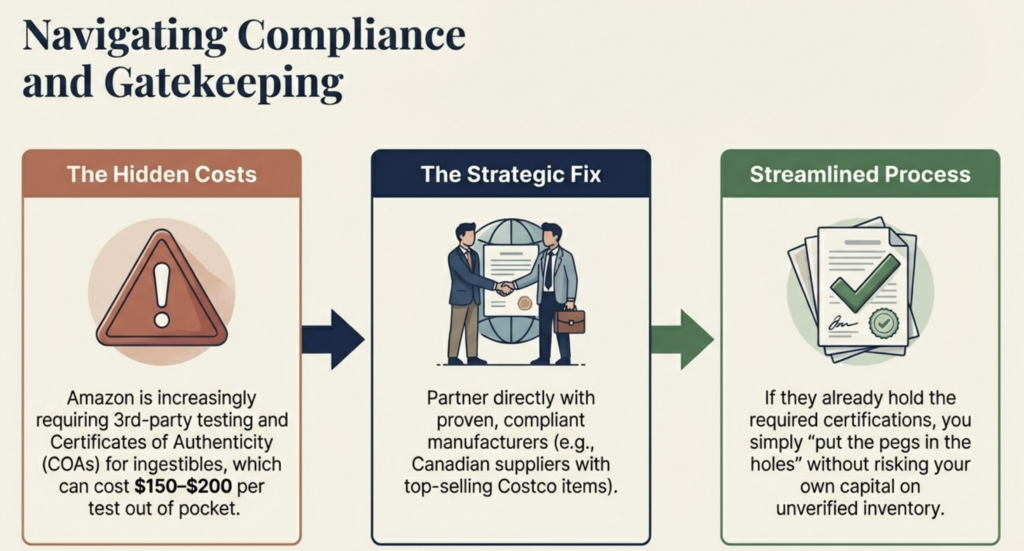
- Amazon is moving towards requiring third-party testing for supplements.
- This involves sending products to an Amazon-approved facility for verification, incurring a cost of approximately $150-$200.
- The supplier is also the manufacturer, which allows for obtaining necessary documentation like certificates of authenticity and ingredient certificates, though these also incur fees.
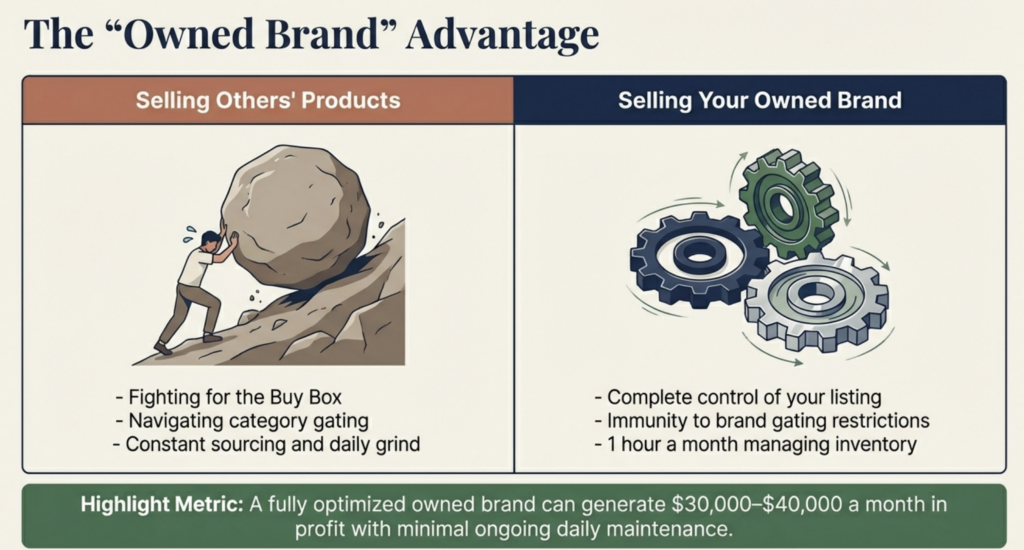
- Having a private brand on Amazon eliminates issues like competitor complaints, brand restrictions, and category gating.
- Paul raises questions about the process for ingestibles and the potential for expanding a Shopify site with different product types.
Brand Strategy and Expansion
- Building a brand with the goal of eventual exit:
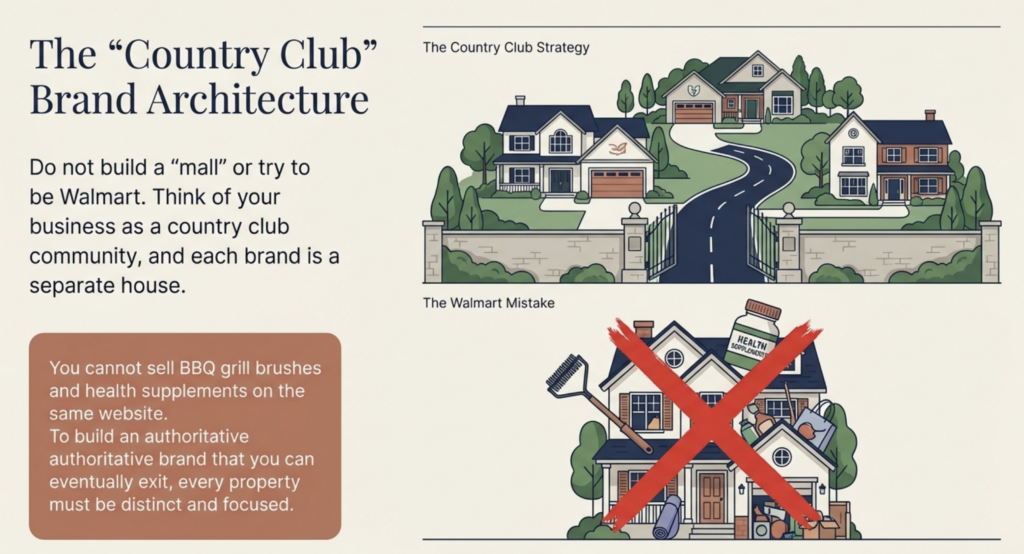
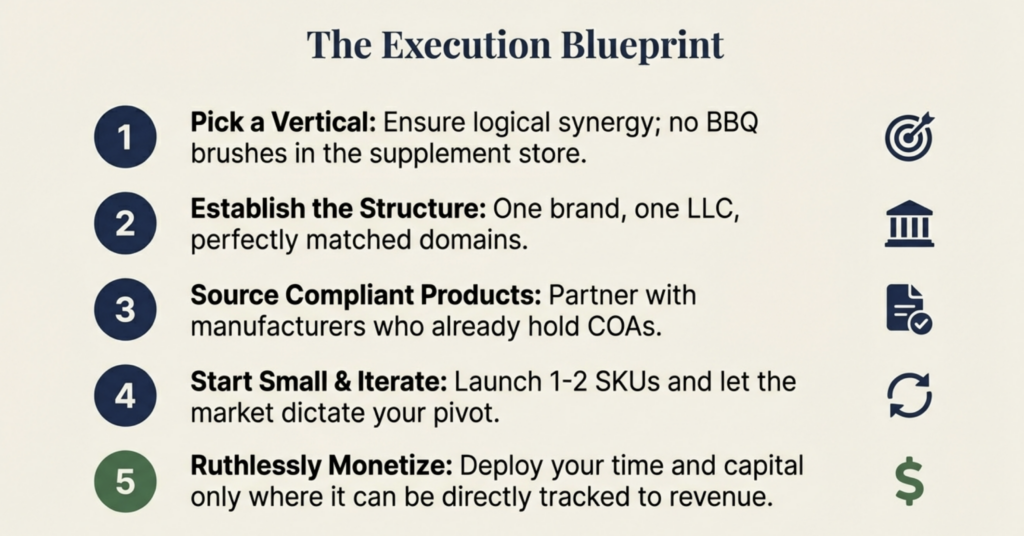
- A single website should focus on a specific vertical (e.g., supplements like pills, creams, powders).
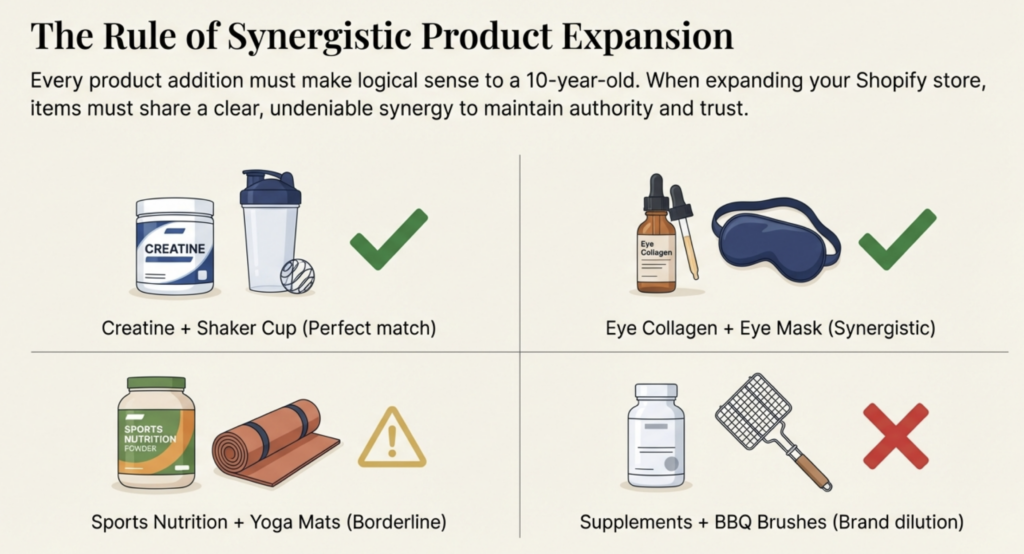
- Different product categories (e.g., barbecue brushes and vitamins) require separate brands and websites to maintain brand authority and facilitate future exit strategies.
- Once a brand proves profitable (e.g., $10,000-$20,000 a month), reinvesting in new verticals becomes a viable strategy.
- Multiple brands under one umbrella:
- It is possible to have multiple brands selling similar products (e.g., six different Vitamin D brands) across different Amazon accounts to dominate a market segment.
- Product compatibility and synergy:
- Products sold on the same website should be compatible and logically related (e.g., creatine and a shaker cup).
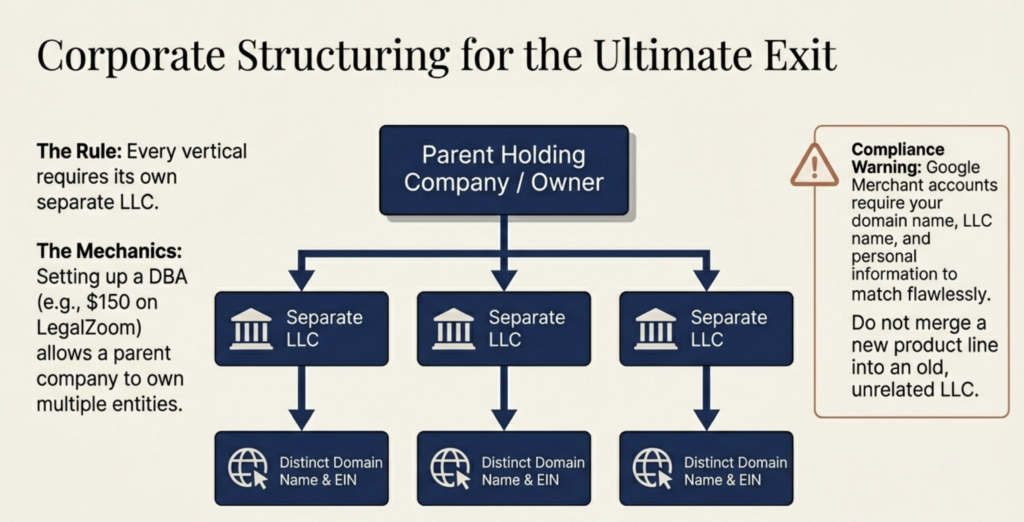
- The domain name, LLC name, and personal information must match for a Google merchant account.
- If a new product is unrelated, a new property (website/brand) is needed.
- Trademarking:
- Trademarking is considered premature until a product proves its worth.
- Research is necessary to ensure brand names are not already in use (e.g., DailyEssentials Biz is already taken by a vitamin company).
- Starting with products:
- There is no limit to the number of products on a Shopify site.
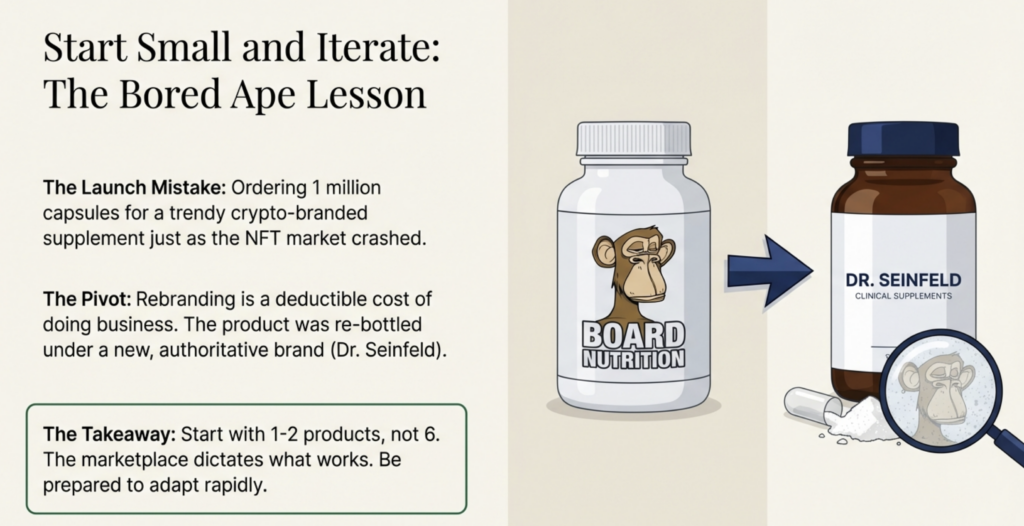
- It is recommended to start with one or two products to test the flow and allow for adaptability.
- Changing a brand name or labels after launch is costly and requires redoing all associated materials.
- An example is given of rebranding from Board Nutrition to Dr.seinfeld.com, which involved rebottling and relabeling 10,000 bottles of supplements, costing money but saving the cost of capsules.
- Passive income:
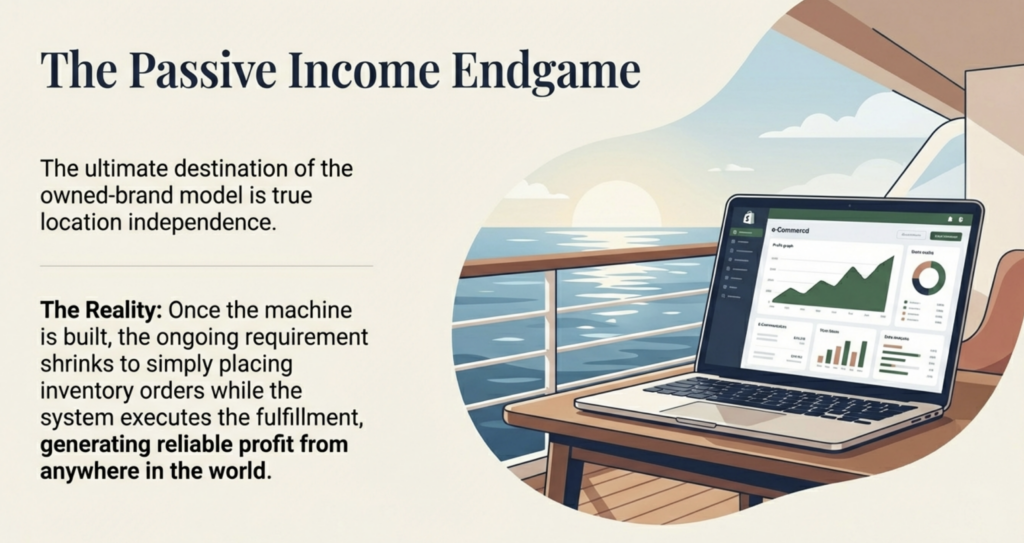
- Building a personal brand is highlighted as a path to true passive income, requiring minimal monthly effort once established.
- This model offers flexibility, allowing operation from anywhere with internet access.
Business Structure and Financial Strategy
- LLC vs. S Corp:
- For multiple distinct businesses (e.g., supplements and barbecue brushes), it is advisable to set up a separate LLC for each business.
- An S Corp offers tax benefits related to distributions and is generally considered for businesses with more employees.
- It is recommended to consult with a corporate advisor like Prime Corporate for specific tax and corporate structure advice.
- Affiliate marketing:
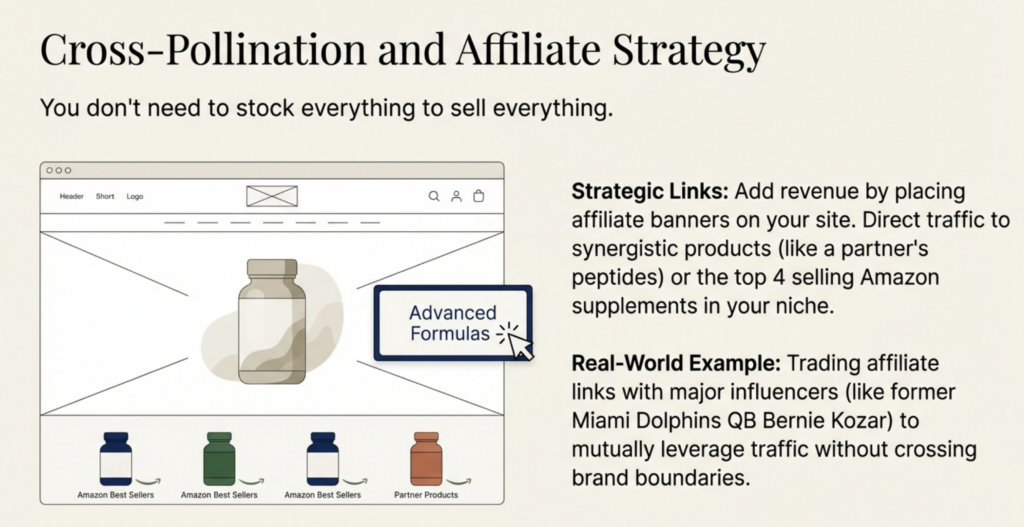
- Affiliate links can be integrated into a website that sells related products.
- For example, a supplement website can feature banners for advanced formulas or links to other top-selling supplements on Amazon, earning affiliate commissions.
- Consistency across the board is key, ensuring all promoted content relates to the main topic.
- An affiliate relationship with Bernie Kozar, a former Miami Dolphins quarterback, is mentioned for cross-promotion.
- Funding and leveling up:
- The private label program is limited to in-person attendees, but others are encouraged to save towards it.
- Alternative paths to level up include wholesale, with training available from the accelerator event.
- Funding for the private label program can be obtained, with a deposit required upfront and the balance paid upon funding approval (typically 2-3 days).
- Financial philosophy:
- The core principle is to make money work for individuals, rather than individuals working for money.
- Investing money in ventures that yield a high return is crucial.
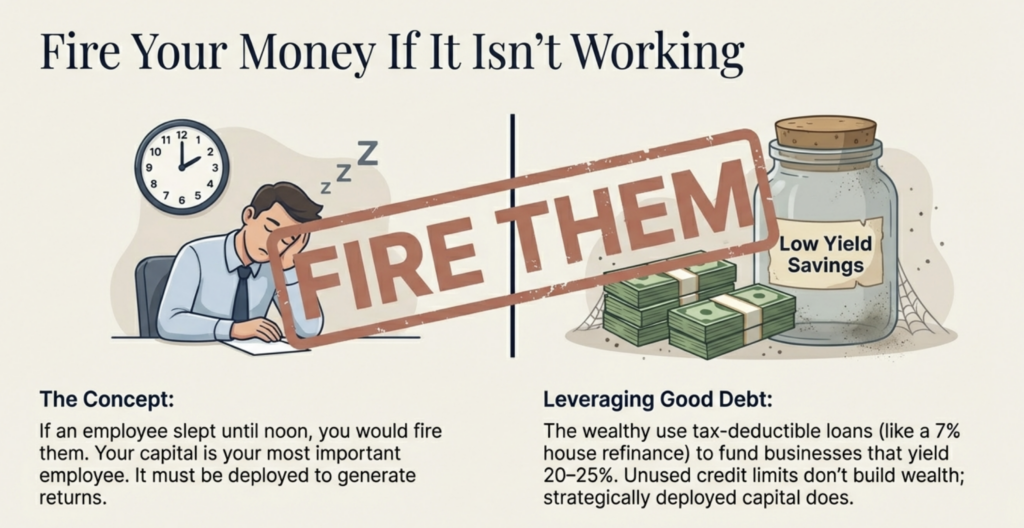
- Good debt, such as borrowing money for business investments, is seen as beneficial because borrowed money is not subject to income tax, and interest can be a tax deduction.
- Credit cards should be used and paid off to build credit scores, not just kept with a zero balance.
- Business expenses, like a wrapped car for advertising, can be tax-deductible.
Amazon KDP (Kindle Direct Publishing)
- KDP allows authors to publish books on Amazon.
- Monetization of KDP:
- KDP is generally not recommended for significant income unless the author is already a bestseller or has a large platform.
- The focus should be on monetizing time and effort, and KDP offers limited direct monetization for new authors.
- Amazon requires third-party testing for supplements, which costs $150-$200.
- AI-generated content for books is discouraged by Amazon, though AI can be used for initial drafts and then humanized.
- Publishing process:
- An Amazon account automatically grants a KDP account.
- Books can be uploaded as PDFs, with formatting assistance available from tools like ChatGPT.
- Journals on KDP:
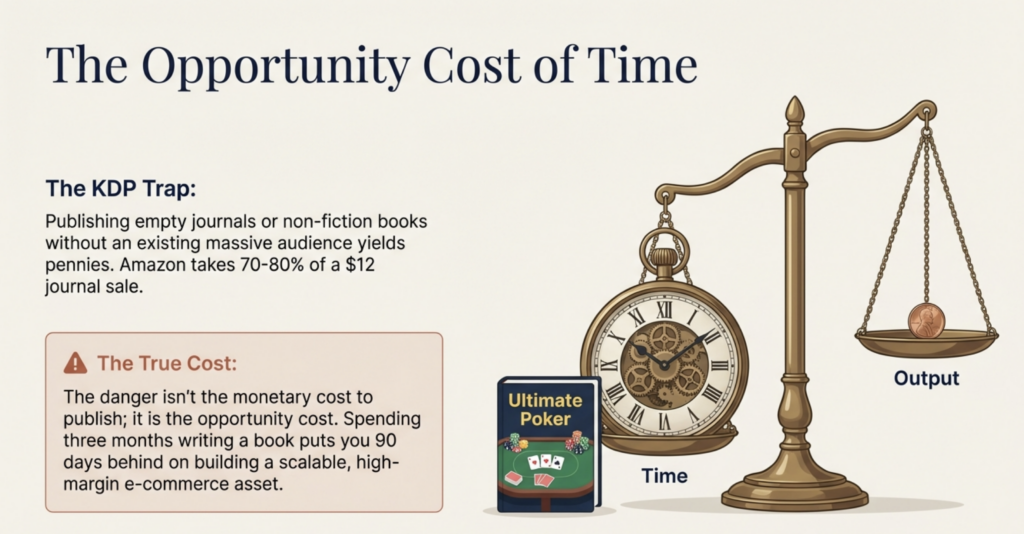
- Publishing journals (especially blank or prompted ones) is a common activity, but actual sales are typically low.
- Amazon takes a significant percentage (70-80%) of journal sales due to printing and shipping costs, resulting in low profit margins per unit.
- Credibility and authority:
- Books are often purchased from authority figures.
- Writing a book can build credibility, but it needs to be supported by an existing platform or expertise.
- An example is given of investing $30,000 in a health and wellness publication to gain credibility through features and advertising.
- Physical publications are more effective for giveaways and building credibility at events than e-books.
- Technology can create 3D mockups of book covers for websites without needing a physical book.
Action Items
Customer Support
☐ Send missing affiliate links to anyone who signed up but didn’t receive one
☐ Create and publish affiliate training videos and still images showing backend steps
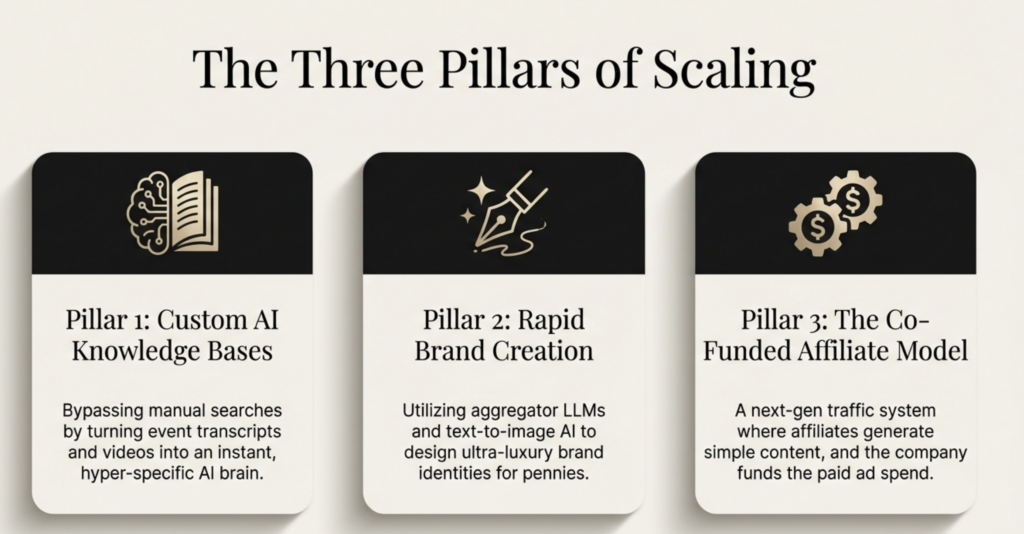
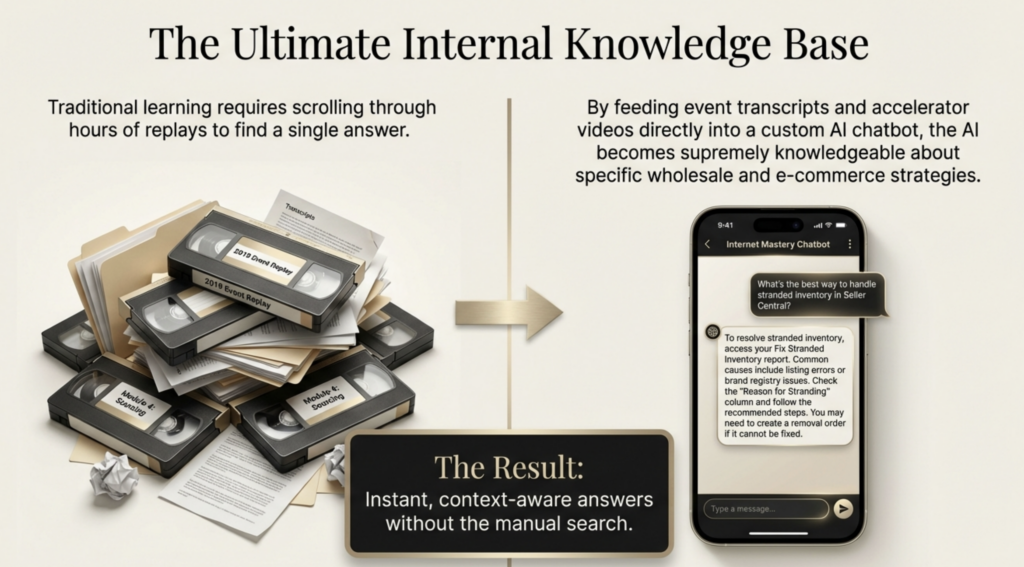
☐ Build an AI chatbot knowledge base using accelerator transcripts and videos
☐ Run paid ads using submitted affiliate videos and link each ad to the submitter’s affiliate URL
☐ Provide each affiliate with three unique tracking links for testing
Unassigned
☐ Create a short promotional video and send it to Customer Support
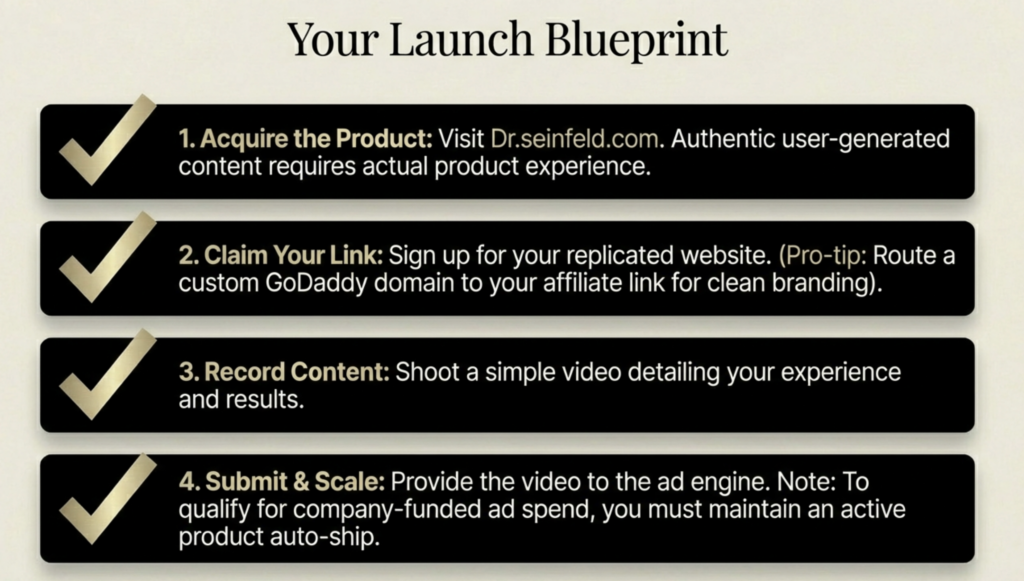
☐ Purchase a product from Dr.seinfeld.com
☐ Sign up as an affiliate at the program signup page
Internet Mastery Accelerator 3 Content
- Replays of the event are available in the community groups.
- Session 1 includes slides due to an issue, while all other sessions have recordings.
- Cliff Notes and infographics are provided for each session, breaking down content for quick review.
- The compiled content effectively creates a mini wholesale course.
AI Chatbot Development
- An AI chatbot is being built within the community as a knowledge base for Internet Mastery.
- The chatbot will be trained using all accelerator transcripts and videos.
- Its purpose is to provide quick answers to user questions, eliminating the need to scroll through videos.
AI Tools and Image Generation
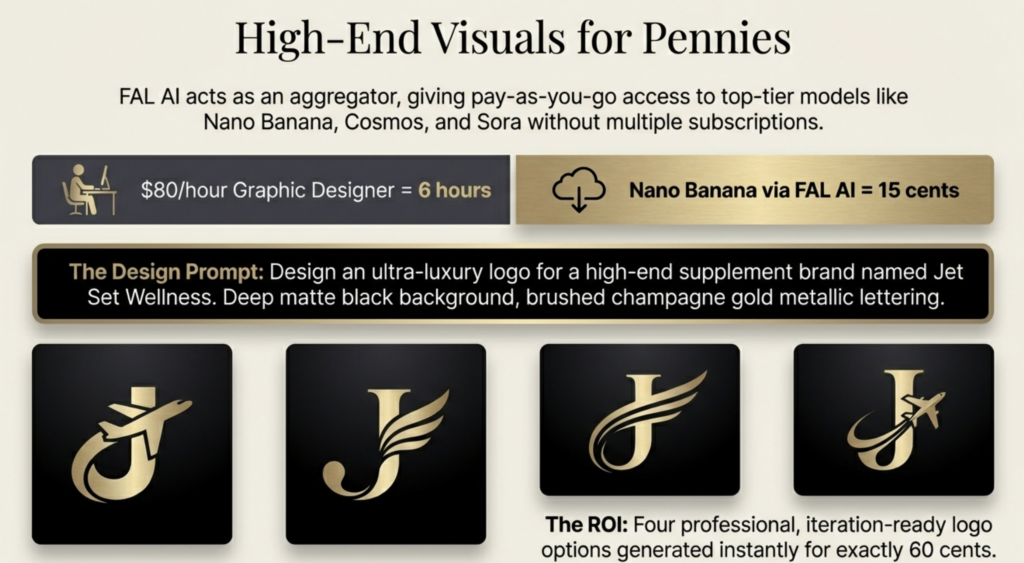
- FAL AI is introduced as an aggregator for various AI tools.
- It includes tools like Clink, Cosmos, Gemini, Nano Banana, and Sora.
- The platform operates on a pay-as-you-use model, not a monthly subscription.
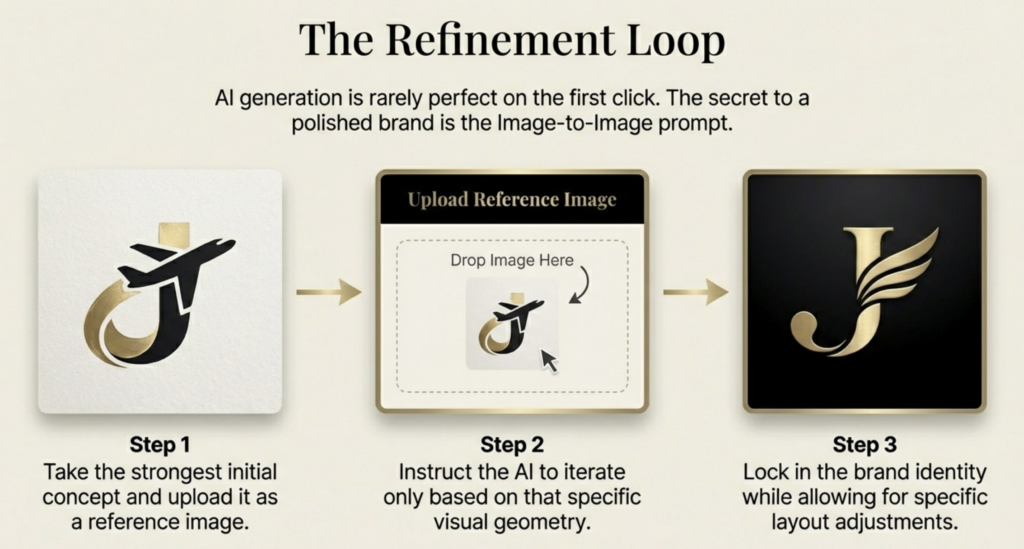
- Nano Banana is highlighted for its text-to-image and image-to-image capabilities.
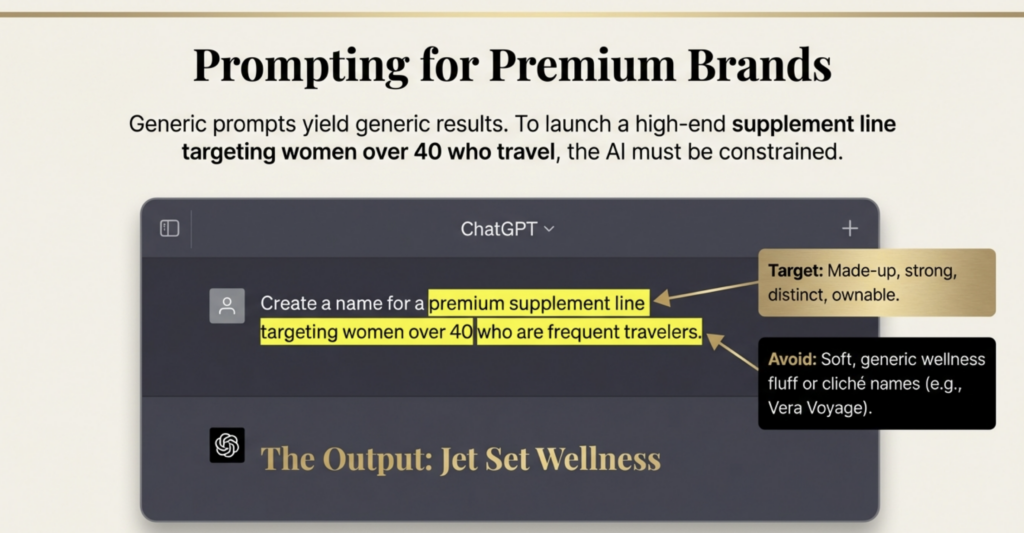
- A demonstration shows creating a logo for a supplement brand, “Jet Set Wellness.”
- Prompts for image generation can be created using tools like ChatGPT or Gemini.
- The cost for Nano Banana is 15 cents per image.
- Customization of elements like color palette is possible within the prompt.
Affiliate Marketing Program
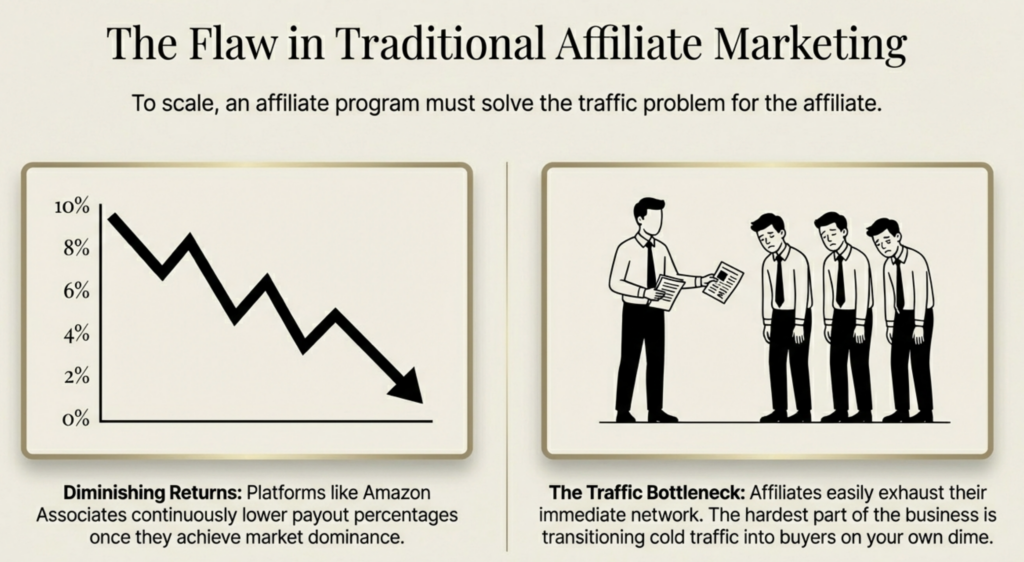
- The affiliate program allows individuals to promote Dr.seinfeld.com and Internet Mastery products for commission.
- The program has evolved from traditional affiliate marketing to incorporate influencer marketing strategies.
- Steps to become an affiliate:
- Purchase a product from Dr.seinfeld.com.
- Sign up as an affiliate; a link is provided individually.
- Promote products using a unique affiliate link or a replicated website.
- Commission structure and benefits:
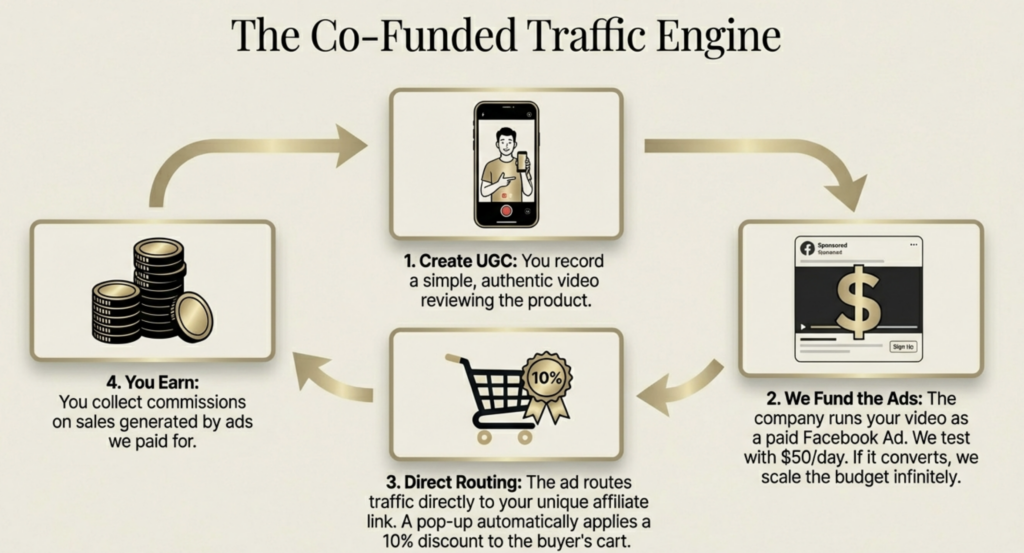
- New customers receive a 10% discount when using an affiliate’s link.
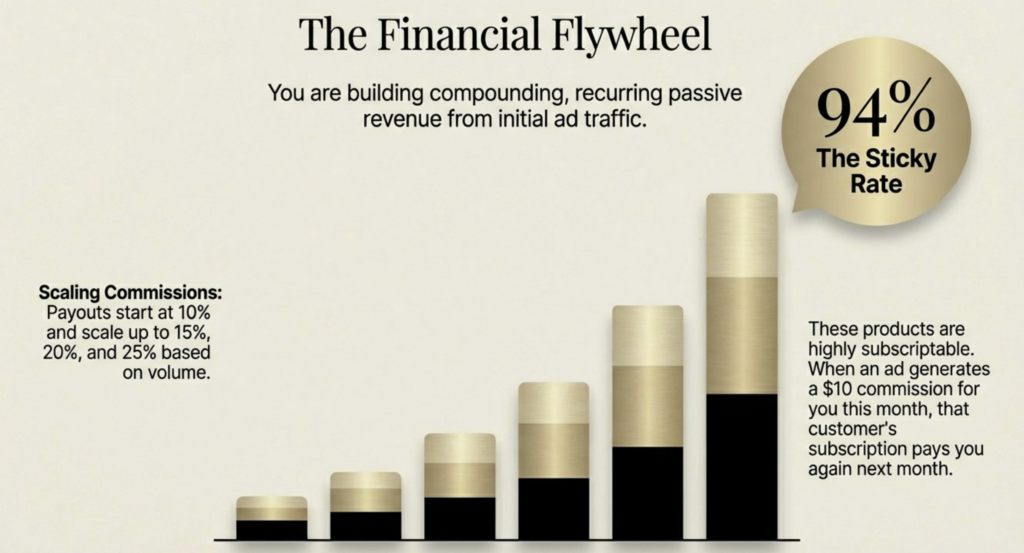
- Affiliates earn a 10% commission, which can increase to 15%, 20%, or 25% based on sales volume, with no cap.
- Affiliates receive lifetime commission on customer reorders, upsells, and cross-sells.
- Content creation and advertising:
- Affiliates are encouraged to create videos featuring the product.
- Customer Support will run Facebook ads using affiliate videos, covering the advertising costs.
- The affiliate’s unique link is embedded in these ads.
- For continued payment from video-based ads beyond the first month, the affiliate’s product must be on auto-ship.
- No auto-ship requirement exists for referrals made through direct links or personal websites.
- Ad performance is monitored: ads run for three days at $50 per day; non-converting ads are cut, while converting ads receive increased budgets.
- Affiliates do not gain access to customer data.
- Affiliates can utilize high-performing videos created by other affiliates within the network.
- The use of AI-generated videos for promotion is permitted.
Dr. Seinfeld Products and Health Benefits
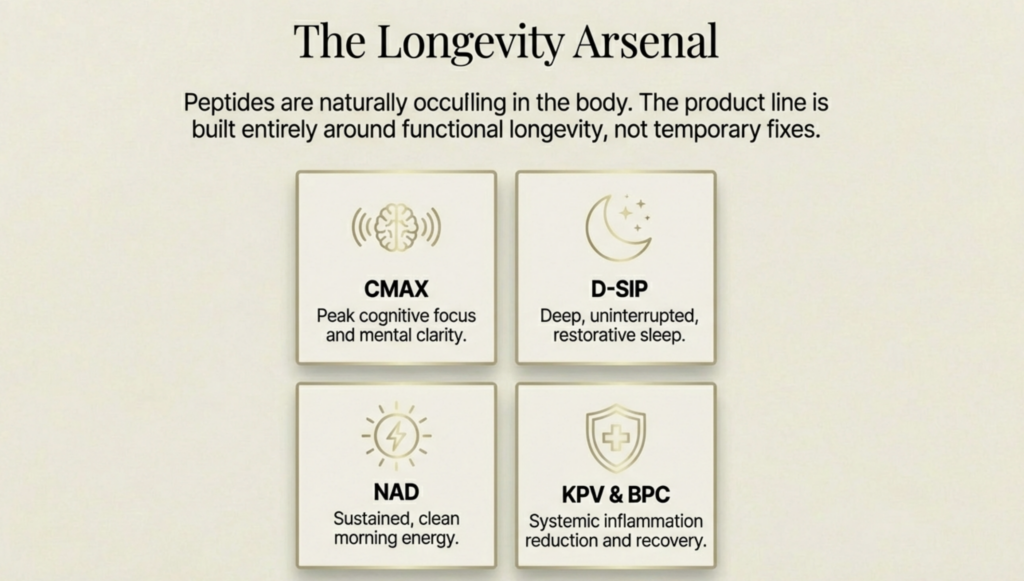
- The product line includes:
- D-sip for sleep.
- NAD for energy.
- KPV for inflammation.
- CMAX.
- Peptides are naturally occurring in the body and do not pose an overdose risk.
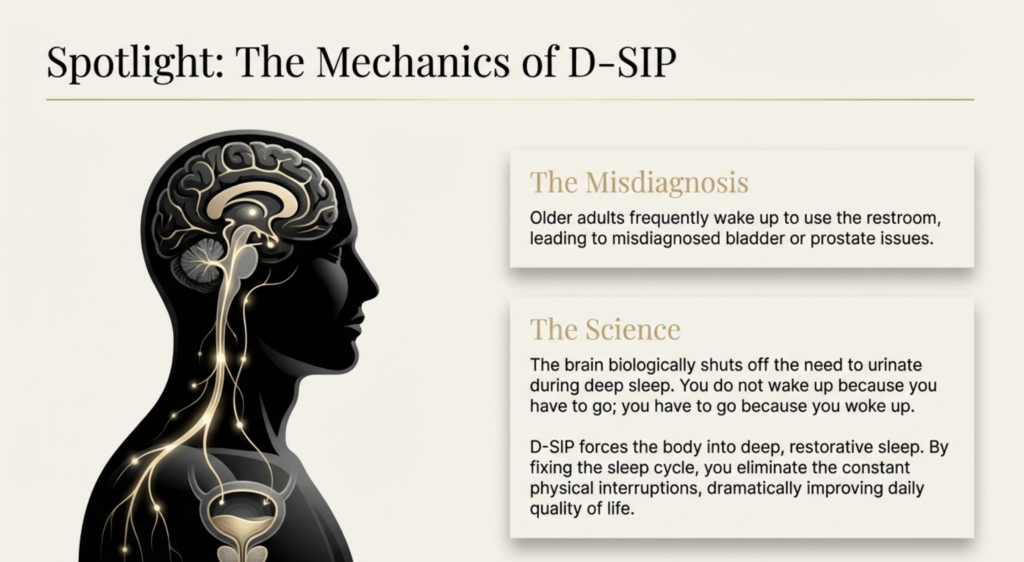
- D-sip is particularly effective for improving sleep quality.
- It helps individuals, especially older men, sleep through the night, thereby reducing frequent nighttime urination.
- The product addresses sleep issues, not bladder or prostate problems, as the brain’s mechanism for suppressing urination during sleep is reactivated with deeper sleep.
- A 42-page sales brochure is available for promoting D-sip.
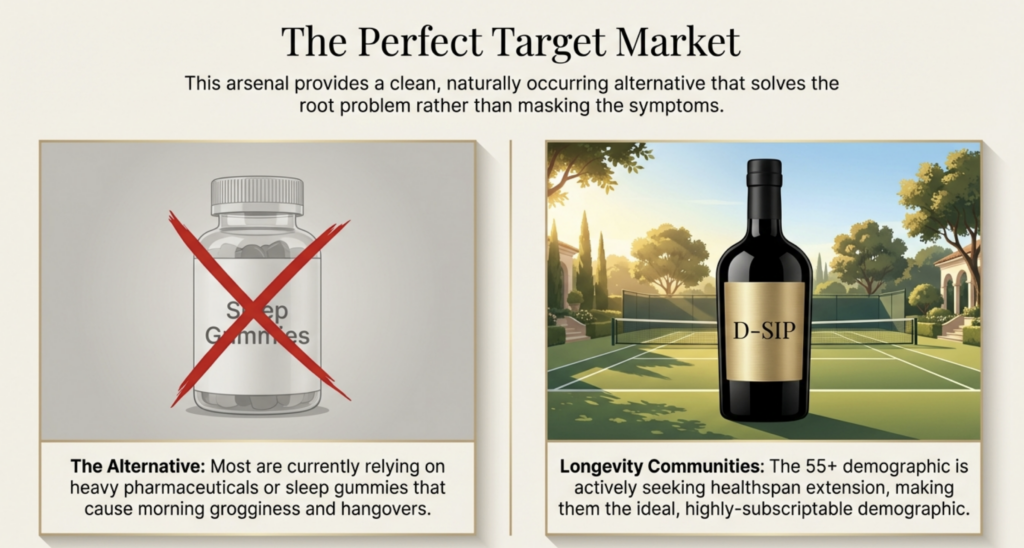
- There is a strategic focus on promoting D-sip in “longevity communities” (retirement homes).
- A partnership with Bernie Kozar aims to introduce D-sip into retirement homes in Ohio.
Action Items
Customer Support
☐ Create a series of videos showing affiliate/backend process
☐ Post submitted video content to host’s account and upload link
☐ Make a short video showing how to redirect GoDaddy domain
☐ Provide all affiliate/login links to Lisa after session
Unassigned
☐ Send affiliate link to people who email support
☐ Schedule a half-hour prompting class with Shane
Affiliate Program Overview
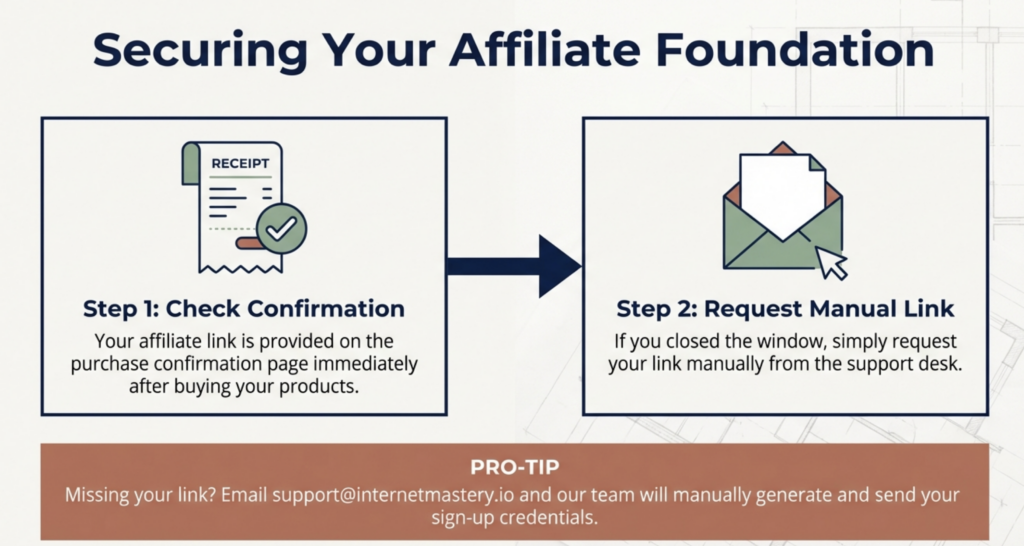
- Affiliate links are available on the purchase confirmation page after signing up for Dr. Seinfeld products.
- If the link is not received, customers are advised to email support@internetmastery.io.
- Tina successfully received the affiliate link.
- Lisa is asked about her affiliate link status.
- A series of videos will be created to explain the entire affiliate process.
Affiliate Program Backend Features
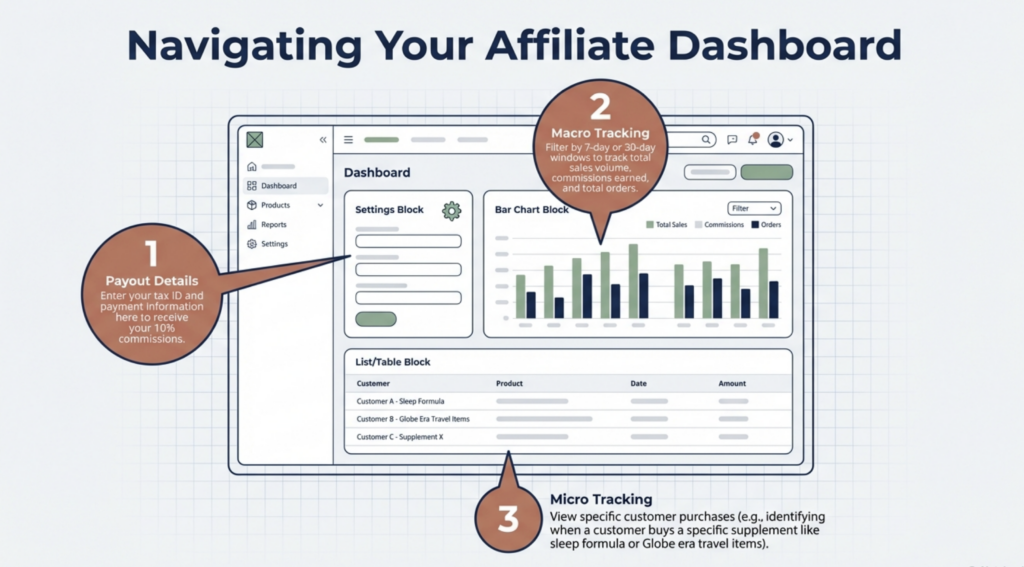
- Payout Details
- Payout details must be entered after making a sale to receive earnings.
- Customer Support has not entered payout details, using the system for tracking purposes.
- Sales and Commissions Tracking
- Last 7 days: $4743 in sales, $414 in commissions, 26 orders, 26 customers, 10% commission.
- Last 30 days: $6345 in sales, $521 in commissions, 40 orders, 37 customers.
- Customer and Sales Visibility
- The system shows who bought what (e.g., Jenny bought sleep formula, Janice bought Globe era travel).
- The origin of sales is not visible.
- Sharing Links
- The “My shop” link is the primary affiliate link for sharing.
- Promo codes are available for discounts but are less frequently used.
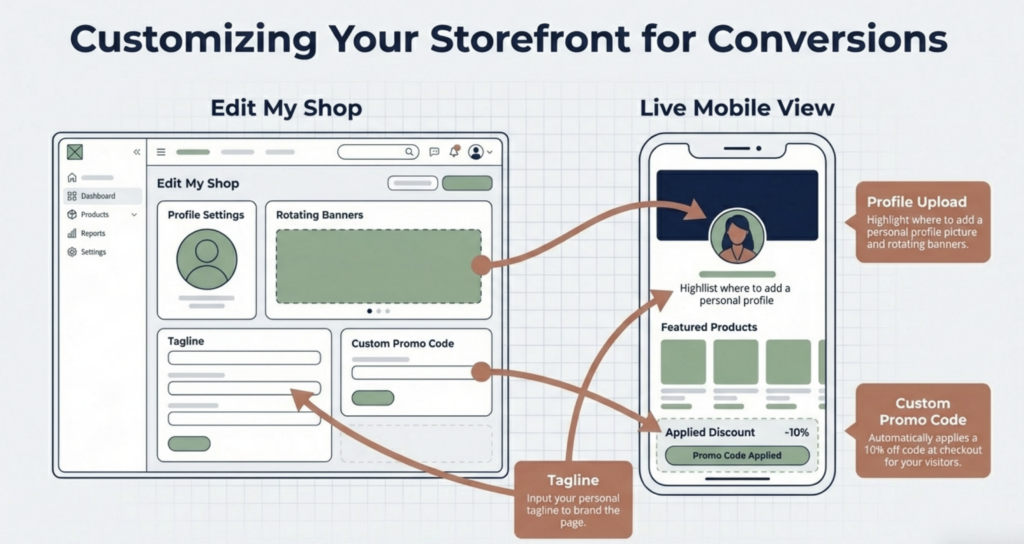
- Editing Shop
- Affiliates can upload a profile picture and customize their link name or promo code and description.
- More banner options will be added for rotation.
- The customized page automatically applies a 10% off code at checkout.
- The affiliate link redirects to Dr.seinfeld.com, embedding the affiliate’s code.
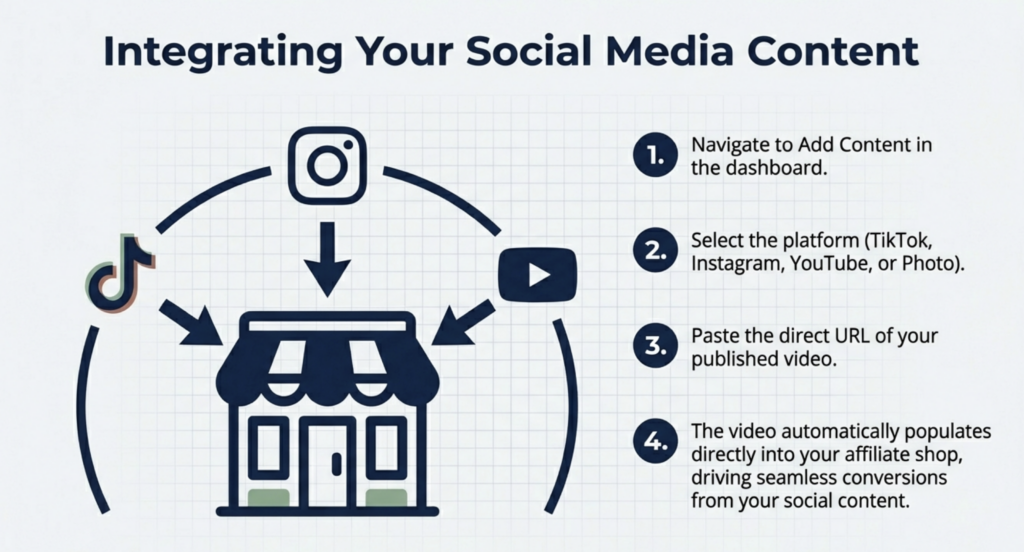
- Adding Content
- TikTok, Instagram, YouTube, and photo posts can be linked to the affiliate’s shop.
- Videos can be sent to Customer Support for posting and linking.
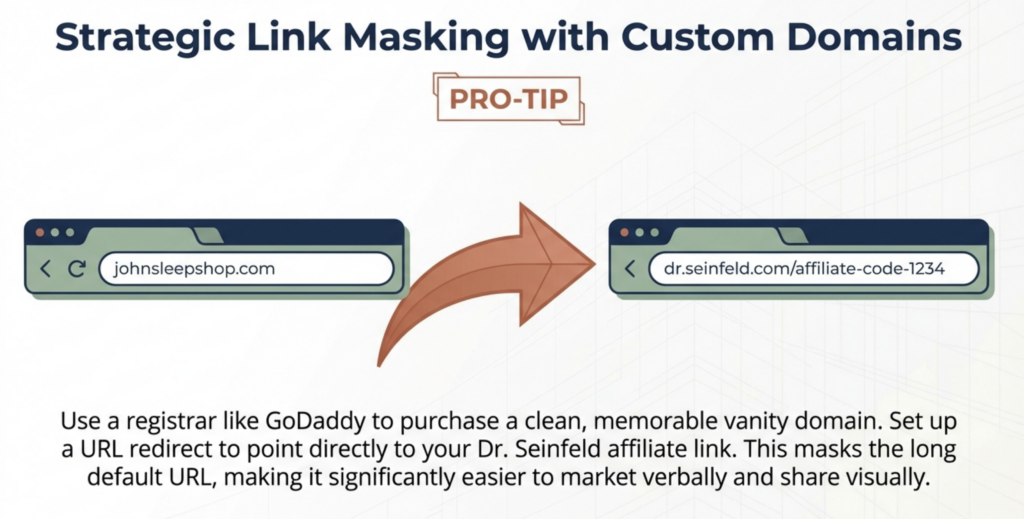
Custom Domain for Affiliate Links
- A custom domain (e.g., johnsleepshop.com) can be purchased on GoDaddy.
- The custom domain can be redirected to the affiliate link, making it easier to share.
- A video will be made on how to redirect URLs.
Amazon Business Updates
- Bola Deals
- Some Bola deals repeat weekly because retailers offer the same deals consistently.
- Ungating Process
- 16 out of 40 items are now automatically ungated.
- This improvement is attributed to better account health and smarter AI for deal finding.
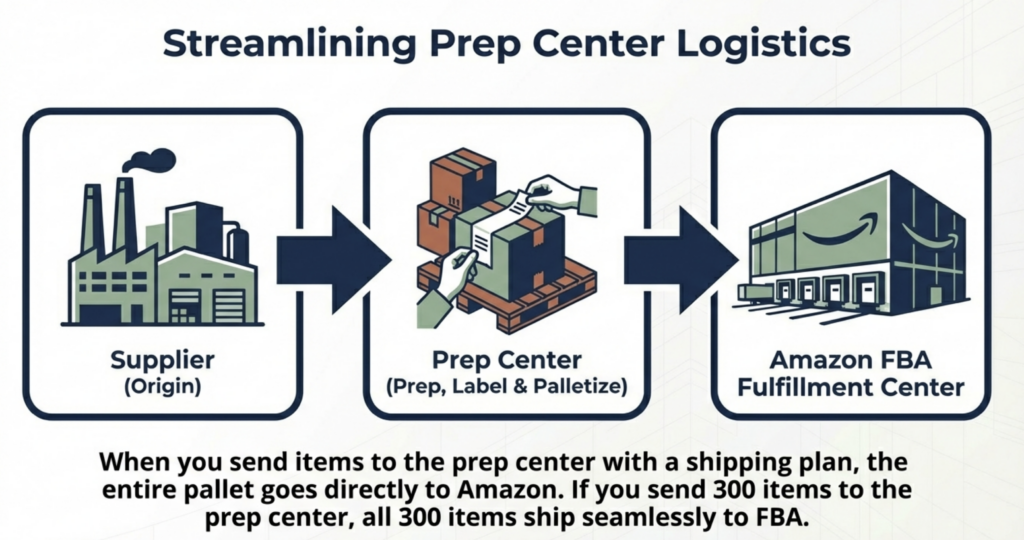
- Prep Center Process
- When items are sent to a prep center with a plan, all items (e.g., 300 items on a pallet) go directly to Amazon.
- Item Pricing Preference
- Customer Support prefers selling items priced at $20 to $25 or higher, rather than lower-priced items like $10.
AI Prompting and Tools
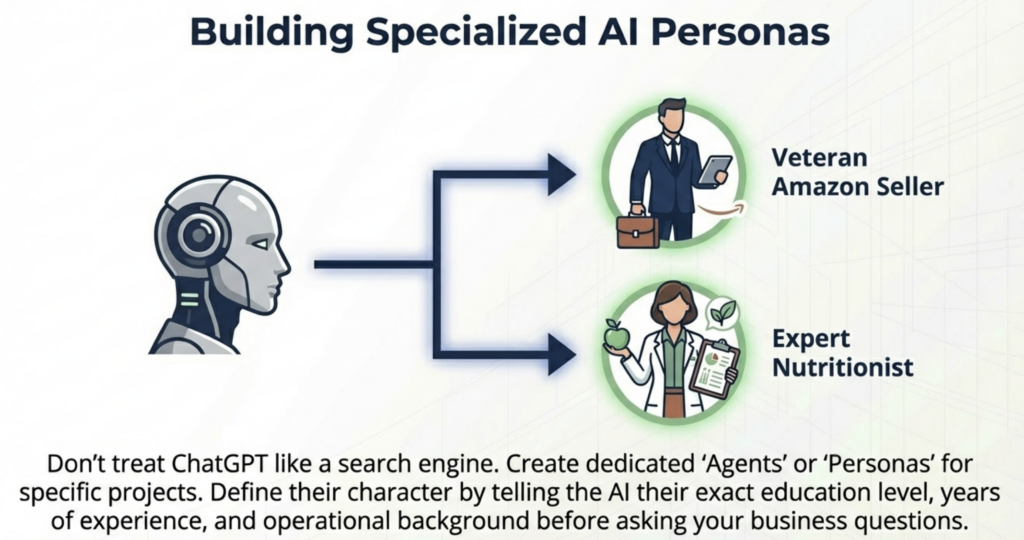
- Personas/Agents
- Paul creates personas or agents in ChatGPT for different projects, such as building an Amazon business, training, or nutrition.
- These personas are developed with specific characteristics and expertise to provide tailored advice.
- Prompting Class Request
- A request is made for a half-hour class on AI prompting, potentially featuring Shane.
- AI Tools
- Notion is discussed as a task manager that ChatGPT suggested for creating a dashboard.
- Claw is mentioned as a new AI tool.
- AI Evolution
- AI capabilities have significantly advanced since December and are expected to continue improving.
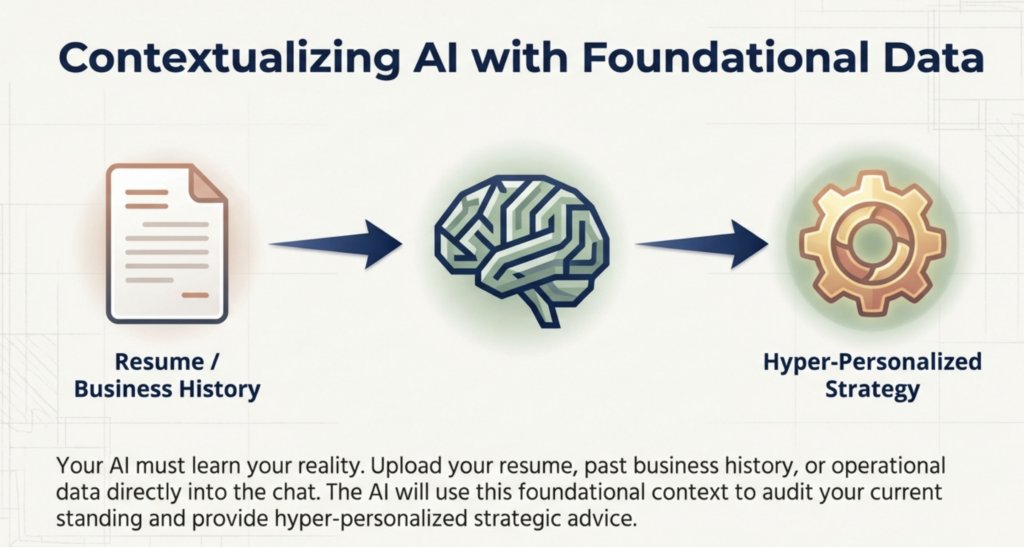
- Resume Example
- A speaker shared an experience where ChatGPT critiqued and improved a resume.
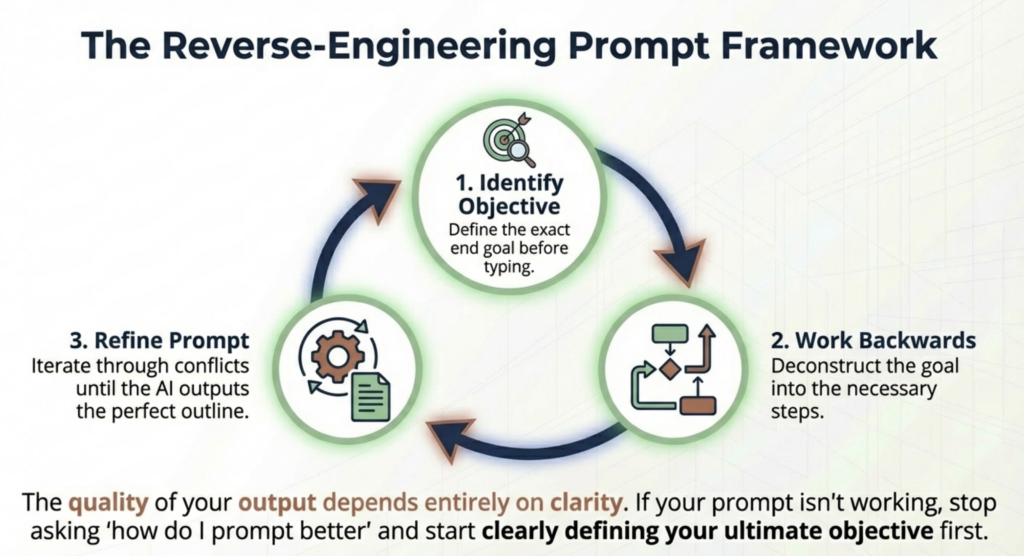
- Objective-Driven Prompting
- The importance of having a clear objective before prompting AI is emphasized.
Future Opportunities and Event Conclusion
- Icon Group
- A new group called “Icon” will be created within the community.
- Shane’s media company works with small business owners to conduct interviews for advertising and branding. This will be an optional opportunity for members of the Icon group.
- Event Replays
- Replays of the event will be available in the group in April, with a possibility of being available as early as tomorrow.
- Event Conclusion
- This event is the last community-wide international broadcast of its kind.
- Attendees are thanked for their participation.